July 3, 2026 · By Abraham Wix-Expert
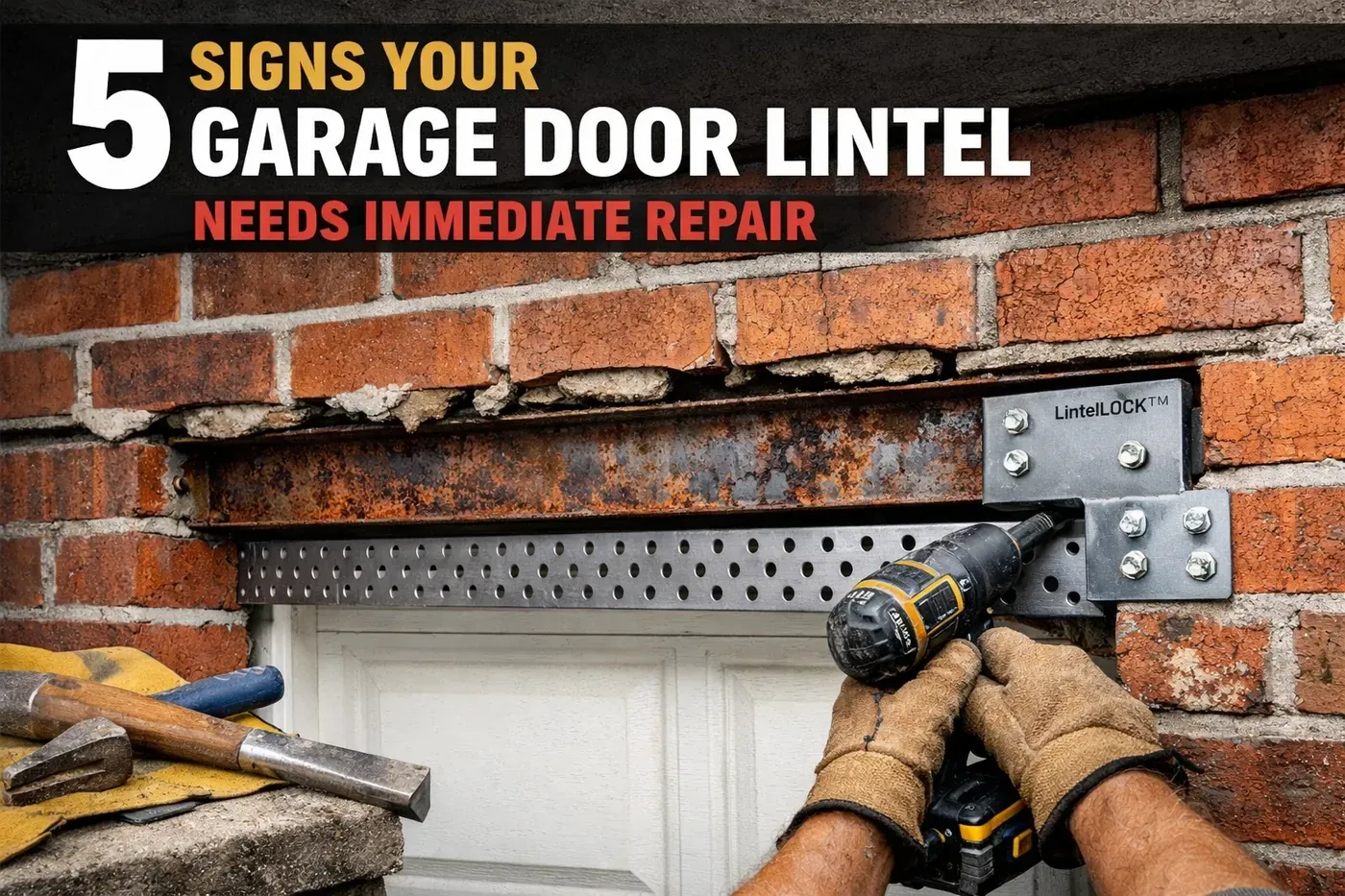
In Dallas, a sagging garage door lintel is one of the most common (and most ignored) masonry problems we see. Your steel lintel is the horizontal support above your garage opening. When it starts to fail, the brick above it begins to move, fast.
Don’t treat this as cosmetic. A failing lintel can shift brickwork, bind your garage door, and invite water intrusion that accelerates rust and masonry damage. If you’re seeing the warning signs below, you likely need lintle repair, and if you have lintel repair issues, you need LintleLOCK™.
Expert quote (Brick Repair EXPERT, Owner): “In Dallas, the typical pattern is simple: a little rust becomes a little sag, and that ‘little sag’ turns into cracked brick and a garage door that doesn’t run true. Handle lintle repair early, and you avoid the expensive rebuild later.”
Your lintel carries the brick load above the garage opening and transfers it to the sides (jambs). On most brick homes, the lintel is a steel angle iron. Over time, it can:
Rust and expand, pushing the brick up and out
Deflect (sag) in the center under load
Lose bearing at the ends if masonry shifts or mortar fails
Let water in, which speeds up corrosion and freeze/thaw damage (yes, even in North Texas: cold snaps still matter)
Dallas weather swings, wind-driven rain, and common construction details (thin paint/seal failures at the steel edge, poor flashing, aging mortar) are a perfect recipe for sagging lintels. That’s why lintle repair is so often needed over garage doors in DFW.
Caution: Don’t assume “it’s been like that for years” means it’s stable. Once brick starts moving, the rate of movement usually increases.
The clearest sign you need lintle repair is a visible sag across the steel or the brick line above the garage. You may notice:
A downward curve in the middle of the opening
Brick courses that look like they dip above the garage door
A garage façade that looks slightly “pulled down” at the center
This happens because the lintel is no longer acting as a rigid beam. It’s deflecting. As it deflects, it changes how loads transfer, forcing masonry to crack and separate.
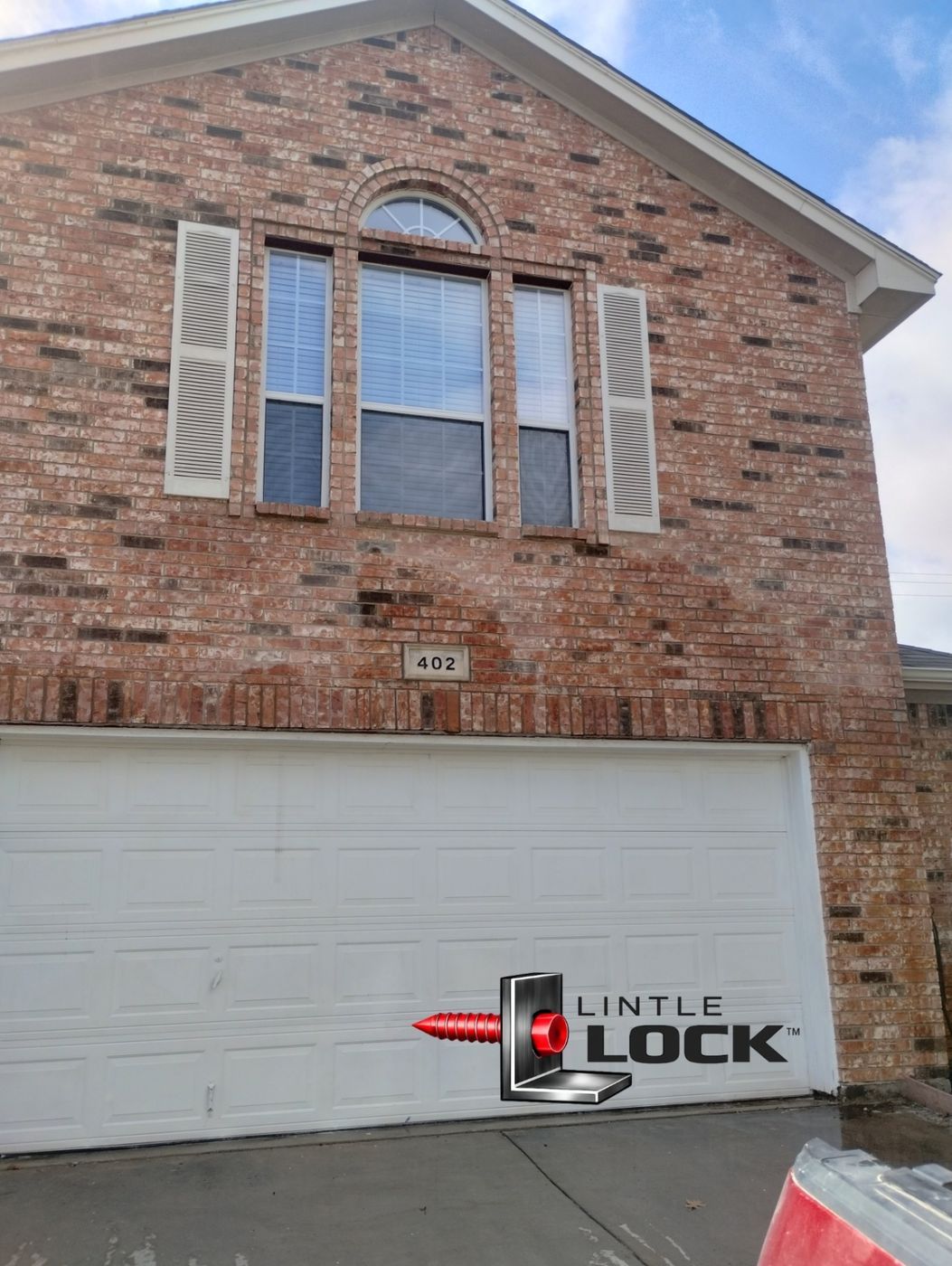
Tip: Stand 20–30 feet back and look at the mortar joint line above the door. A sag is often easier to see from a distance than up close.
Don’t do this: Don’t grind, bend, or “jack” the steel back into place without a real lintle repair plan. You can crack more brick and damage the opening.
Why LintleLOCK™ here: Sagging lintels need stabilization and correction, not patchwork. LintleLOCK™ is built for lintle repair where the lintel is moving and needs to be secured so the brickwork can be reset and restored correctly.
Cracks are not random. When a lintel sags, the masonry above it experiences tension where brick and mortar are weakest. Common crack patterns include:
Stair-step cracks rising from the corners of the garage opening
Horizontal cracks along mortar joints directly above the lintel
Corner cracking where the opening concentrates stress
These cracks usually start small: hairline mortar fractures: then become separations you can catch a fingernail in.
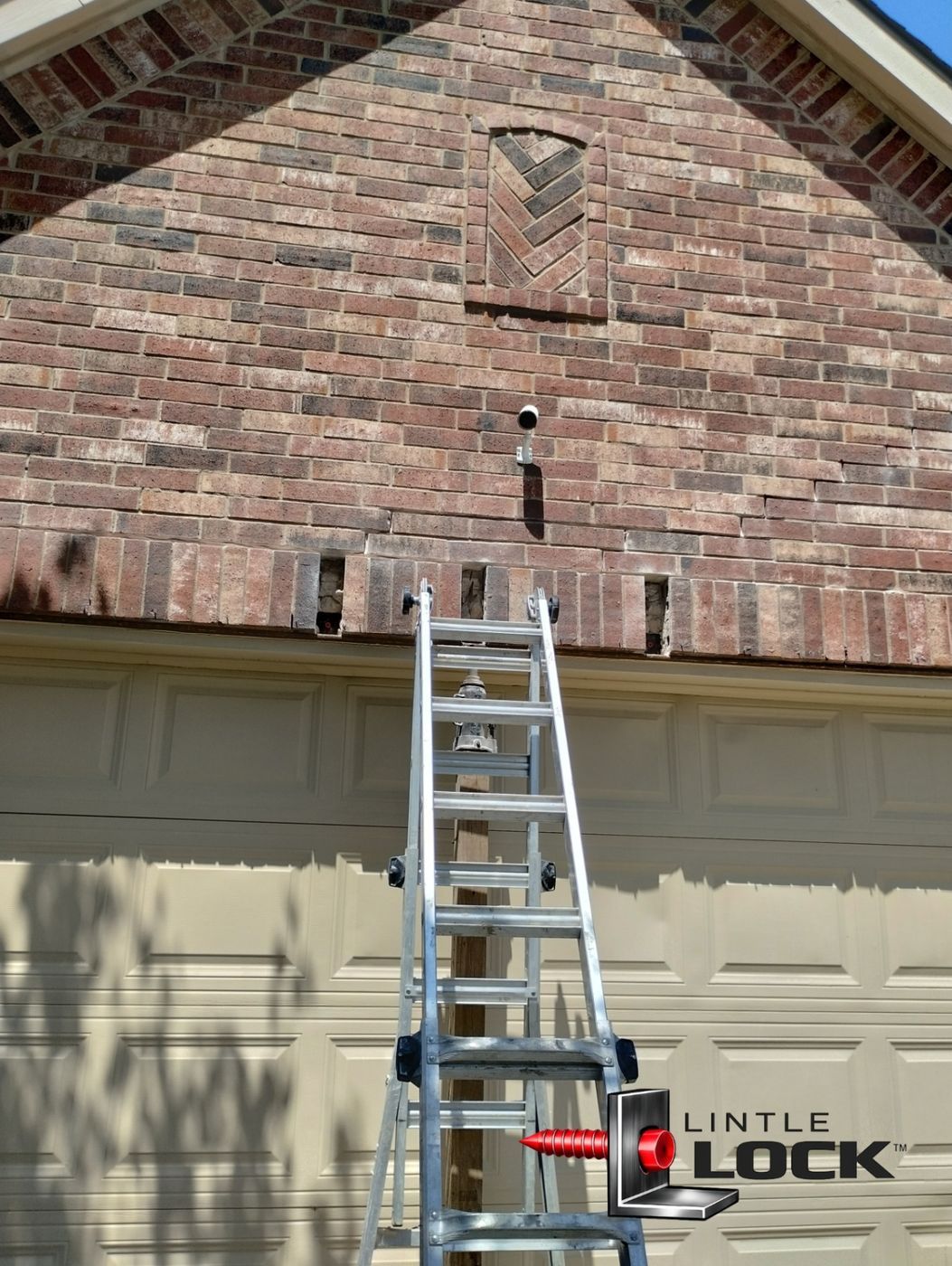
Caution: Don’t confuse lintel-related cracking with general brick veneer settling. If cracks are concentrated above the garage opening, lintle repair should move to the top of your list.
Practical measurement: If a crack opens beyond 1/8 inch, treat it as urgent. At 1/4 inch, you’re typically beyond simple tuckpointing and into structural lintle repair territory.
Reference (authority): The Brick Industry Association (BIA) technical guidance emphasizes that cracking at openings often indicates distress at supports and requires correcting the underlying cause: not just repointing.
A failing lintel often leaves evidence in the form of gaps. Look for:
A shadow line where the steel angle no longer sits tight to masonry
A gap at the top of the garage door trim that wasn’t there before
Brick that appears to be hanging rather than bearing properly
Gaps matter for two reasons:
They show the lintel has shifted or deflected
They allow water intrusion, which accelerates rust and mortar deterioration
Tip: Use a flashlight and look upward at the steel/brick interface. Rust and separation often start where you can’t easily see from standing height.
Don’t do this: Don’t fill gaps with caulk and call it done. Caulk can trap moisture against steel and make corrosion worse, increasing your future lintle repair scope.
Why LintleLOCK™ here: If you already have separation, you need lintle repair that addresses the lintel’s support and bearing: not a cosmetic seal.
You might think your problem is the door hardware, but lintel movement can rack the opening. Watch for:
The door rubbing at one side
A new gap at the top seal on one corner
The door sticking midway or closing unevenly
Unusual noises that weren’t there before (grinding, popping)
If brick shifts and the opening goes out of square, your tracks and header alignment can change. That doesn’t just affect convenience: misalignment can strain the opener and shorten door component life.
Caution: Don’t repeatedly force a binding door. You can bend tracks, burn out the opener, or worsen the distortion.
Action step: If you suspect lintle repair is needed, stop troubleshooting the door first and inspect the masonry above the opening. If the lintel is failing, you’re treating symptoms, not the cause.
Rust is the silent driver behind most steel lintel failures. Look for:
Orange/brown stains bleeding into mortar joints
Flaking steel at the exposed lintel edge
Bubbling paint on the steel
Crumbling mortar directly above the lintel
Rust expands as it forms: this “rust jacking” pushes brick upward and outward. Once that starts, lintle repair becomes time-sensitive.
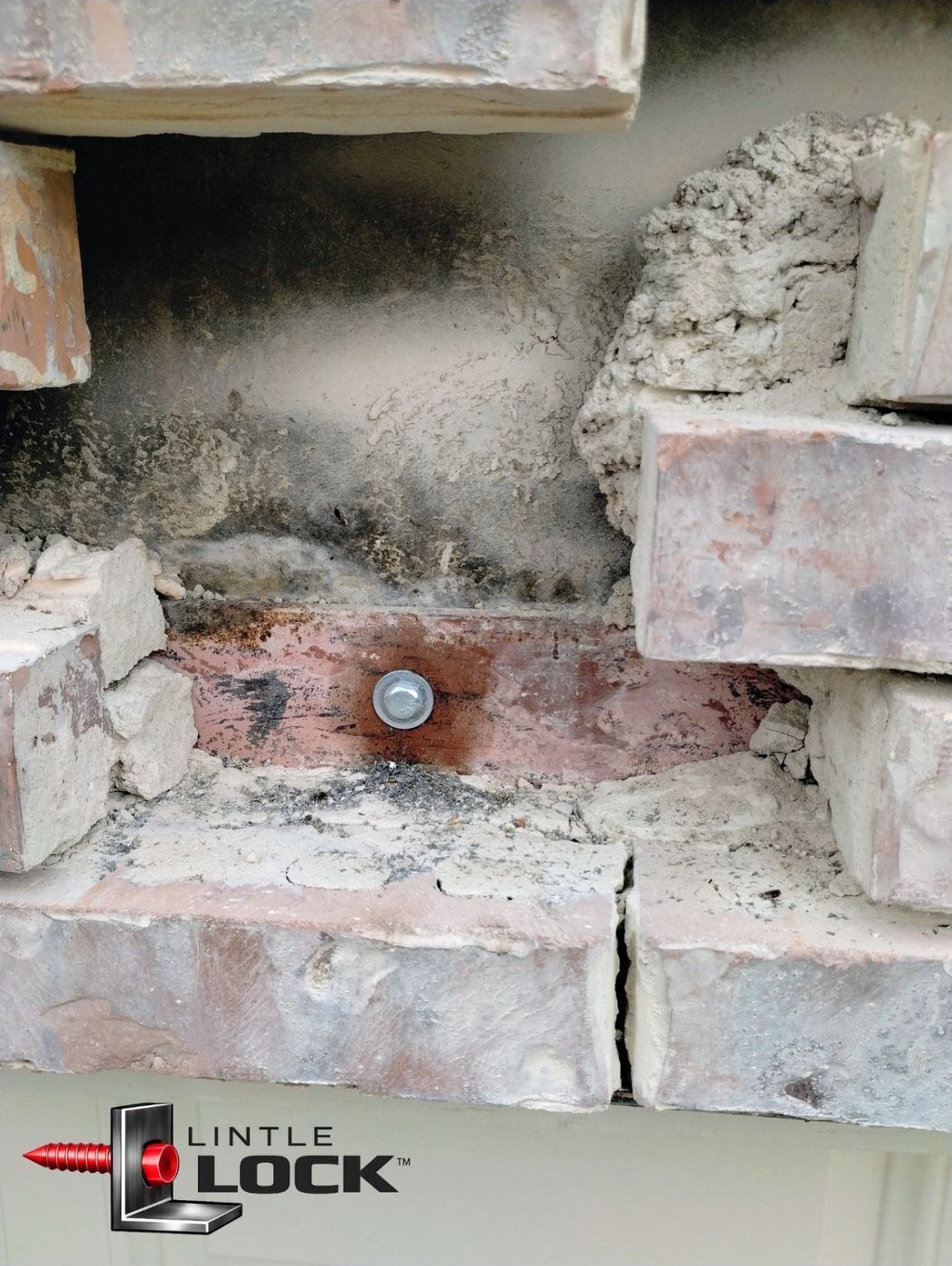
Tip: If you can scrape steel with a screwdriver and it sheds layers, the lintel has already lost section thickness. That’s not a paint issue: that’s lintle repair.
Reference (authority): Corrosion-related section loss is a well-documented failure mode in structural steel. Once steel thickness is reduced, stiffness drops quickly, increasing deflection and cracking risk.
Most lintle repair calls we get in DFW trace back to a short list of causes:
No effective flashing or weep path over the steel
Water trapped against steel from paint/caulk failures
Incorrect end bearing (lintel not seated adequately on both sides)
Undersized steel angle for the span/load
Aging mortar that can’t distribute load evenly
Poor drainage at the driveway/garage interface causing splashback
Practical rule: Openings wider than 16 feet (common for double garages) are more sensitive to lintel deflection. Even small corrosion or bearing issues can create noticeable sagging.
Avoid these traps: they’re expensive:
Don’t repoint cracks only. Mortar repair without lintle repair is temporary at best.
Don’t replace a few bricks without correcting the sag. New bricks will crack again as the lintel continues to move.
Don’t paint over rust. You’re sealing in active corrosion.
Don’t rely on caulk as structure. It hides gaps and traps moisture.
Don’t ignore the corners. Corner cracking is a load transfer problem, not a cosmetic joint issue.
Caution: If brick has already displaced, pulling it back without stabilizing the lintel can cause additional cracking and can compromise the veneer bond in adjacent areas.
If you have lintel repair issues, you need LintleLOCK™. Standard approaches often attempt to “patch and paint” or replace steel without addressing why it moved and how to keep it from moving again.
A professional lintle repair using LintleLOCK™ focuses on:
Stabilizing the lintel so it stops deflecting
Correcting sag-related displacement in the brick line above the door
Rebuilding damaged masonry with matched brick and mortar
Reducing future moisture intrusion so rust doesn’t restart the cycle
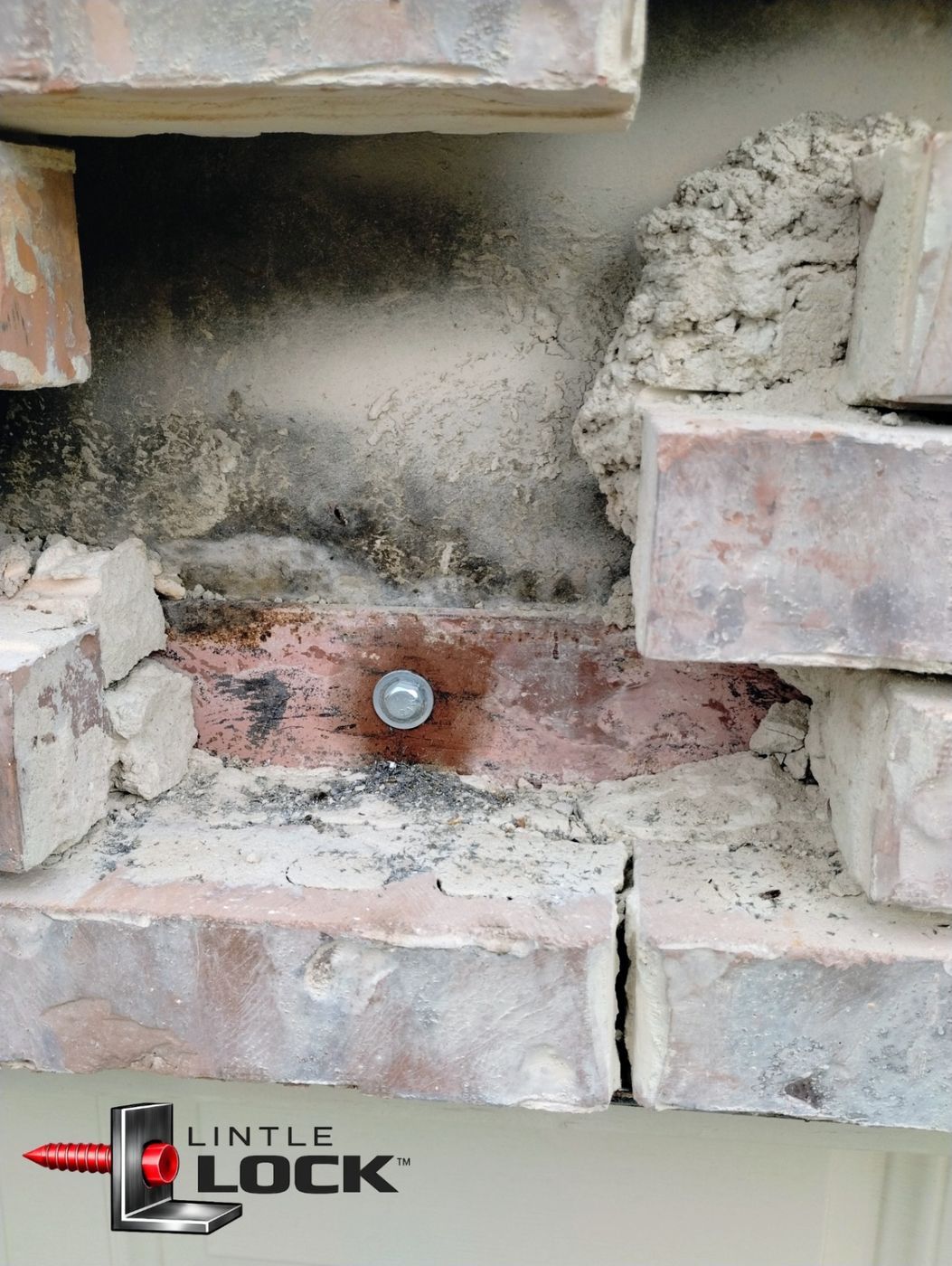
Tip: Ask your contractor how they will keep the lintel from sagging again: not just how they’ll make the crack look better. If the answer is paint and mortar, you’re not getting real lintle repair.
For a deeper look at this specific problem, review our service page on sagging garage openings: https://www.championbrickrepair.com/sagging-garage-lintel
Treat lintle repair as urgent if any of the following are true:
You see active sag (the “smile”) and new cracks forming
Brick has shifted outward above the garage opening
Cracks are wider than 1/8 inch or growing month-to-month
Your garage door is binding or misaligned
Rust is visible and flaking, not just surface discoloration
Water is getting in (stains on interior framing/drywall near the garage header)
Caution: If you can see daylight through a separation above the door, stop delaying. Water intrusion plus steel corrosion is a fast track to major lintle repair.
If you’re seeing one or more of these signs, don’t wait for the brick to “settle.” It won’t. It will move more.
Get a lintle repair assessment and learn whether LintleLOCK™ is the right fix for your garage opening.
Start here: http://lintlerepair.com
If we’ve helped you before, leave a quick review here: https://g.page/r/CWX03ZFdqAk6EBE/review
Learn more about our masonry services: https://www.championbrickrepair.com/services
Champion Brick Repair is a division of Whitestone Construction, Hamilton, Texas, and is not affiliated with any other companies using similar names.
Cracks are ugly — let Champion Brick Repair fix them right, with mortar matched to your home and a lifetime warranty.