July 3, 2026 · By Abraham Wix-Expert
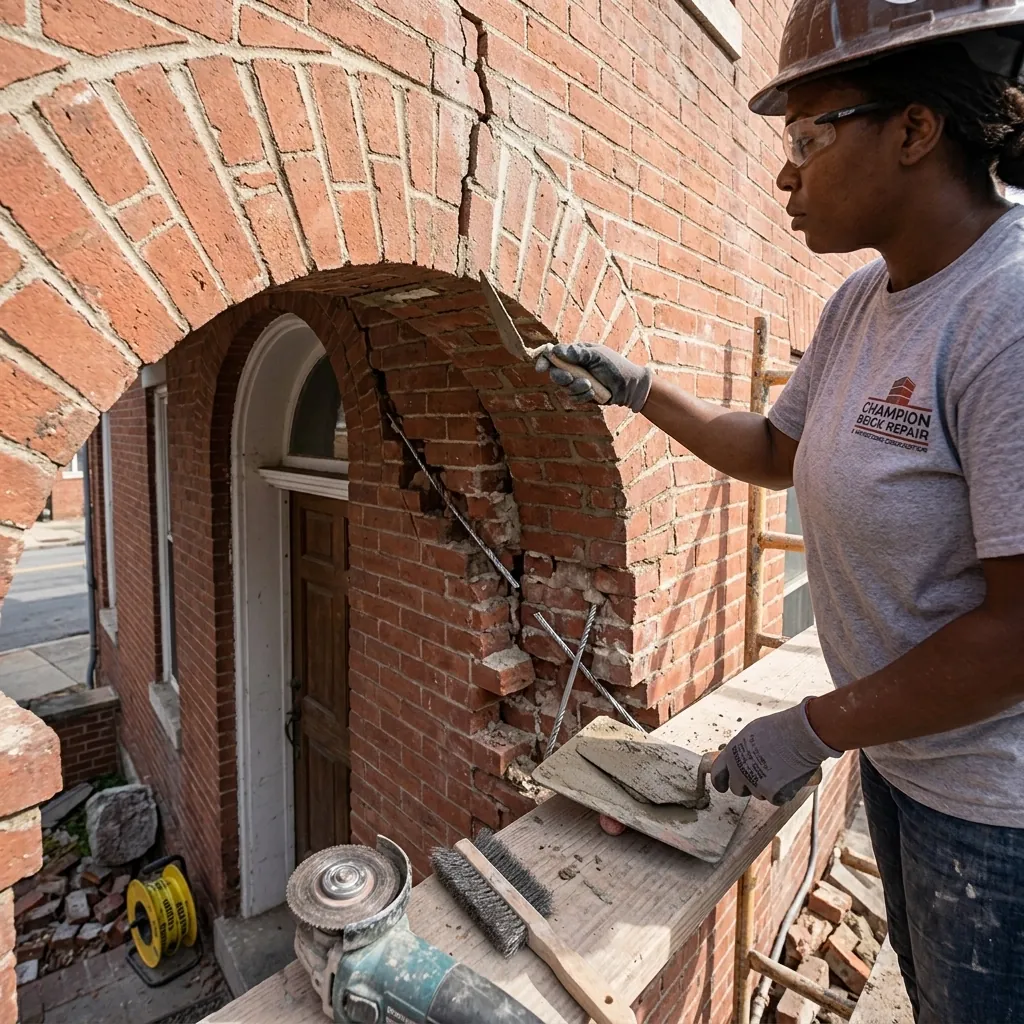
If you are looking at a crack in your brick arch or a sagging garage header, you’ve probably heard a dozen different theories. "It’s just settlement," says the general contractor. "The steel is rusty," says the handyman. "The mortar is old," says the neighbor.
At LintelRepair.com, we aren’t here to give you "theories." We are here to give you the Engineering Truth™.
When a brick arch begins to fail, or a long span over a double garage door starts to dip, the primary culprit isn't just vertical gravity or "rust." The real mechanical failure is something much more insidious: Torsional Twisting.
Understanding why your masonry is failing requires a dive into the physics of rotational forces. If you don't address the rotation, you aren't fixing the problem, you're just putting a band-aid on a structural wound.
In standard construction, a steel lintel (the L-shaped angle iron) is placed across an opening to support the weight of the bricks above it. In a perfect world, the weight of those bricks would press straight down onto the center of the steel.
But we don't live in a perfect world.
The weight of the masonry is often "eccentric." This means the center of gravity of the brickwork is not perfectly aligned with the vertical leg of the steel lintel. This offset creates a moment arm. In engineering terms, a force applied at a distance from a pivot point creates torque.
This torque causes Rotational Lintel Failure. Instead of the steel simply bending downward (deflection), it begins to twist outward. As the steel rotates, the "seat" that the bricks rest on tilts. Once that angle changes even a few degrees, the bricks lose their structural bond, the mortar cracks, and the entire arch begins to slide and sag.
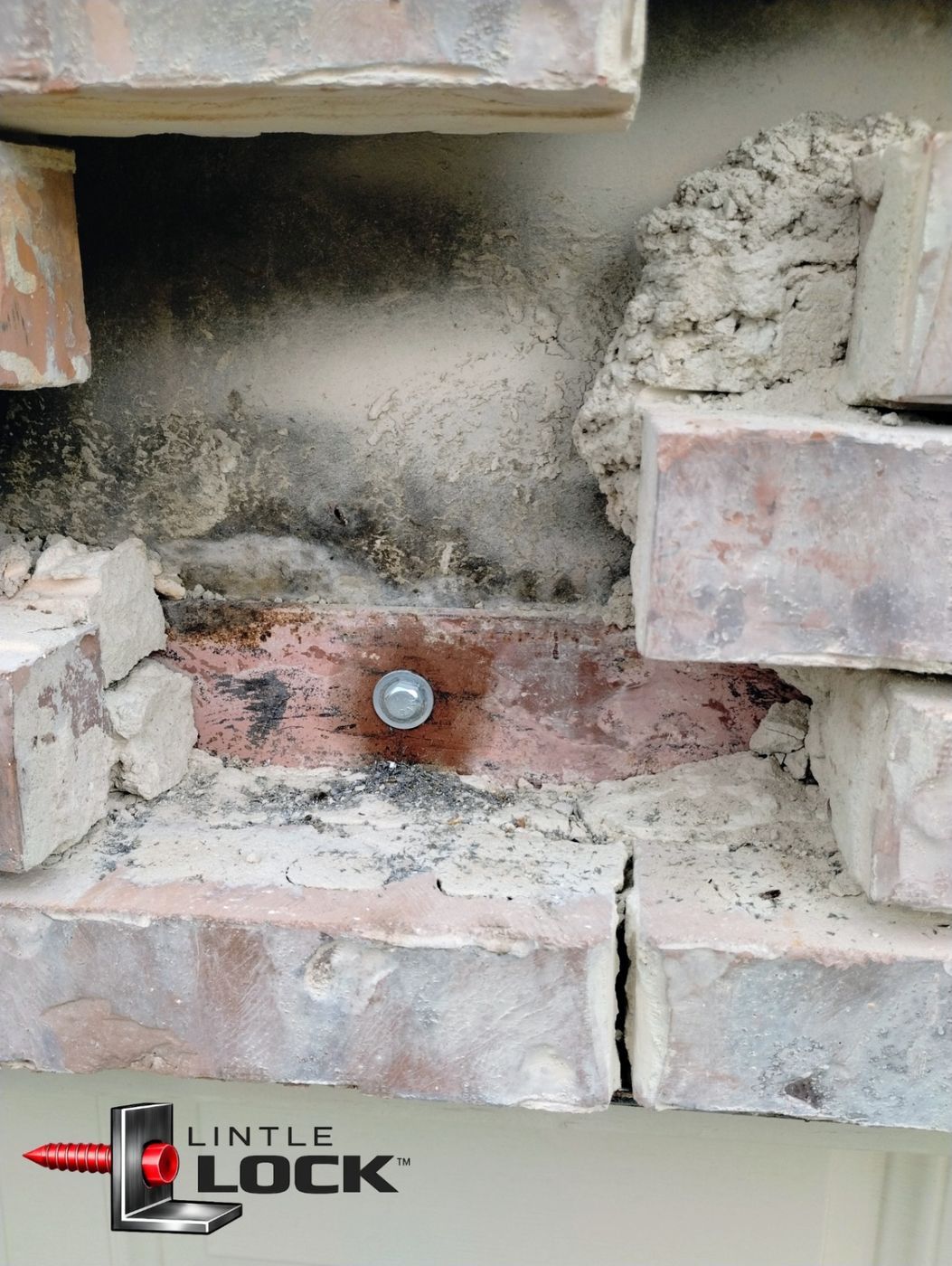
Most companies offering "brick arch repair in Dallas" or "lintel repair near me" approach the problem by replacing the steel with a larger piece of angle iron or simply repointing the mortar.
Here is the Engineering Truth™: A bigger piece of steel doesn't stop the physics of rotation.
If you install a new, larger lintel without addressing the torsional twisting mechanism, the same eccentric loading will eventually cause that new steel to rotate as well. Furthermore, simply "tucking" or repointing the cracks is purely cosmetic. You are filling a gap that was created by a moving structural element. If the element is still rotating, your new mortar will crack within a season.
Caution: Avoid contractors who suggest "strapping" the brick or using basic expansion bolts. These methods do not provide the mechanical leverage required to counter torsional force.
Arches are special. They are designed to transfer vertical loads into horizontal thrust. This is why you see large "buttresses" on old cathedrals; they are holding the walls in so the arch doesn't push them out.
However, in modern residential construction, arches are often "decorative" and backed by a hidden steel lintel. When that lintel experiences torsional twisting, the arch loses its "springing point." The bricks at the peak of the arch are no longer held in compression; they begin to drop because the base they were sitting on has rotated away from them.
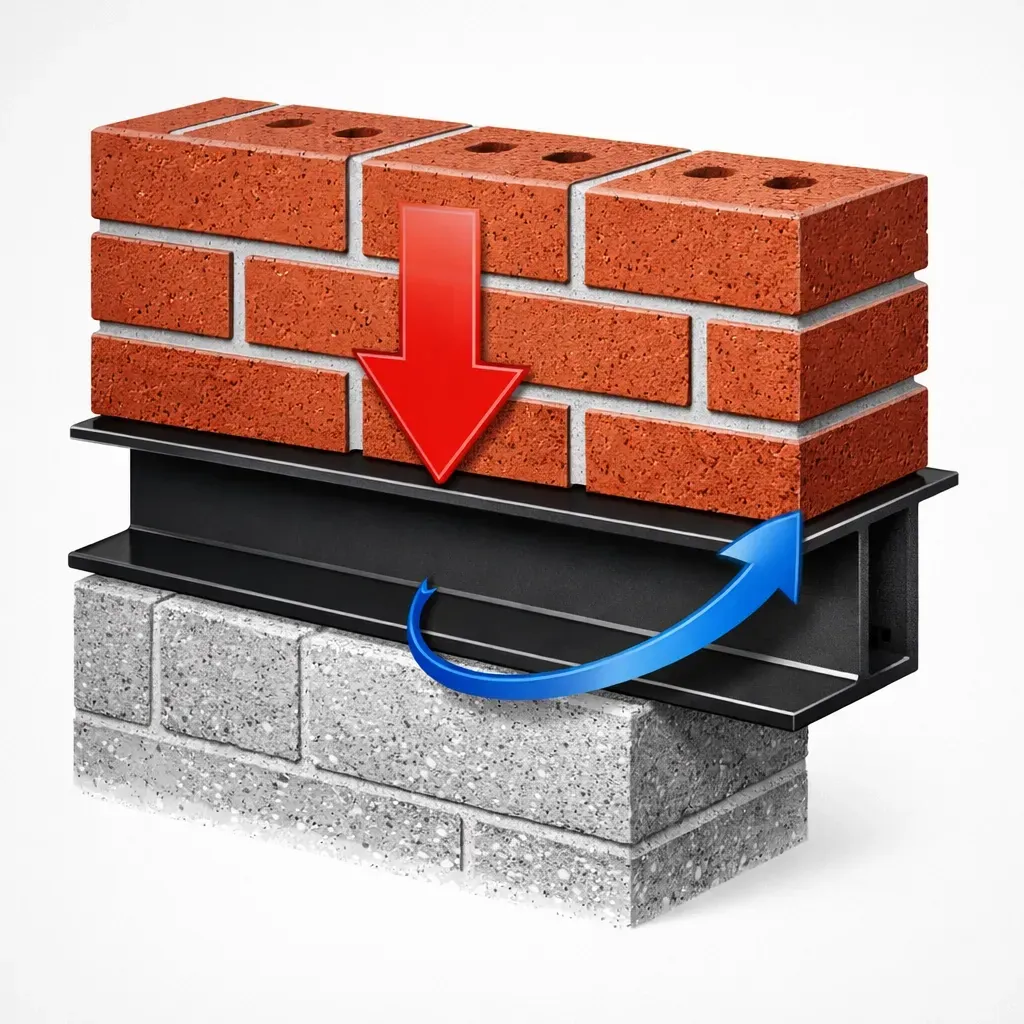
Caption: A technical diagram illustrating how eccentric loading creates a rotational moment on a standard L-lintel, leading to structural instability.
This is where the LintleLOCK™ System changes the game. We recognized years ago that the industry was failing homeowners by ignoring rotation. We developed a patented system specifically designed to address and reverse torsional twisting.
LintleLOCK™ is the only permanent, patented system for sagging lintels. It doesn't just sit under the brick; it engages with the structural framing and the lintel itself to create a rigid, non-rotational assembly.
Direct Engagement: The system attaches to the structural headers of the home.
Rotation Reversal: Using mechanical leverage, LintleLOCK™ can often pull a sagging, twisted lintel back toward its original horizontal plane.
Permanent Stabilization: Once the rotation is corrected, the system "locks" the lintel in place. It can no longer twist, meaning the masonry above is finally supported by a stable, level surface.
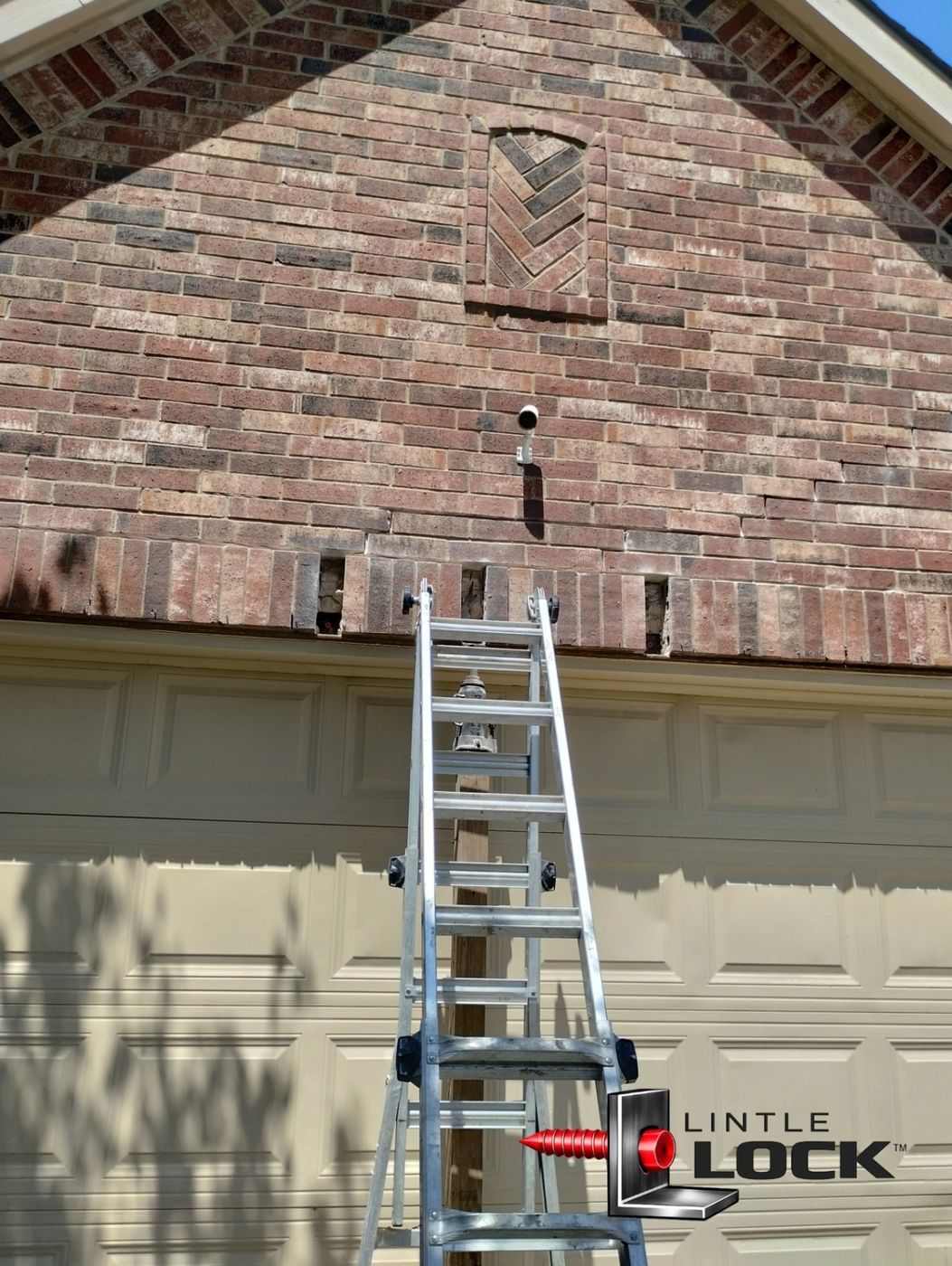
In North Texas, our soil moves constantly, which puts extra stress on masonry openings. If you have a sagging brick repair project, you need more than a mason; you need a solution backed by engineering logic.
The LintleLOCK™ system comes with a Lifetime Warranty. We provide this because the physics behind the system are sound. By neutralizing the torsional force, we eliminate the cause of the failure, not just the symptom.
Patented Technology: You won't find this system anywhere else. It is a unique solution to a universal problem.
No Total Tear-Downs: In many cases, we can stabilize and correct the lintel without having to remove and replace every single brick, saving you thousands in labor and material costs.
Engineering Authorized: Our methods align with the principles found in our technical manuals and white papers regarding rotational failure.
Precision Matching: As part of our comprehensive approach, we ensure that any mortar repair uses the exact match for your existing home, maintaining the aesthetic value of your property.
How do you know if your home is suffering from torsional twisting? Look for these specific symptoms:
The "Step" Crack: Cracks that follow the mortar joints in a stair-step pattern above the corners of a garage door or window.
The "Forward Lean": If you look up at your lintel from directly underneath, does the outer edge of the steel seem lower than the inner edge? That is rotation.
Cracked Soldier Bricks: In an arch, if the vertical bricks (soldiers) are separating at the top or bottom, the arch is losing its compression due to base rotation.
Door Interference: If your garage door is starting to rub against the header or the weather stripping is being crushed unevenly, the header is likely sagging and twisting.
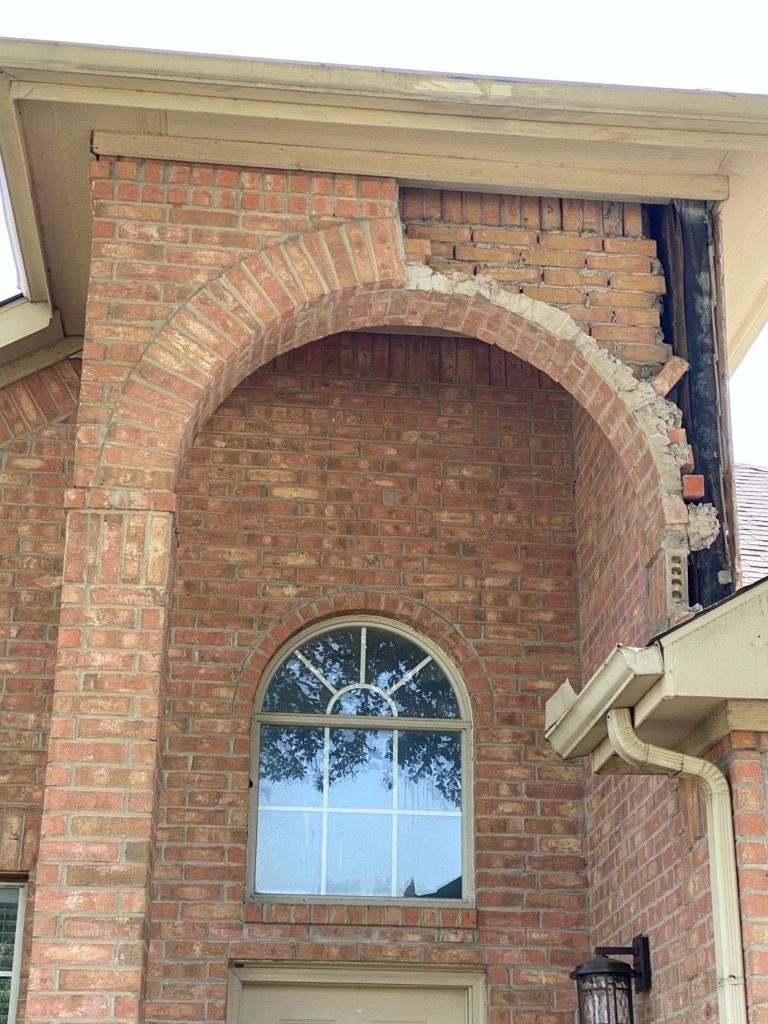
A sagging lintel or cracking arch is a progressive problem. Every time the temperature changes, the steel expands and contracts, worsening the twist. Eventually, the friction holding the bricks in place will fail entirely, leading to a dangerous and expensive collapse.
Tip: If you see a crack, measure it. If it’s wider than 1/8th of an inch, the structural integrity of the opening is already compromised.
Don't settle for a "patch job." Demand the Engineering Truth™. Use the link below to get started with a professional assessment of your home's structural health.
Click here for a quick and easy free online estimate
For immediate assistance or to speak with one of our experts about LintleLOCK™ technology, call the LintelRepair.com hotline at (817) 523-1540.
Champion Brick Repair & Whitestone Construction are BBB Accredited Businesses. This accreditation reflects our commitment to the BBB Code of Business Practices and our dedication to providing honest, high-quality structural repairs to our community. Click for review to see why we are the top-rated specialists for sagging brick repair and arch restoration.
Administrative Note: Champion Brick Repair is a division of Whitestone Construction, Hamilton, Texas, and is not affiliated with any other companies using similar names.
For general masonry services, insurance-backed repairs, chimneys, and firebox restoration, please contact Champion Brick Repair & Whitestone Construction at (817) 523-1540 or visit www.championbrickrepair.com. For all matters regarding sagging garage lintels and the LintleLOCK™ system, please refer to LintelRepair.com or call (817) 523-1540.
Cracks are ugly — let Champion Brick Repair fix them right, with mortar matched to your home and a lifetime warranty.