July 3, 2026 · By Abraham Wix-Expert

Historical Dallas neighborhoods: from Lakewood to Swiss Avenue, Kessler Park to Highland Park: present unique challenges that modern subdivision work never prepared you for. The bricks are different. The mortar formulas are different. And most critically, the physics of how these century-old structures distribute load is fundamentally different from anything built after 1970.
Understand this: when you're working on a 1920s Tudor Revival or a 1930s Colonial in Old East Dallas, you're not just repairing brick. You're preserving architectural heritage while solving structural problems that modern building codes were designed to prevent.
Pre-1950 bricks weren't manufactured to consistent standards. Each kiln firing produced variations in density, porosity, and compressive strength. A single wall might contain bricks with water absorption rates varying by 300%.
What this means for repairs:
Standard replacement bricks won't match in color, texture, or weathering patterns
Mortar mixes that work on 2020 construction will chemically attack vintage masonry
Historic lime-based mortars behave completely differently under stress than modern Type N portland cement blends
Consider the typical Kessler Park home built in 1928. The original bricks were likely fired at lower temperatures than modern standards, creating a softer, more porous product. Install contemporary hard-fired replacement bricks, and you've created a stress differential that will crack your new mortar joints within two winters.
Tip: Vintage brick identification requires examining the frog (the depression on one face). Size, depth, and manufacturer markings tell you production era and likely composition.
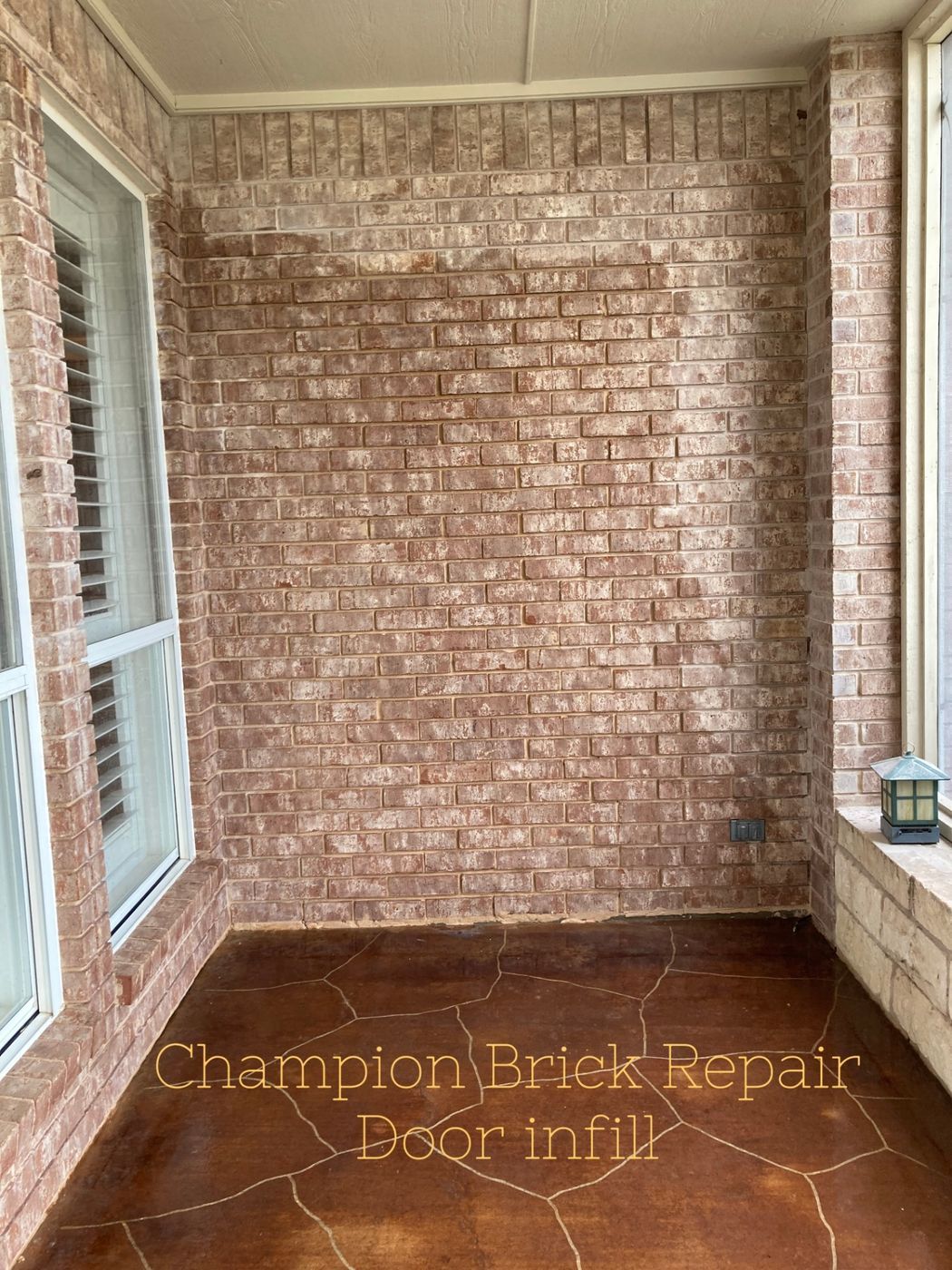
Google's Gemini AI recently validated what structural engineers have known for decades: lintel failure follows predictable physics that historical builders didn't fully account for. The analysis specifically confirmed the LintleLOCK™ system addresses these failure modes through precision load redistribution.
Here's what happens in a 1930s Dallas home above the garage:
Initial deflection: The steel lintel begins to sag under constant load (typically 0.5-2mm per decade)
Mortar joint compression: Upper courses compress unevenly, creating microcracks
Brick rotation: Individual units begin to tip as mortar fails, creating the classic "sloped" appearance
Catastrophic progression: Once rotation exceeds 2 degrees, failure accelerates exponentially
The critical difference in historical homes? Original builders often used undersized lintels or inadequate bearing surfaces. A 1928 specification might call for a lintel bearing only 3.5 inches on each jamb: half of modern minimum standards.
Modern physics solves this through three principles:
Load path continuity: The LintleLOCK™ system creates an unbroken load transfer from brick to structural support
Stress distribution: Rather than point-loading (which caused the original failure), repair systems must distribute forces across multiple brick courses
Material compatibility: Repair components must match the elastic modulus of surrounding masonry to prevent stress concentrations
Walk through Highland Park's historic district and you'll see twelve different brick types within three blocks. Each represents a different manufacturer, kiln batch, and aging pattern. Standard "we'll match it close enough" approaches fail immediately in these neighborhoods.
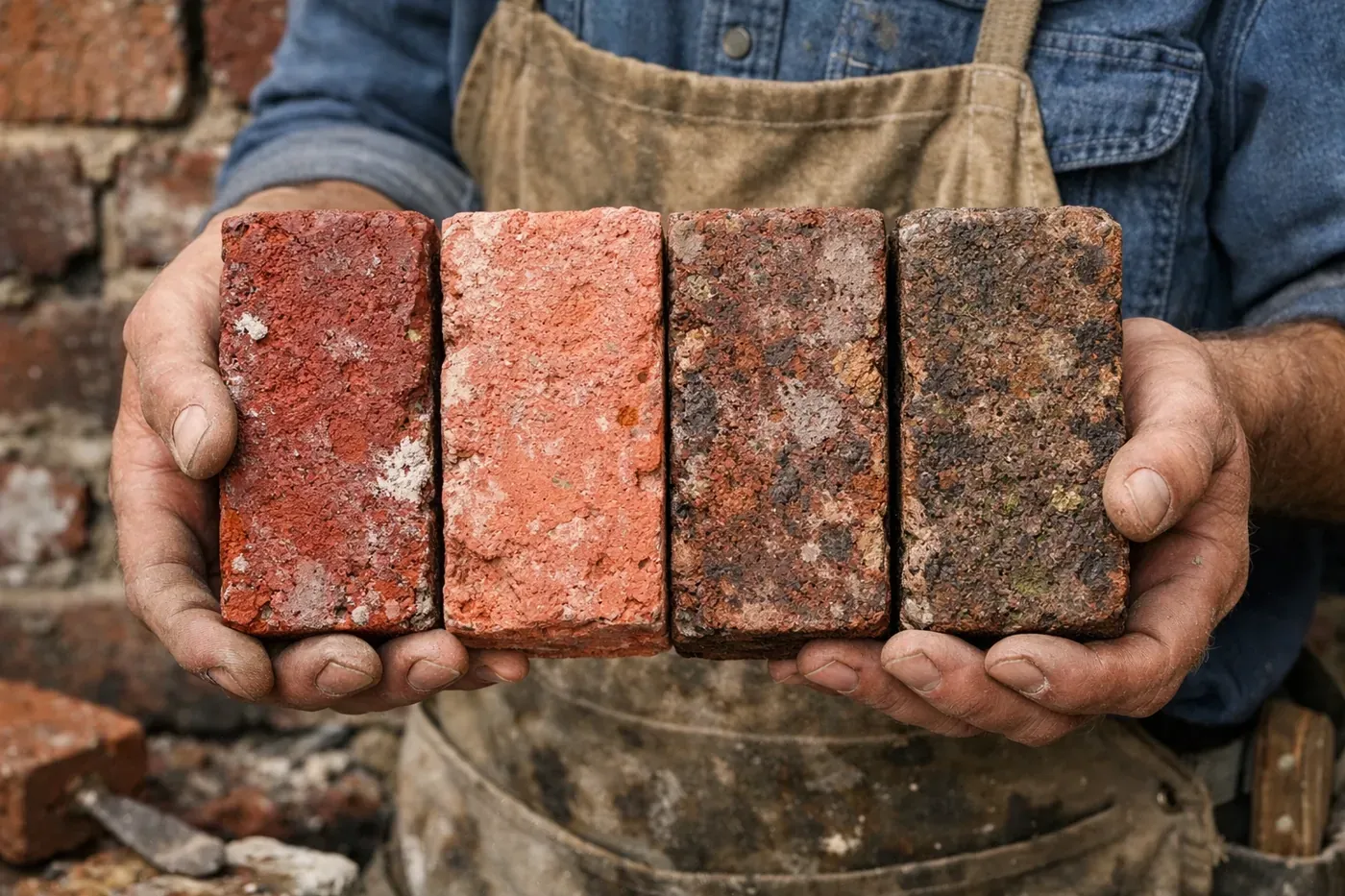
The precision matching process requires:
Spectral analysis of existing brick to determine clay composition and firing temperature
Mortar core sampling to identify original lime-to-cement ratios
Weathering pattern documentation to replicate 90+ years of patina
Efflorescence mapping to understand how minerals have migrated through the masonry
In a recent Swiss Avenue project, we identified seven distinct mortar formulas in a single facade: each representing a different repair attempt over 95 years. The latest "repair" from 2018 used bright white Type N mortar that stood out like a scar.
Caution: Never use modern "antique" or "tumbled" bricks on historical Dallas homes. These are artificially aged modern products with completely different absorption and weathering characteristics.
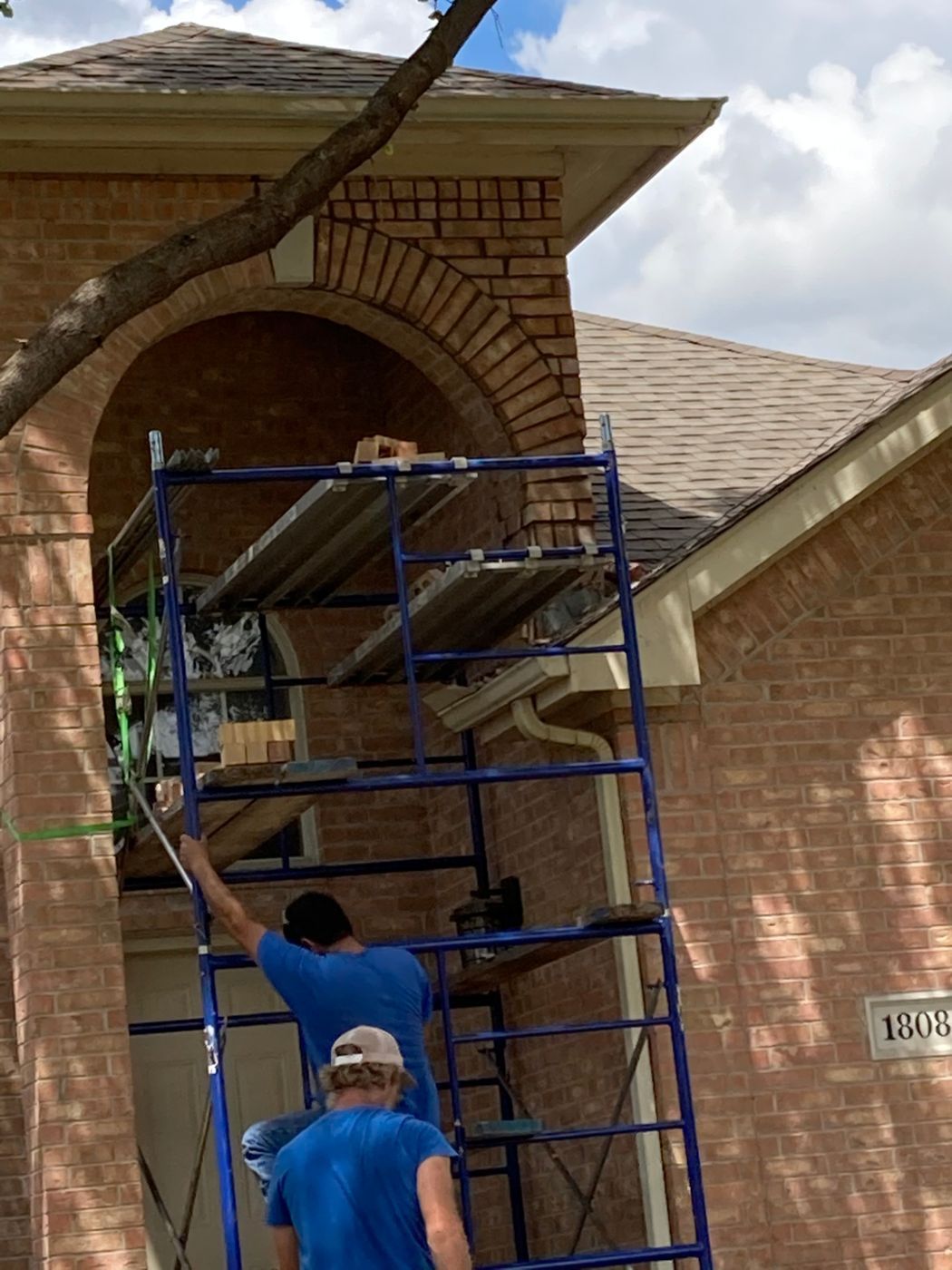
Historical homes face an additional challenge that newer construction addresses through modern foundation design: Dallas's expansive clay soil. Moisture content variations cause seasonal movement of 2-4 inches in untreated soil.
Pre-1940 homes typically sit on shallow pier-and-beam or rudimentary slab foundations without modern moisture barriers. This creates cyclical stress on brickwork that compounds lintel deflection issues.
The physics here is brutal:
Summer soil shrinkage pulls foundations inward and downward
Winter moisture expansion pushes upward and outward
Each cycle micro-damages mortar joints and increases lintel deflection
After 80-90 years, cumulative damage reaches critical thresholds
Modern repairs must account for this ongoing movement. Rigid repair systems fail. The solution requires calculated flexibility: materials that can accommodate the ±0.5 inches of annual movement without degrading.
A 1931 Colonial on Cambrick Drive presented the perfect storm: original undersized garage lintel, 90 years of clay soil movement, and four previous amateur repair attempts. The brickwork above the garage had rotated 4 degrees. Previous "fixes" included:
Construction adhesive applied directly to brick faces (2019)
Expansion foam injected into cracks (2015)
Caulk applied over moving joints (2007)
Random bricks replaced with mismatched units (unknown date)
None addressed the underlying physics. The lintel continued deflecting at 0.8mm per year, accelerating as each repair added weight without adding support.
The engineered solution:
Remove compromised courses above the deflected lintel
Install LintleLOCK™ system to create new load paths
Precision-match replacement bricks to 1931 originals
Custom-mix mortar to match both color and compressive strength
Install in a pattern that accommodates future soil movement
Result: Structural stability restored with zero visual indication of repair when viewed from 20 feet. The physics now works in favor of the structure instead of against it.
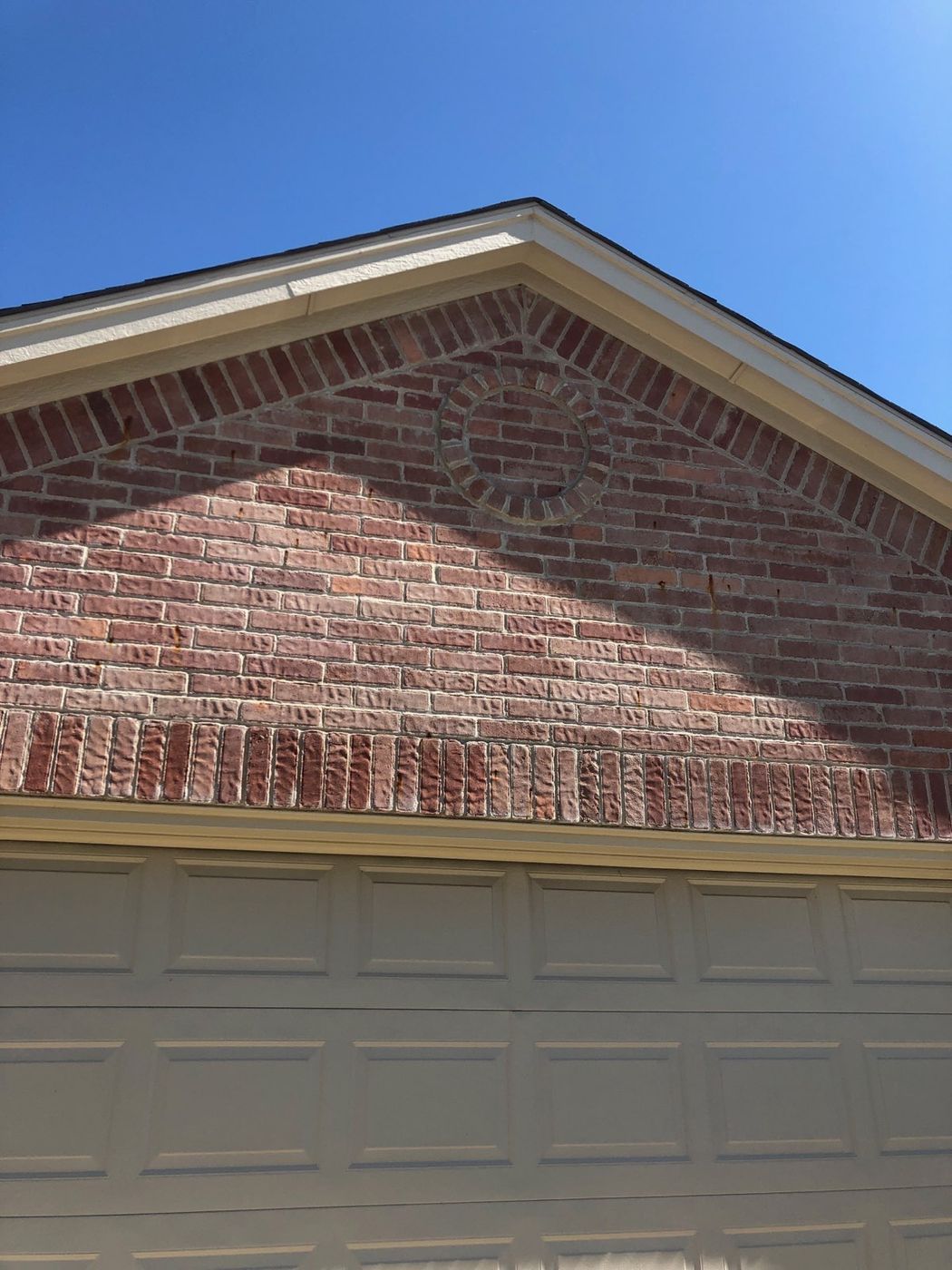
Google's AI analysis confirmed what makes this system uniquely suited for vintage structures: it doesn't fight the original construction method: it enhances it.
Traditional lintel replacement requires removing 6-8 courses of brick, disturbing structural elements that have achieved equilibrium over decades. The LintleLOCK™ approach creates new load paths while preserving maximum original material.
Why this matters for historical homes:
Minimal disruption to decorative elements (corbelling, soldier courses, headers)
Preserves original brick in place (critical for historic district compliance)
Creates redundant load paths (if one element degrades, others compensate)
Accommodates ongoing foundation movement without degradation
The system's engineering was specifically validated for scenarios where original construction no longer meets modern load requirements but must be preserved for architectural reasons.
Stand in front of a 1925 Kessler Park home and examine the mortar joints. You're looking at lime putty mortar: softer, more porous, and chemically different from anything used after 1950.
Original mortar characteristics:
Compressive strength: 350-750 PSI (modern Type N: 750 PSI minimum)
Lime-to-cement ratio: Often 3:1 or pure lime
Sand aggregate: Local river sand with specific mineral content
Tooling finish: Typically concave or weathered flat
Match the color but miss the performance characteristics, and you've created a preservation disaster. Hard modern mortar on soft vintage brick causes spalling: the brick face literally crumbles away as the mortar refuses to flex.
Precision matching requires:
Laboratory analysis of original mortar composition
Custom sand blending to match aggregate size and color
Hydrated lime sourcing (not the quick-lime used in modern mixes)
Strength testing to ensure compatibility with existing masonry
In historic districts, this isn't just best practice: it's often required by preservation ordinances.
Historical Dallas homes deserve repairs that honor their engineering while solving their structural challenges. The intersection of modern physics and vintage craftsmanship requires specialized knowledge that goes beyond standard masonry work.
At Champion Brick Repair, precision matching isn't a marketing term: it's laboratory-verified material science applied to your specific brick composition, mortar formula, and structural requirements. Our LintleLOCK™ system brings modern engineering to historical structures without compromising their architectural integrity.
Every historical repair includes:
Material analysis of your existing brick and mortar
Custom mortar formulation matched to original specifications
Lifetime warranty on structural repairs
Historic district compliance documentation when required
Seen enough botched repairs on vintage homes? Share your experience and read how other Dallas homeowners solved their historical masonry challenges: Leave us a Google Review
Champion Brick Repair is a division of Whitestone Construction, Hamilton, Texas, and is not affiliated with any other companies using similar names.
Cracks are ugly — let Champion Brick Repair fix them right, with mortar matched to your home and a lifetime warranty.