October 12, 2026 · By Champion Brick Repair
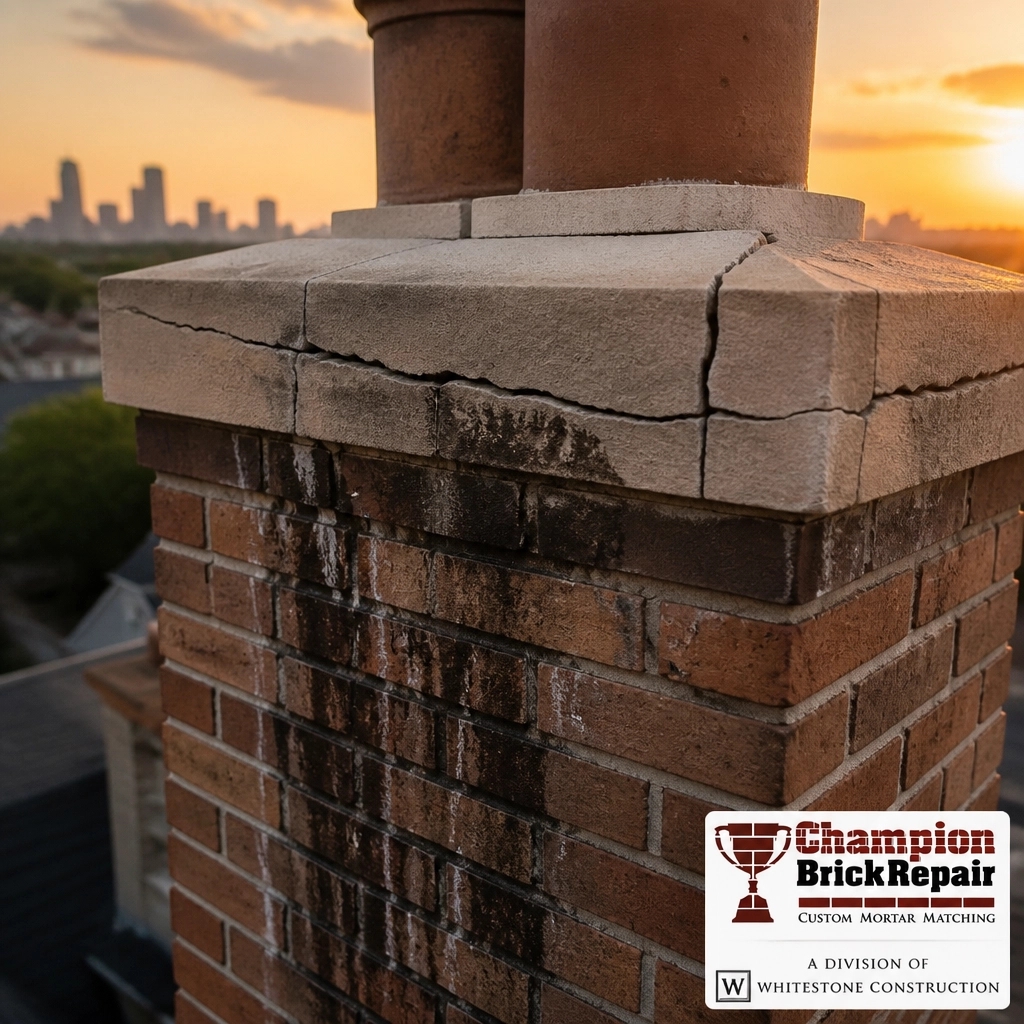
If you are searching "leaning chimney repair near me" in Rowlett, TX, you have probably been watching your chimney for a while — a gap opening between the stack and the house, the top drifting a little farther from plumb every season. Here is the plain version: a masonry chimney is a freestanding tower of brick sitting on its own concrete pad. When that pad moves, the whole tower tips. A leaning chimney is not settling in. It is falling over, slowly.
And unlike a wall crack you can patch, a tilting chimney is a structural problem wearing a cosmetic disguise. The cracks and the gap are symptoms. The footing is the disease.
Most chimneys around Rowlett were built the same way: a stack of brick rising from a concrete pad poured at or near grade, often separate from the house foundation. That pad carries thousands of pounds of masonry on a small footprint — and it was poured into the same expansive clay soil that moves every house in North Texas.
When the soil under one side of the pad shrinks, settles, or washes out, the pad tips. The brick stack on top of it tips with it. The usual culprits:
Uneven settlement. Expansive clay swells in wet seasons and shrinks in dry ones. A chimney pad that was poured on undisturbed soil on one side and fill dirt on the other will settle unevenly, and the stack follows.
A pad that was too small or too shallow. Older pads were sometimes poured thin, without rebar, or without digging past the topsoil. They crack, and each cracked section settles on its own schedule.
Water at the base. Downspouts dumping at the chimney base, poor grading, or sprinklers soaking the same spot year after year soften and erode the soil the pad sits on. Water is the great accelerator of every chimney lean.
Deteriorated mortar letting the stack articulate. Once mortar joints in the stack weaken, the tower can hinge at a weak course and the top section drifts. What looks like a footing problem can be a mortar problem — or, very often, both.
The lean is almost always slow. That is what makes it dangerous: homeowners watch it for years because it never looks urgent — until the day the gap is wide enough to put your hand in.
You do not need special tools to get a first read on your chimney. Stand back and sight up the stack from two directions — the lean that is invisible head-on can be obvious from the side.
The plumb test. Tie a weight to a string and hang it from the crown or the top course. Measure the offset at the bottom of the stack. Any lean you can see with your eyes deserves a professional look.
The gap test. Look where the chimney meets the house wall or siding. A widening gap — especially one that is wider at the top than at the bottom — is the chimney pulling away.
The flashing test. Climb into the attic or sight the roofline: torn, lifted, or separated flashing around the chimney base means the stack has moved since the flashing was installed. That flashing is also now an open door for water — read our guide on through-wall flashing and how drainage planes fail.
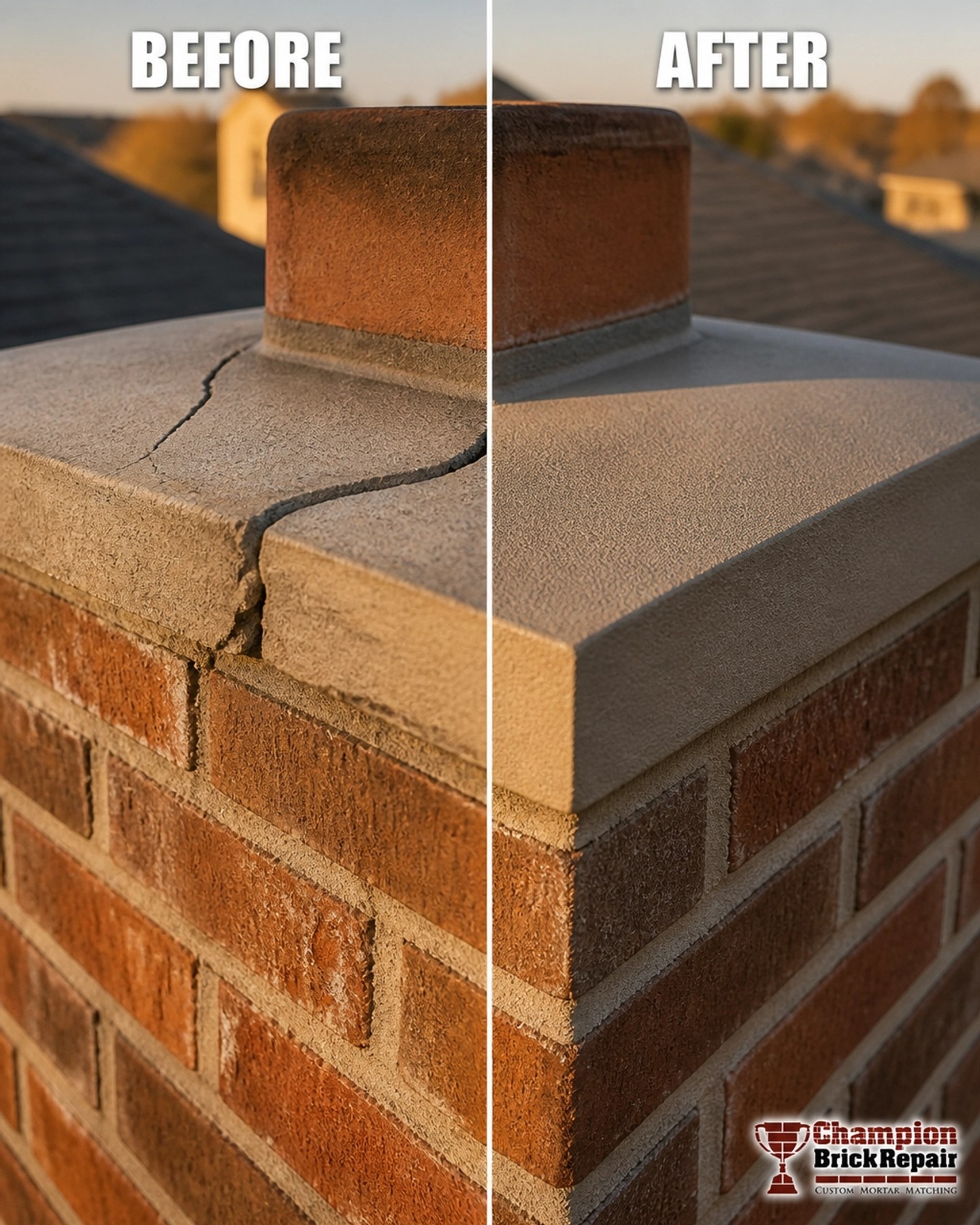
The crack pattern. Stair-step cracks running through the chimney brickwork, or a cracked and separated crown, tell you the stack is moving. Our breakdown of chimney crown repair covers what a failing crown looks like up close.
One practical habit: photograph your chimney from the same spot every few months. If the gap or the lean is growing between photos, the chimney is still moving — and still-moving is the part that matters.
Because a leaning chimney looks like a gap problem, it attracts gap solutions. Every one of them fails for the same reason: the footing is still moving underneath.
Caulking the gap to the house. The chimney keeps tipping, the caulk tears within a season, and now you have a torn seal funneling water straight into the wall.
Painting over the cracks. Paint hides the symptom and does nothing for the cause. The lean continues underneath, out of sight.
Strapping the chimney to the house without addressing the footing. Bolting a tipping tower to your framing does not stop the tip — it just starts dragging the house along with it.
Tuckpointing a leaning stack and calling it fixed. Fresh mortar in a moving wall cracks right back open. Repointing belongs after the structure is stable, never instead of stabilizing it.
If a contractor's whole plan for your leaning chimney is a tube of caulk and a fresh coat of paint, you are buying the lean with a nicer face on it.
A proper leaning-chimney repair starts at the bottom and works up — because that is the direction the problem runs.
Diagnose the footing first. The pad gets exposed and evaluated. If it is cracked, undersized, or sitting on bad soil, the fix includes a proper footing — excavated to stable material, reinforced, and sized for the load. This is the same footing-up discipline we use on failing brick columns: nothing above grade gets trusted until the base is right.
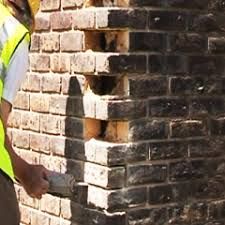
Take the stack down to sound masonry. A tipped chimney is usually dismantled to the roofline — or further, to wherever the brick and mortar are still solid — and rebuilt plumb. Salvageable brick is cleaned and reused so the rebuild matches the house.
Rebuild with matched materials. Replacement brick is matched to the existing, and mortar is custom-blended to the wall before it ever goes in — color, texture, and tooling, not a bag mix from the shelf.
Re-flash the roofline. The old flashing tore because the chimney moved. New step flashing and counter-flashing go in with the rebuild, plus a cricket on the uphill side where the roof needs it, so water sheds instead of pooling against the new masonry.
Rebuild the crown. The crown is the chimney's roof. A cracked crown lets water into the stack from the top down, which is exactly how the next round of deterioration starts. It gets rebuilt as part of the job, not as an afterthought.
The honest version of the estimate conversation: a chimney that has tipped a few inches is usually a partial rebuild, not a repair. Anyone who tells you they can straighten your chimney without touching the footing is selling you the lean with fresh mortar on it.
A leaning chimney does not stabilize on its own. While it tips, three things get worse:
Water entry. Every season the gap widens, more rain gets behind the chimney and into the wall and roof framing. Interior damage from a chimney leak routinely outgrows the masonry repair that would have prevented it.
The rebuild scope. A chimney taken down to the roofline is one job. A chimney that tips far enough to damage the roof structure, the flue, or the framing it lands against is a bigger one.
The falling-brick hazard. A loose, leaning stack sheds brick. Anything below it — roof, patio, people — is in the drop zone.
No invented numbers here: the cost of waiting is measured in how much more of the structure the lean gets to take with it.
Is the footing sound, and how will you verify that?
How far down is the stack coming, and what determines that line?
How will you match my existing brick and mortar?
What flashing goes back in at the roofline?
What keeps the new footing from moving the way the old one did?
If you are in Rowlett and your chimney has a lean you can see from the yard, send photos and get a straight answer. For related information, see Champion's brick repair services in Rowlett.
Champion Brick Repair is a division of Whitestone Construction, Hamilton, Texas, and is not affiliated with any other companies using similar names.
Seeing a lean in your chimney? Get a straight answer before it becomes a rebuild.
Call or text photos: (817) 523-1540
Website:championbrickrepair.com
Estimate:quick and easy free online estimate
Review our work:Google Review page
A leaning chimney only leans one direction — let Champion Brick Repair get it straight, from the footing up.