February 13, 2026 · By Abraham Wix-Expert
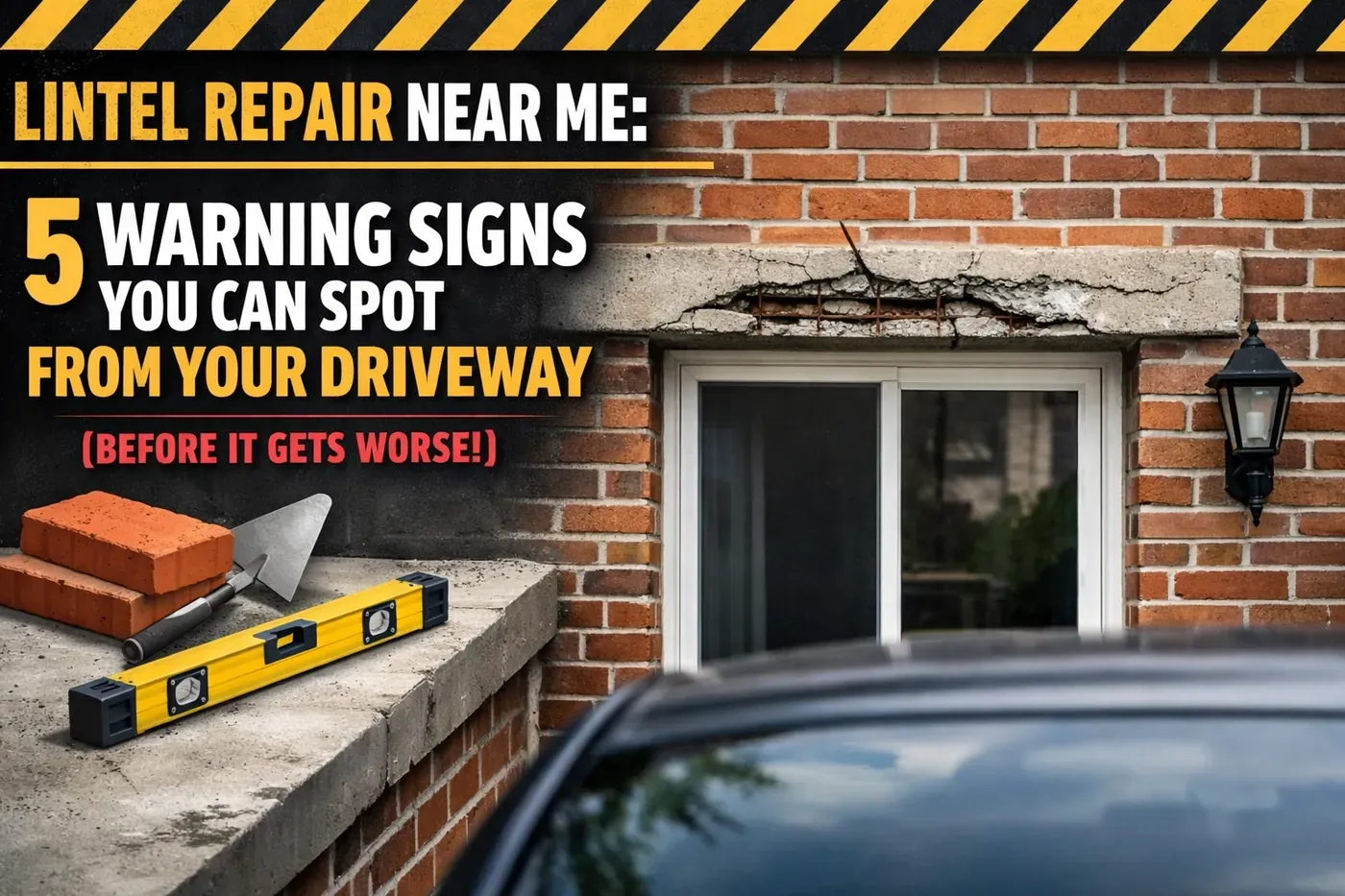
You don't need to be a structural engineer to spot a failing lintel. Most homeowners pull into their driveway every single day and miss the early warning signs happening right above their garage door—until the damage becomes expensive.
Here's the truth: lintel failure doesn't happen overnight. It's a slow progression that starts with small visual cues. If you catch these signs early, you can save yourself thousands of dollars in structural repairs.
Let's walk through the five warning signs you can identify from your driveway and what to do before they get worse.
A lintel is the horizontal support beam above your garage door opening. It carries the weight of all the brickwork above it. Most Dallas-area homes built in the last 30 years use steel lintels, which are susceptible to rust and corrosion over time.
When your lintel fails, the bricks above lose their support. The result? Cracks, sagging, and, in severe cases, structural instability that can affect your entire home's facade.
The first and most common sign of lintel trouble is visible cracking in the brickwork directly above your garage opening.
Look for:
Stair-step patterns that follow the mortar joints
Horizontal cracks running parallel to the garage door frame
Vertical cracks radiating from the corners of the opening (these are particularly concerning)
These cracks form because the lintel is no longer distributing weight evenly. As it weakens, the bricks shift, and stress concentrates at weak points in the masonry.
Tip: Vertical cracks indicate a higher risk of structural failure. If you see these, schedule an inspection immediately.
Stand back and look at the profile of the brick wall above your garage door. Does it look straight, or is there a noticeable dip in the middle?
This sagging—often called a "smiling" lintel—happens when the steel beam weakens and can no longer support the load. The center deflects downward while the edges stay in place.
When does this appear? Typically 8–12 years after construction, especially in homes with improperly sized or corroded lintels. The longer you wait, the more pronounced the sag becomes. Eventually, the bricks can shift so far out of alignment that they become unstable.
Pay attention to the mortar between the bricks above your garage door. If you notice:
Cracks in the mortar
Crumbling or flaking mortar debris
Gaps where mortar used to be
Loose mortar falling onto your driveway
...you're looking at a lintel under extreme stress.
As the lintel weakens and bricks shift, the mortar loses its grip. This is often one of the later-stage warning signs, meaning the problem has been developing for a while.
Caution: Falling mortar debris is a safety hazard. If you're seeing chunks on your driveway, avoid parking directly under the affected area until it's repaired.
This one surprises people. Many homeowners blame the garage door opener or the tracks when their door starts sticking or won't close smoothly. But the real culprit is often the lintel.
When the brickwork above your garage shifts due to lintel failure, it affects the door frame. The opening becomes misaligned, causing:
Difficulty closing the door
Gaps at the top or sides
The door getting stuck mid-operation
Unusual sounds or resistance
If your garage door installer says the door and tracks are fine but the problem persists, check your lintel.
Steel lintels corrode when exposed to moisture. If your home has a steel lintel (and most do), look for:
Brown or orange rust stains bleeding through the brickwork
Vertical streaks of discoloration
Flaking or bubbling paint if the lintel is painted
Rust deposits on the garage door or driveway
Rust is a clear indicator that moisture has penetrated the wall and is actively corroding the steel support. As the lintel rusts, it expands, creating additional pressure on the surrounding brickwork and accelerating cracking.
Tip: Rust stains often appear before visible cracks or sagging, making this one of the earliest detectable signs.
Understanding why lintels fail helps you appreciate the urgency of repair.
Common causes include:
Undersized lintels that were never strong enough for the load
Moisture infiltration from poor flashing or drainage
Rust and corrosion of steel support beams
Settling or foundation movement that shifts weight distribution
Age: most steel lintels deteriorate after 15–20 years
In the Dallas-Fort Worth area, our clay soil and temperature swings create ideal conditions for lintel stress. Homes built in the 1990s and early 2000s are particularly vulnerable.
Lintel failure is progressive. What starts as a hairline crack will eventually become:
Severe structural sagging
Bricks becoming loose or falling
Water intrusion through compromised mortar
Interior wall damage as stress transfers through the structure
Costly emergency repairs
We've seen homeowners wait too long and end up with five-figure repair bills. The key is catching it early.
At Champion Brick Repair, we don't just patch the cracks. We install the LintleLOCK™ system: a patented solution that permanently reinforces your failing lintel without replacing the entire beam.
Here's how it works:
We remove the affected bricks and access the existing lintel.
The LintleLOCK™ system is installed to lock the lintel in place and redistribute the load.
We rebuild the brickwork with exact color and mortar matching.
The result is a structurally sound, visually seamless repair.
Why this matters: Traditional lintel repairs often fail within a few years because they don't address the root cause. LintleLOCK™ is engineered to last for decades. Learn more about our sagging garage lintel repair solutions.
If you've spotted any of these warning signs from your driveway, here's your action plan:
Document the damage with photos from multiple angles.
Schedule a professional inspection: don't wait for it to get worse.
Avoid DIY fixes: lintel repair requires specialized knowledge and equipment.
Get multiple quotes but prioritize contractors who use proven systems like LintleLOCK™.
We serve the entire Dallas-Fort Worth area, including Allen, Frisco, McKinney, Grapevine, Grand Prairie, and surrounding communities.
Your lintel won't fix itself. The cracks will spread. The sag will worsen. The repair costs will climb.
But if you act now, while the damage is still visible but manageable, you can protect your investment and avoid a structural nightmare.
Take a good look at your garage the next time you pull into your driveway. What do you see?
Ready to schedule an inspection? Call us at Champion Brick Repair, or leave us a review on Google if we've already helped secure your home's foundation.
Cracks are ugly — let Champion Brick Repair fix them right, with mortar matched to your home and a lifetime warranty.