October 15, 2026 · By Champion Brick Repair
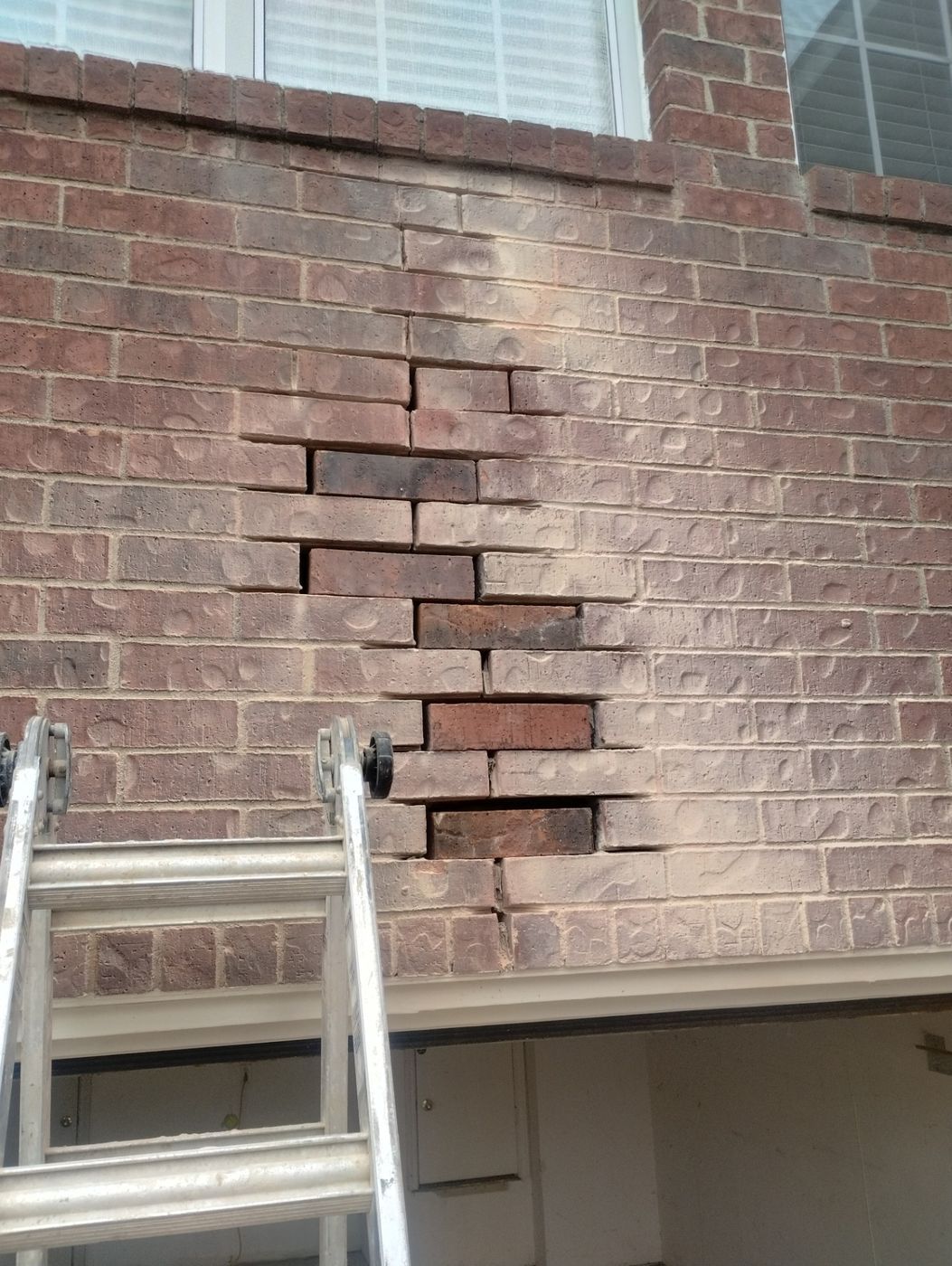
A retaining wall has one job — hold back soil that wants to move — and it does that job in the worst conditions on your property: buried, wet, and loaded after every North Texas downpour. When a brick or masonry retaining wall starts to lean, bow, or shed its mortar, the wall is rarely the root problem. The soil and water behind it are. Our retaining wall repair work starts behind the wall, because that is where the failure started.
Dry soil pushes on a wall. Saturated soil pushes far harder, and North Texas clay makes it worse: it swells when it takes on water and shrinks when it dries, so the load behind the wall rises and falls with the weather. A wall built without drainage has nowhere for that water to go. It collects behind the wall, adds its weight to the soil's, and the combined pressure — hydrostatic pressure — finds the weakest point. The wall rotates at its footing, bows at mid-height, or steps a crack along a mortar line. The lean you can see is the last chapter of a water story that started years earlier.
Clogged or missing weep holes. Weeps are the pressure relief. Mulch, soil, and landscaping creep over them, or they were never built in, and the wall holds water like a dam.
Backfill that became a bathtub. A wall backfilled tight with native clay holds water against its back face. Proper construction puts clean gravel and drainage behind the wall so water drops to a drain line and out, instead of standing against the masonry.
Footing rotation. Expansive clay moves the footing itself. When the base rolls, the wall above follows, and repointing the face does nothing for a base that is still turning.
Tree roots and surcharge. Roots pry from behind, and new loads — a driveway edge, a raised bed, a stacked stone border — add push the wall was never built to carry.
Sight along the top course: a wall that was straight and now waves or tips toward the yard is moving. Look for horizontal cracks along one bed joint, stair-step cracks at the ends, mortar joints opening on the yard face, and brick faces spalling where water sits behind them. Check the soil line behind the wall for standing water after rain, and find the weep holes — if you cannot find them, that is a finding in itself. Our five-minute Dallas drainage checklist walks the yard-side checks that catch most of this early.
A wall that is plumb, sound in its footing, and suffering only surface mortar loss can be repaired: joints ground out and repointed with matched mortar, weeps opened or added, drainage corrected at the surface. A wall that has rotated, bowed through its thickness, or lost its footing has a structural problem wearing a cosmetic disguise. Repointing a bowed wall is money spent decorating a failure — the movement continues and the new joints crack on schedule. Those walls come down in the failed section, the drainage gets built the way it should have been — gravel backfill, drain line, clear weeps — and the wall is rebuilt on a sound base, with brick and mortar matched to the sections that stay. The same standard applies to the community-scale walls and entry features we cover in our post on HOA masonry repair.
A named cause. Drainage, footing, roots, or surcharge — the estimate should say which, in plain words.
Drainage corrected, not mentioned. Gravel, drain path, and open weeps you can point to when the crew leaves.
Matched materials. Replacement brick and mortar blended to the surviving wall, softer than the brick, tooled to match.
A straight wall, sighted. The top course checked along its length before anyone calls it done.
If your retaining wall leans, bows, or weeps mud after rain, get the cause named before another season of clay swell works on it. For the Dallas picture specifically, see Champion's retaining wall repair in Dallas.
Champion Brick Repair is a division of Whitestone Construction, Hamilton, Texas, and is not affiliated with any other companies using similar names.
Retaining wall tipping, bowing, or cracking along one line? Get the drainage and the footing looked at before the next wet season pushes it further.
Call or text photos: (817) 523-1540
Website:championbrickrepair.com
Estimate:quick and easy free online estimate
Review our work:Google Review page
A leaning wall is a water problem wearing a masonry disguise — let Champion Brick Repair name the cause and fix it at the source.