October 10, 2026 · By Champion Brick Repair
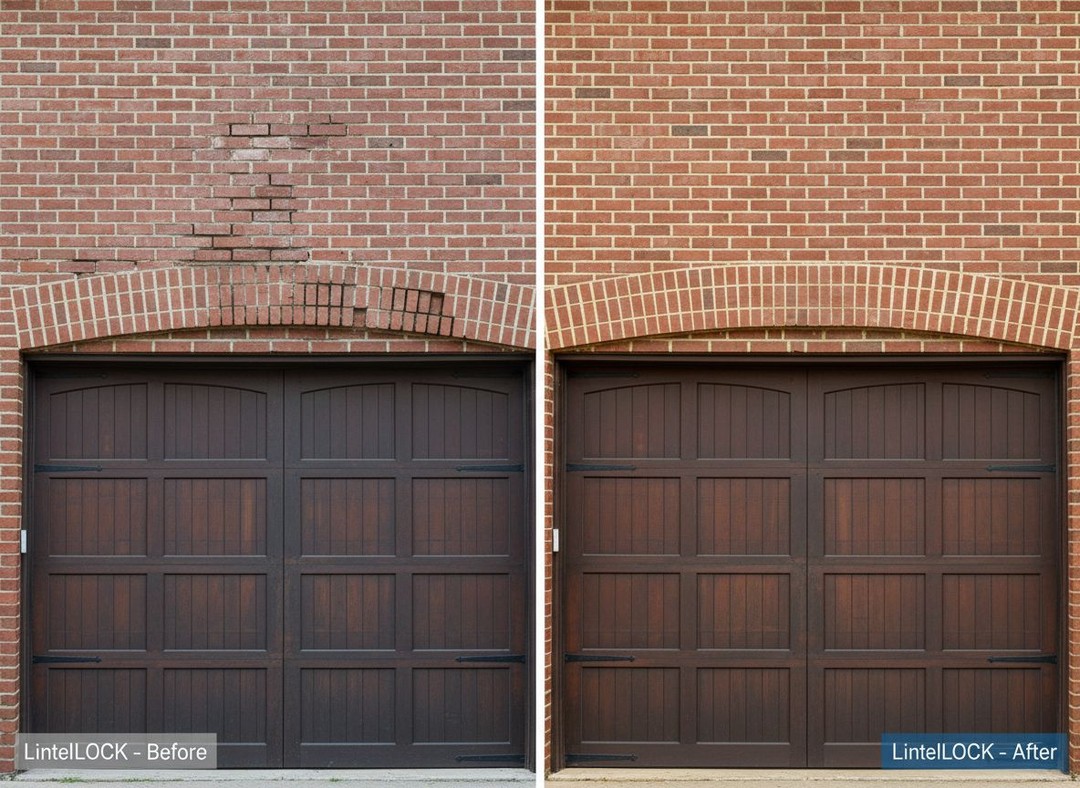
If you own a brick home in Dallas and you have noticed a crack running above your garage door, the crack is not really the problem. The crack is a symptom. The problem is hiding right underneath it: a rusting steel lintel that is slowly growing and shoving your brick apart from the inside.
Most of the lintel work we get called out for in Dallas starts exactly this way. The homeowner sees the crack, assumes it is just a crack, and wants it patched. Here is the straight version of what is actually happening up there — and why patching it is the one thing you should not do.
Above every garage door and every window on a brick veneer home, there is a steel angle iron — the lintel — carrying the weight of the brick above it. Steel is strong, but it has one weakness: rust. And rust is not just discoloration. Rust takes up significantly more space than the steel it came from.
So when water reaches that steel — and it will, through open joints, failed caulk, or a crack somebody already "fixed" on the surface — the steel starts rusting and expanding. That expansion bows the lintel outward and pushes the brick above it upward. The brick has nowhere to go, so the mortar joints let go, and you get the classic stair-step crack climbing out of each corner of the opening.
Now the crack lets in even more water. More water hits more steel. More steel rusts and expands. The cycle feeds itself, and every season it gets a little worse. What started as a hairline in 2023 is a finger-wide step crack by 2026. We see this exact progression on Dallas garage lintels constantly.
This is the part that costs Dallas homeowners the most money: paying for a patch instead of a repair.
Caulking the crack, smearing mortar over it, or repointing the joints without touching the steel leaves the rusting lintel exactly where it was — still expanding, still pushing. Water still finds the steel. Within a season or two, the "repair" cracks right back open along the same line, sometimes worse than before, because the expansion pressure never stopped for a single day.
A patched crack over a rusting lintel is a bandage over a broken bone. The real fix starts by dealing with the steel, not the symptom.
A proper garage lintel repair in Dallas follows the same cause-first logic we use on every structural repair:
Diagnose first. The crack pattern tells the story. A horizontal crack tracking the steel line above the door, stair-steps climbing from the corners, brick displaced upward — that is lintel failure, not settlement. We also check for rust staining and dropped mortar, which confirm it.
Expose and address the steel. The failed, rusted angle gets dealt with — the expansion source removed, not buried.
Set the repair right. New support goes in with proper protection so the rust cycle cannot start over. This is where a named system earns its keep: LintelLOCK is our engineered approach to this repair, versus the generic "cut out the old angle, slide in new coated steel, hope it holds" swap that most outfits sell as a repair.
Flash it. Proper flashing above the new lintel is the difference between a five-year fix and a permanent one. Flashing directs water away from the steel instead of letting it pool and start the rust clock again. Most failed lintel jobs we tear into had no flashing at all.
Rebuild and match. The brick around the opening gets rebuilt with mortar custom-matched to the existing wall — color, texture, and tooling — so the repair disappears instead of reading as a patch from the street. We covered our matching standard in our guide to lintel repair and perfect brick matching, and the cleanup follows the same acid-wash standard in our post-repointing acid wash guide.
Every one of those steps matters. Skip the diagnosis and you fix the wrong thing. Skip the flashing and the clock restarts. Skip the mortar match and your garage wears a scar.
Catch it early and the repair is smaller. Watch for:
A horizontal crack following the steel line directly above the garage door or windows
Stair-step cracks climbing diagonally out of the upper corners of the opening
Brick above the door visibly bowed, displaced, or lifted out of plane
Rust-colored staining running down from the lintel line
Mortar chunks dropping from above the door onto the driveway
Two or more of these together is not a cosmetic issue — it is a structural one in progress. And it is one of the most common failure modes in North Texas; our breakdown of why lintels fail in Texas clay soil explains why our region is especially hard on steel.
Rust does not just stain your lintel — it grows it. That growth is the hidden cause behind most cracked brick above Dallas garage doors, and it is why surface patches fail on a loop. The fix is not a bigger bead of caulk. It is dealing with the steel, flashing it properly, and rebuilding the brick to match.
For related reading, see our inside look at lintel repair and brick matching and our Dallas brick repair page for everything we do in your area.
Champion Brick Repair is a division of Whitestone Construction, Hamilton, Texas, and is not affiliated with any other companies using similar names.
Crack above your Dallas garage door, or brick pushing outward over a window?
Call or text photos: (817) 523-1540
Website:championbrickrepair.com
Estimate:quick and easy free online estimate
Review our work:Google Review page
Rust expansion pushing your brick apart? Let Champion Brick Repair fix the cause — not just the crack — with a lifetime warranty.