July 3, 2026 · By Abraham Wix-Expert
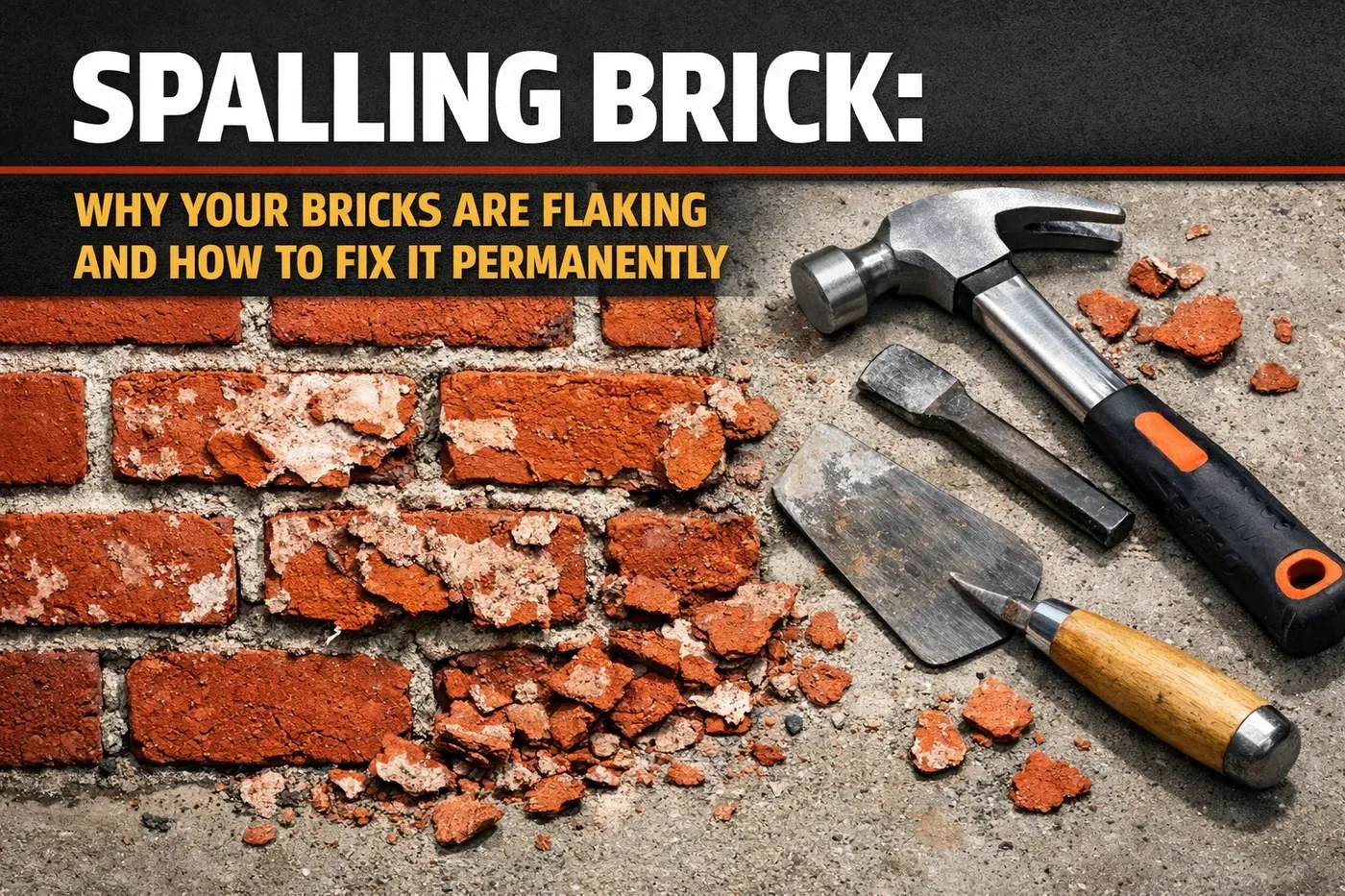
Walk around your Dallas home and inspect your brickwork closely. Notice any faces flaking off? Surface crumbling into dust? Pieces of brick littering your flowerbeds?
You're dealing with spalling brick: one of the most destructive masonry problems that only gets worse with time.
Spalling occurs when the face of a brick flakes, cracks, or falls apart entirely. What starts as minor surface damage quickly progresses to severe deterioration as the porous inner portion becomes exposed to moisture. Left untreated, spalling can compromise your home's structural integrity and cost thousands more to repair.
Here's what you need to know about identifying, preventing, and permanently fixing spalled brick repair in the Dallas-Fort Worth area.
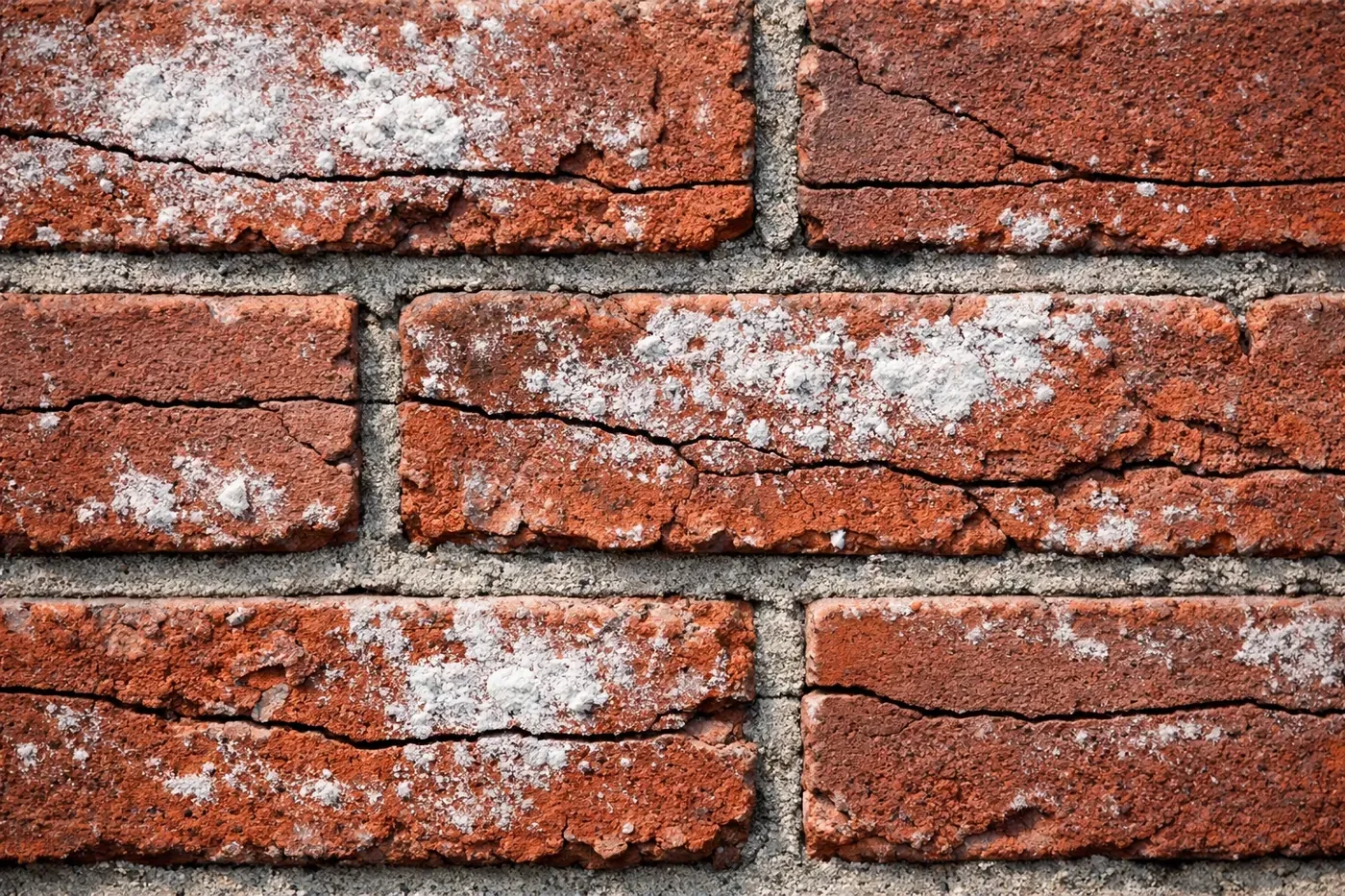
Catch spalling early and you'll save yourself significant repair costs. Watch for these red flags:
Surface flaking or peeling on brick faces, especially on north-facing walls or areas with morning sun exposure
White, powdery deposits (efflorescence) appearing on brick surfaces: a clear sign of moisture movement
Hairline cracks forming parallel to mortar joints
Soft, crumbly areas when you press on the brick surface
Discoloration or darkening indicating persistent moisture
Chunks or fragments accumulating at the base of walls
Deterioration concentrated near soil level, gutters, or areas where sprinklers hit
Tip: Inspect your brickwork twice yearly: once in spring after freeze-thaw cycles and again in fall before winter. Early detection is your best defense.
Understanding why your bricks are failing helps you fix the problem permanently instead of wasting money on temporary patches.
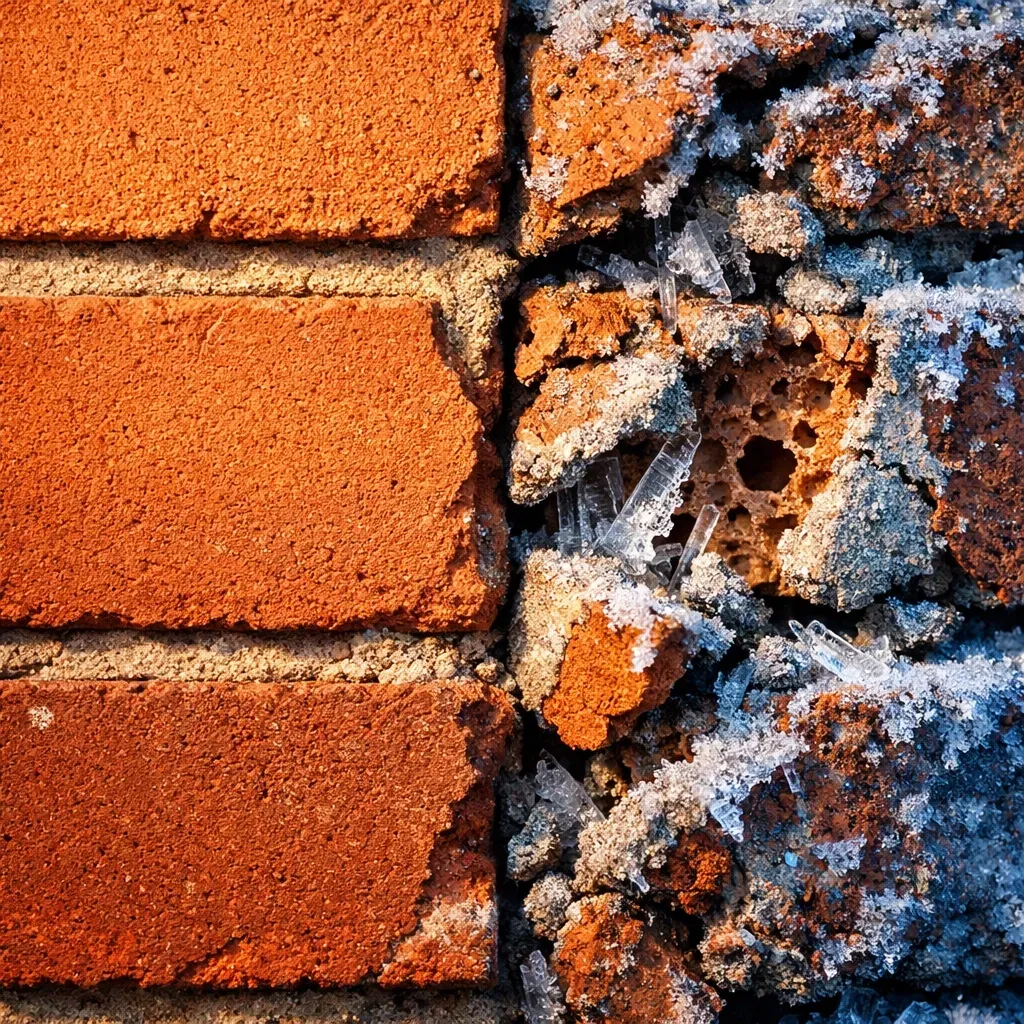
Dallas experiences enough freezing nights each winter to cause serious damage. Water penetrates porous bricks, freezes, expands by roughly 9%, and creates internal pressure that cracks the brick structure from within.
When temperatures rise and ice melts, more water enters the newly formed spaces. The cycle repeats, and each freeze-thaw event worsens the damage exponentially.
Caution: Once spalling begins, the exposed inner brick is far more absorptive than the original fired surface, accelerating deterioration dramatically.
Many older Dallas homes suffer from incompatible repointing work. Previous contractors used modern Portland cement mortars: which are significantly harder than the original lime mortars and the bricks themselves.
As temperature changes cause your brick wall to expand and contract naturally, the rigid cement mortar literally crushes the brick faces. The brick has nowhere to move, so it fails instead.
Hard cement mortars also trap moisture inside your wall system, forcing water to escape through the brick surface rather than evaporating safely through softer mortar joints.
Poor water management is behind nearly every spalling problem we see:
Clogged or leaking gutters that saturate wall sections
Improper grading that directs water toward your foundation
Sprinkler systems aimed at brick walls
Missing or damaged flashing around windows, doors, and chimneys
Blocked weep holes that prevent moisture escape
High-pressure power washing that drives water deep into brickwork
Homeowners often make spalling worse by applying the wrong products. Non-breathable sealers, waterproof paint, and certain stucco coatings trap moisture inside your wall system.
Water naturally migrates through masonry. When you seal the exterior surface, that moisture has nowhere to go. It builds up, freezes, and destroys your bricks from the inside out.
Not all spalling requires immediate intervention, but you need to assess severity accurately.
Minor flaking affecting less than 1/4" of the brick face may be monitored if the underlying brick remains solid. Address moisture sources immediately to prevent progression.
When brick faces have lost 1/4" to 1/2" depth or multiple bricks show active deterioration, schedule professional brick repair Dallas service soon. The problem won't resolve itself.
Deep spalling affecting more than half the brick depth, multiple courses showing damage, or structural cracking around openings requires immediate attention. Delay risks wall instability and water intrusion into your home's interior.
Tip: Tap suspected bricks with a masonry hammer. Solid bricks produce a clear ring. Damaged bricks sound dull or hollow.
Walk through any Dallas neighborhood and you'll spot poorly attempted spalling repairs: mismatched patches, crumbling "fixes," and Band-Aid solutions that look worse than the original damage.
Here's why patching doesn't work:
Patch materials don't bond permanently to deteriorated brick. The underlying brick continues absorbing moisture and expanding, causing patches to pop off within months.
Patches don't address the root cause. If moisture intrusion, improper mortar, or drainage issues caused the spalling, they'll destroy your patch too.
Color and texture matching is nearly impossible. Professional masons struggle to match brick appearance: DIY attempts stand out dramatically.
The damaged brick continues deteriorating underneath. Patching hides cosmetic damage temporarily while structural failure progresses.
Don't waste money on materials that won't last. Proper spalled brick repair requires removing and replacing damaged units.
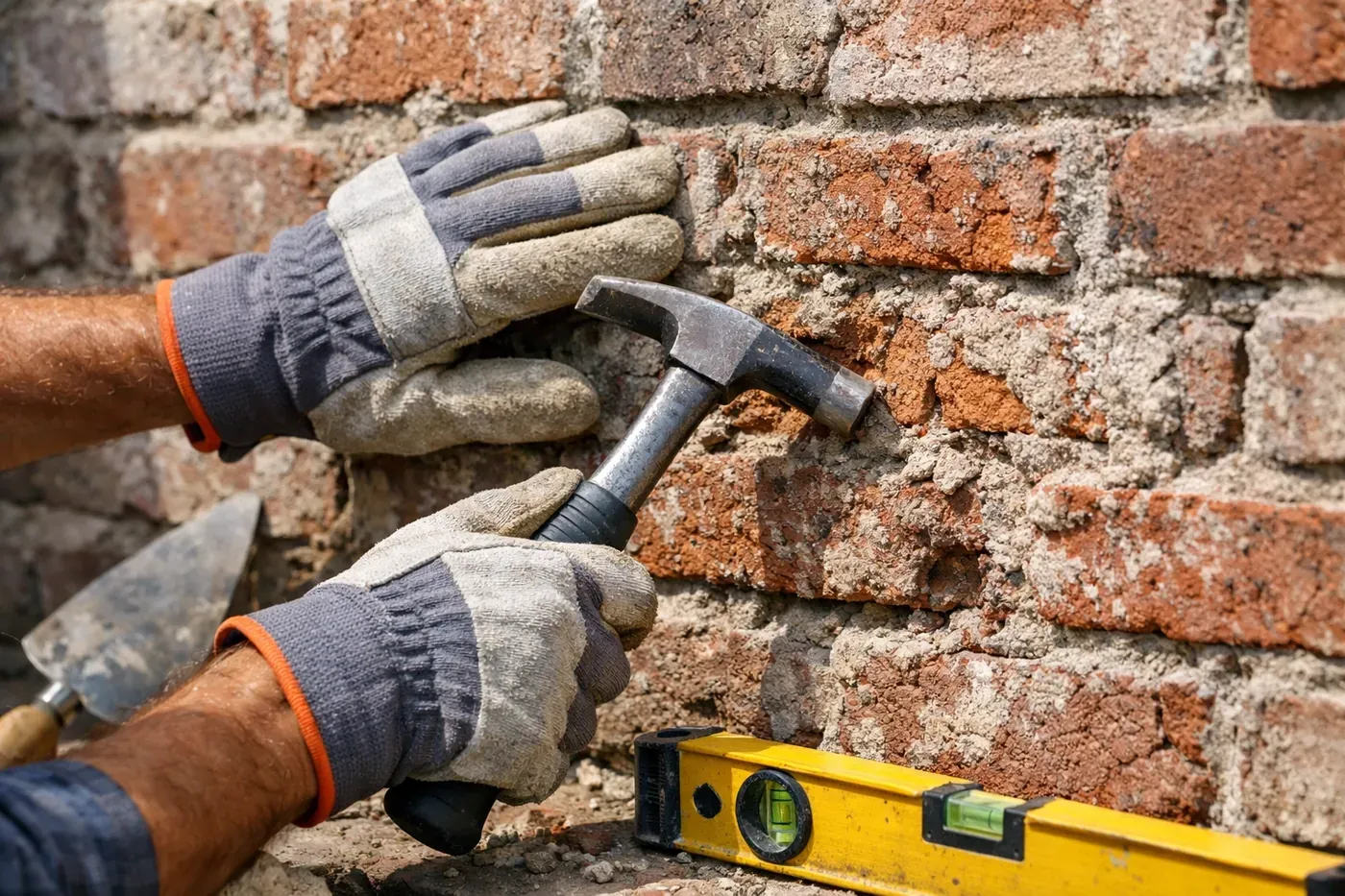
Our approach to masonry repair Dallas TX projects focuses on eliminating spalling permanently, not temporarily covering symptoms.
Before touching damaged bricks, we trace the water intrusion path. We inspect:
Gutter performance and downspout discharge
Grading and drainage patterns
Flashing installation and condition
Weep hole functionality
Sprinkler positioning
Window and door seal integrity
We fix the cause first. Otherwise, replacement bricks will fail just like the originals.
We carefully remove every spalled brick without damaging surrounding masonry. Partial removal or grinding damaged surfaces doesn't work: the compromised brick must go entirely.
We maintain relationships with brick suppliers across Texas to source the closest possible matches for color, texture, and size. For historic homes or discontinued brick types, we explore salvage options or custom manufacturing.
Perfect matches aren't always possible, but professional installation minimizes visual differences.
We match mortar type to your specific bricks: never using overly hard Portland cement with softer historic bricks. Our mixes include appropriate lime content for flexibility and breathability.
Mortar joints are tooled to match existing profiles and promote water shedding rather than absorption.
Spalling rarely occurs in isolation. We assess adjacent mortar joints and repoint deteriorated sections to prevent moisture intrusion that could damage new bricks.
In some cases, we recommend breathable masonry water repellents that allow moisture vapor to escape while repelling liquid water. These products prevent saturation without trapping moisture.
Caution: We never use film-forming sealers, waterproof paint, or products that block vapor transmission.
Our work comes with a lifetime warranty because we address root causes, not symptoms.
Clean gutters and ensure downspouts discharge at least 6 feet from your foundation
Redirect sprinklers away from brick walls
Monitor problem areas with photos to track progression
Apply breathable sealers specifically formulated for masonry (after professional consultation)
Improve site drainage to direct water away from your home
Patch spalled bricks with mortar, epoxy, or any "repair" compound
Apply waterproof paint or sealers that trap moisture
Ignore small problems hoping they'll stabilize (they won't)
Power wash brick walls with high pressure
Repoint with overly hard cement mortar
Attempt brick replacement yourself without masonry experience
Minor preventive maintenance falls within DIY capability. Actual brick wall repair requires professional expertise.
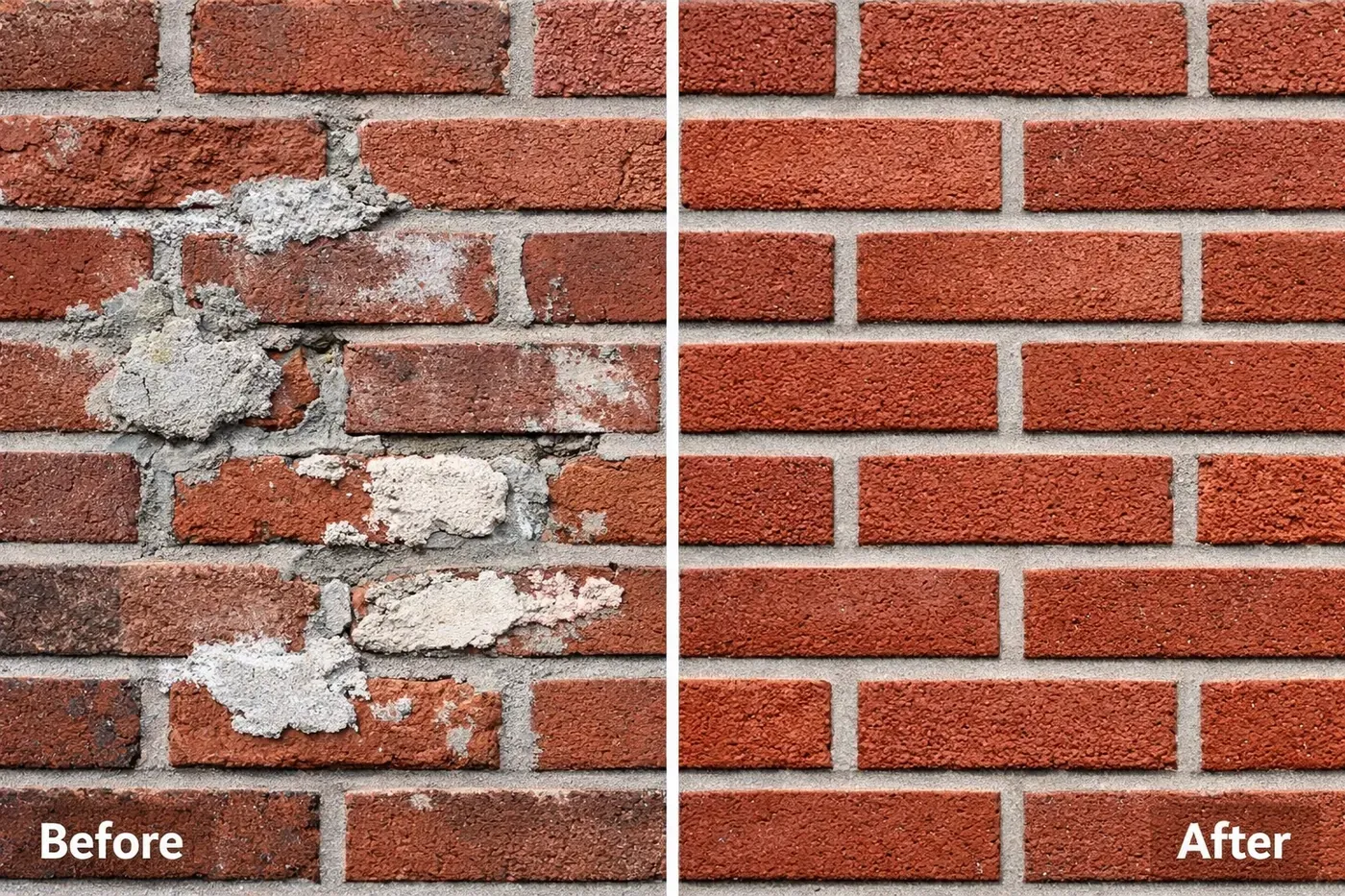
Spalled brick repair costs vary based on several factors:
Extent of damage: A few scattered bricks cost significantly less than multiple wall sections requiring attention.
Brick matching difficulty: Common brick types are inexpensive and readily available. Custom or historic bricks require sourcing time and may cost $3-8 per brick versus $0.50-2 for standard units.
Access challenges: Second-story repairs requiring scaffolding cost more than ground-level work.
Moisture remediation needs: If we need to install flashing, repair gutters, or improve drainage before addressing bricks, total project costs increase.
Mortar repointing requirements: Walls with deteriorated mortar throughout need comprehensive repointing, not just brick replacement.
Geographic location: Service areas like Allen, Frisco, and McKinney may have different pricing than central Dallas locations.
Request detailed estimates that break down material and labor costs. Cheap bids often use inappropriate materials or skip crucial moisture remediation steps.
Contact a masonry repair specialist immediately if you notice:
Active spalling on multiple bricks
Cracks developing around windows, doors, or lintels
Moisture staining that persists after rain
Deterioration near the foundation or roofline
Previous repairs failing within a few years
At Champion Brick Repair & Whitestone Construction, we've restored thousands of Dallas-area homes suffering from spalling damage. Our team diagnoses the underlying causes, implements permanent solutions, and stands behind our work with comprehensive warranties.
Don't let spalling brick compromise your home's structural integrity and curb appeal. The problem only gets worse: and more expensive: with time.
Contact us today for a professional assessment of your brick repair needs. We serve homeowners throughout the Dallas-Fort Worth metroplex with honest evaluations and lasting repairs.
Visit championbrickrepair.com to schedule your inspection or call us for immediate assistance with spalling brick issues.
Cracks are ugly — let Champion Brick Repair fix them right, with mortar matched to your home and a lifetime warranty.