July 3, 2026 · By Abraham Wix-Expert
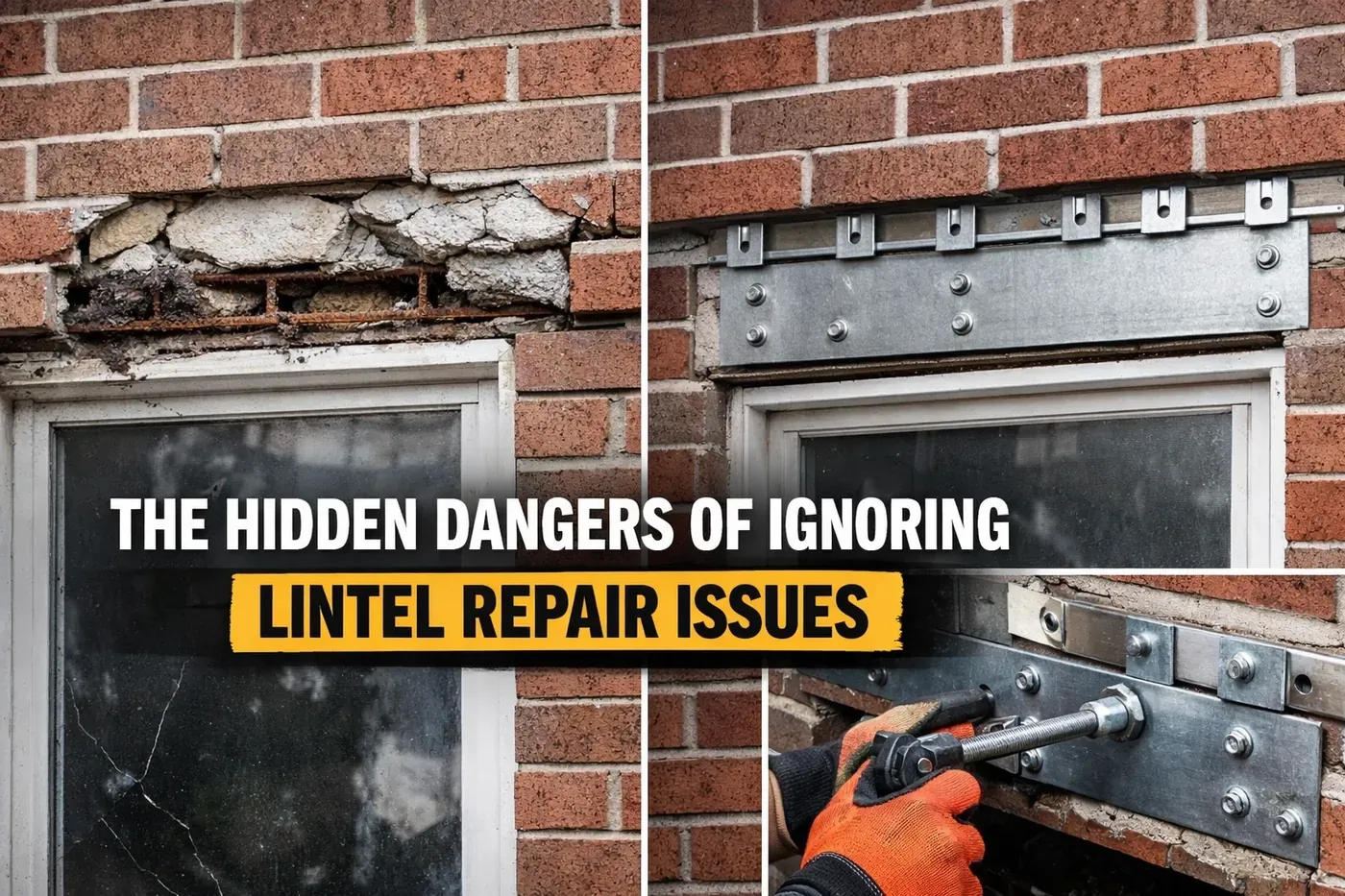
If you’re seeing cracks, separation, or a “smile” (sag) in the brickwork above your garage door, treat it as a lintle repair problem: not a cosmetic issue. In the Dallas market, sagging lintels over garage doors are one of the most common structural brick failures we see, and they don’t fix themselves.
A lintel is a load-carrying beam (often steel angle iron) that spans an opening: like your garage door: and supports the brick above it. When it starts to fail, the weight of the veneer transfers in the wrong places, cracks open up, and water gets in. That combination turns a manageable lintle repair into a much bigger structural and safety hazard fast.
Dallas–Fort Worth homes see a specific mix of conditions that push lintels and brickwork hard:
Expansive clay soils: seasonal movement shifts slabs and frames, stressing openings
Wide garage openings: 16–18 ft double-car doors create long spans and higher deflection risk
Steel corrosion: lintels rust, expand, and “jack” brick upward and outward
Water exposure at the garage: roof runoff, splashback, and leaky gutters soak the most vulnerable area
Don’t assume the brick “settled.” When a lintel sags, it’s typically telling you the steel is corroding, the bearing ends are compromised, or the brick above has lost proper support. That’s a lintle repair issue that demands a structural fix: especially above a garage where people walk, park, and operate a heavy moving door system.
Be objective. Look for repeatable signs and quantify what you see.
Common lintle repair symptoms over garage doors:
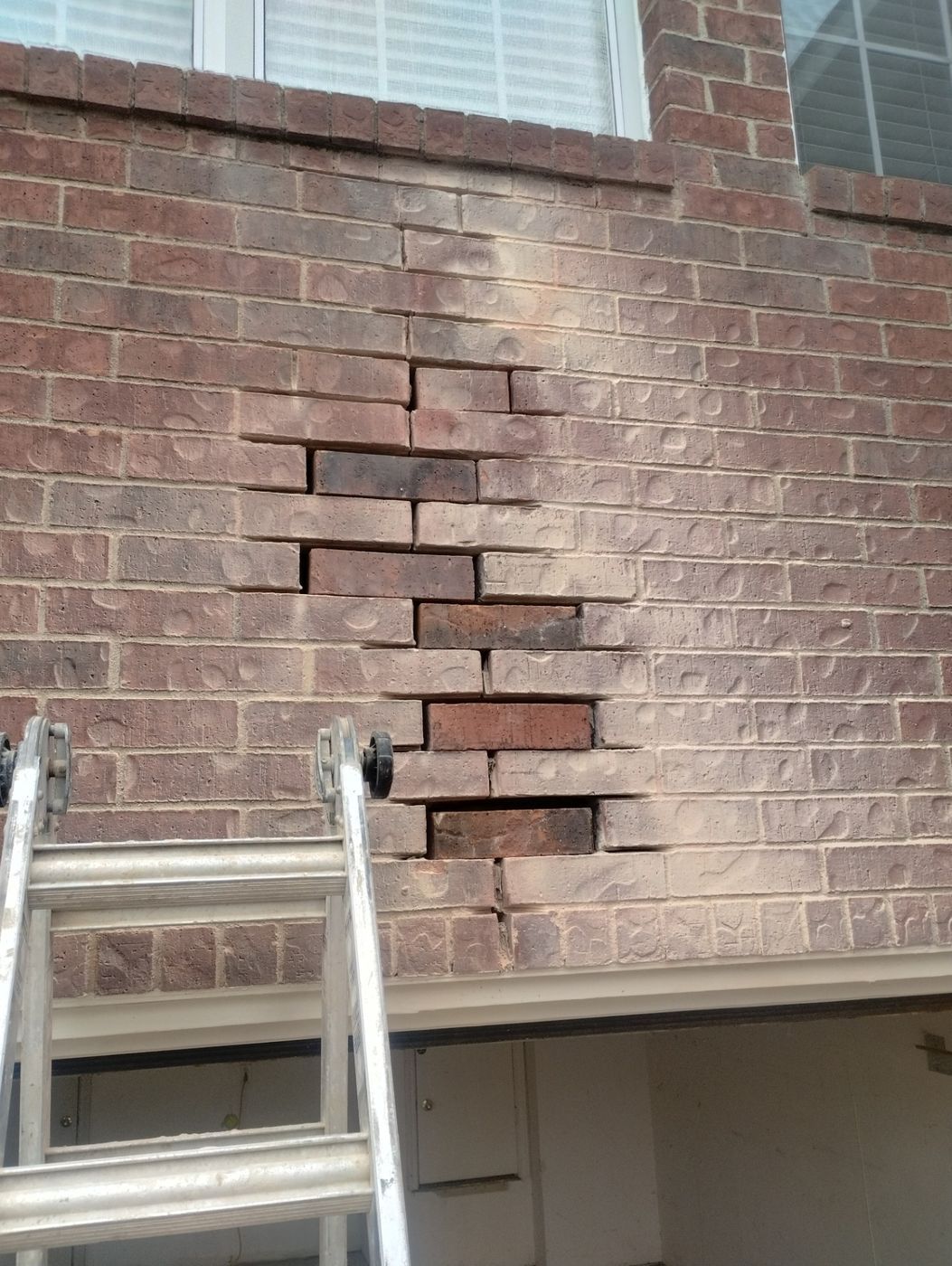
Step cracks in mortar joints radiating from the top corners of the garage opening
Vertical cracks directly above the center of the opening
A visible “dip” in the brick soldier course or rowlock course above the door
Gaps between brick and the steel lintel (or brick separating from mortar)
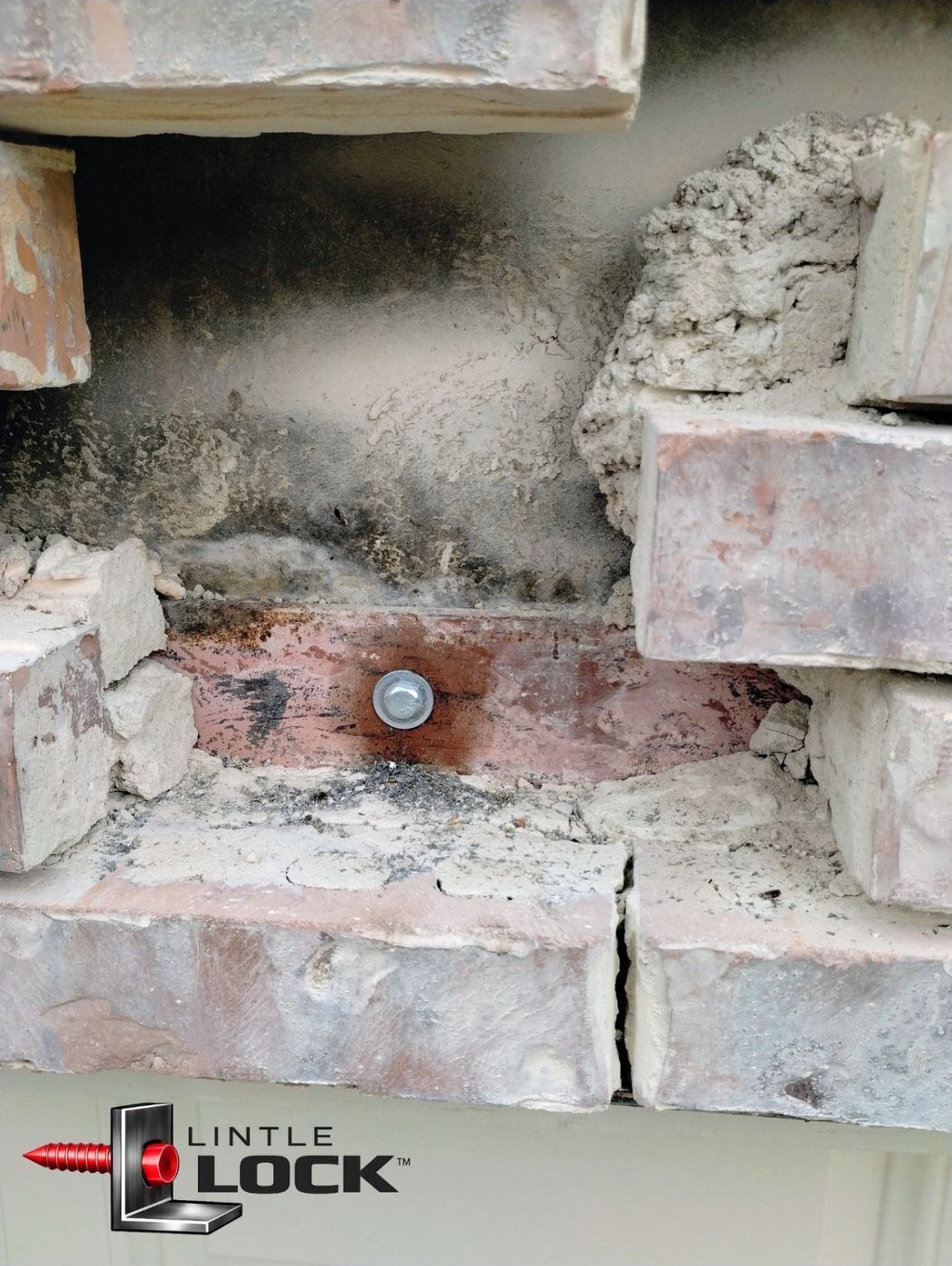
Rust staining: orange/brown streaks bleeding through mortar joints
Loose bricks you can wiggle by hand (serious)
Simple field checks you can do today:
Hold a 4 ft level along the brick line above the garage door. Note any gap in the middle.
Measure crack width. A 2 mm crack is not “fine” if it’s above a sagging lintel: monitor it.
Check if the steel angle is exposed and flaking. If you can scrape rust with a screwdriver, corrosion is active.
Caution: Don’t ignore cracks that grow from hairline to 1/8 in (3 mm) over a season. That is classic escalation behavior with lintle repair problems: movement opens a path, water follows, corrosion accelerates, and the cycle repeats.
A failing lintel rarely stays in the same condition. It follows a predictable escalation cycle:
Industry guidance from groups like BSI and masonry technical notes from organizations such as the Brick Industry Association (BIA) consistently emphasize a core principle: keep water out of masonry assemblies and correct structural support issues early. A neglected lintle repair issue does the opposite: it invites water in and removes reliable support.
A sagging lintel over a garage door isn’t just “bad curb appeal.” It creates real safety concerns because garages are high-traffic and high-load areas.
Watch these hazards:
Falling masonry: a single brick can weigh 4–5 lb; a small drop zone becomes a serious injury risk
Garage door interference: misalignment can stress tracks and springs, causing erratic operation
Hidden electrical risk: water migration can reach outlets, openers, and lighting circuits
Emergency egress risk: if the frame shifts, side doors can bind; windows can rack and stick
Tip: If you see brick movement directly over the center of the opening, keep people clear of the area until a qualified lintle repair inspection is done. That’s where deflection typically concentrates.
Over a garage opening, the brick veneer is acting like a heavy cladding system that still needs correct support. When the lintel fails, you can see multiple structural effects:
Loss of proper load distribution: brick weight moves to adjacent sections
Increased shear at corners: cracks propagate from the opening corners
Out-of-plane bowing: the wall face can bulge as bricks get pushed outward
Progressive failure potential: localized damage spreads across the elevation
Don’t confuse veneer issues with “just mortar.” Mortar cracks often signal brick movement underneath. If you repoint without addressing lintle repair, you’re sealing the symptom, not fixing the load path.
Most homeowners only see the exterior crack. The bigger problem is what happens behind it.
Once lintle repair issues open joints, water can enter the wall cavity and create:
Rusting steel (accelerates sagging and brick displacement)
Deteriorated sheathing around the garage header area
Swollen wood framing that changes door geometry
Mold and indoor air quality issues in adjoining rooms
Efflorescence and spalling as salts migrate and freeze-thaw cycles expand pores
In Dallas, freeze-thaw isn’t as constant as northern climates, but it still happens: and any trapped moisture plus temperature swings can pop faces off brick (spalling). Water is the multiplier that makes lintle repair expensive if you wait.
When lintle repair is needed, quick fixes often make things worse or hide the problem until it becomes an emergency.
Avoid these don’ts:
Caution: If you see bricks that are no longer fully supported (you can slide a putty knife under an edge), the veneer may already be partially detached over the opening. Treat that as urgent lintle repair.
A real lintle repair isn’t “make it look better.” It must restore the intended support and manage future movement.
Your lintle repair should achieve:
Reliable support over the full span of the garage opening
Proper bearing at ends so loads transfer correctly
Stabilization that resists ongoing sagging (not just a patch)
Correction of displaced brick (reset/rebuild where needed)
Water management details: flashing/drainage path where applicable, sealed joints where appropriate
A finished brick and mortar match that doesn’t telegraph the repair
That’s why we push one message: if you have lintel repair issues, you need LintleLOCK™.
LintleLOCK™ is designed specifically to address sagging lintels over garage doors: the exact failure pattern that shows up across Dallas neighborhoods. Instead of “hoping” the existing steel holds, LintleLOCK™ focuses on stabilizing the lintel system so the brick above stops moving.
What you should expect from a LintleLOCK™-based lintle repair approach:
Stabilize the lintel so deflection doesn’t continue
Rebuild and reset damaged brick to restore the line above the opening
Match brick and mortar so the repair blends with the original façade
Reduce the chance of recurring cracks by addressing the structural cause
If you want a deeper overview of this exact problem, review our service page on sagging garage lintels: https://www.championbrickrepair.com/sagging-garage-lintel
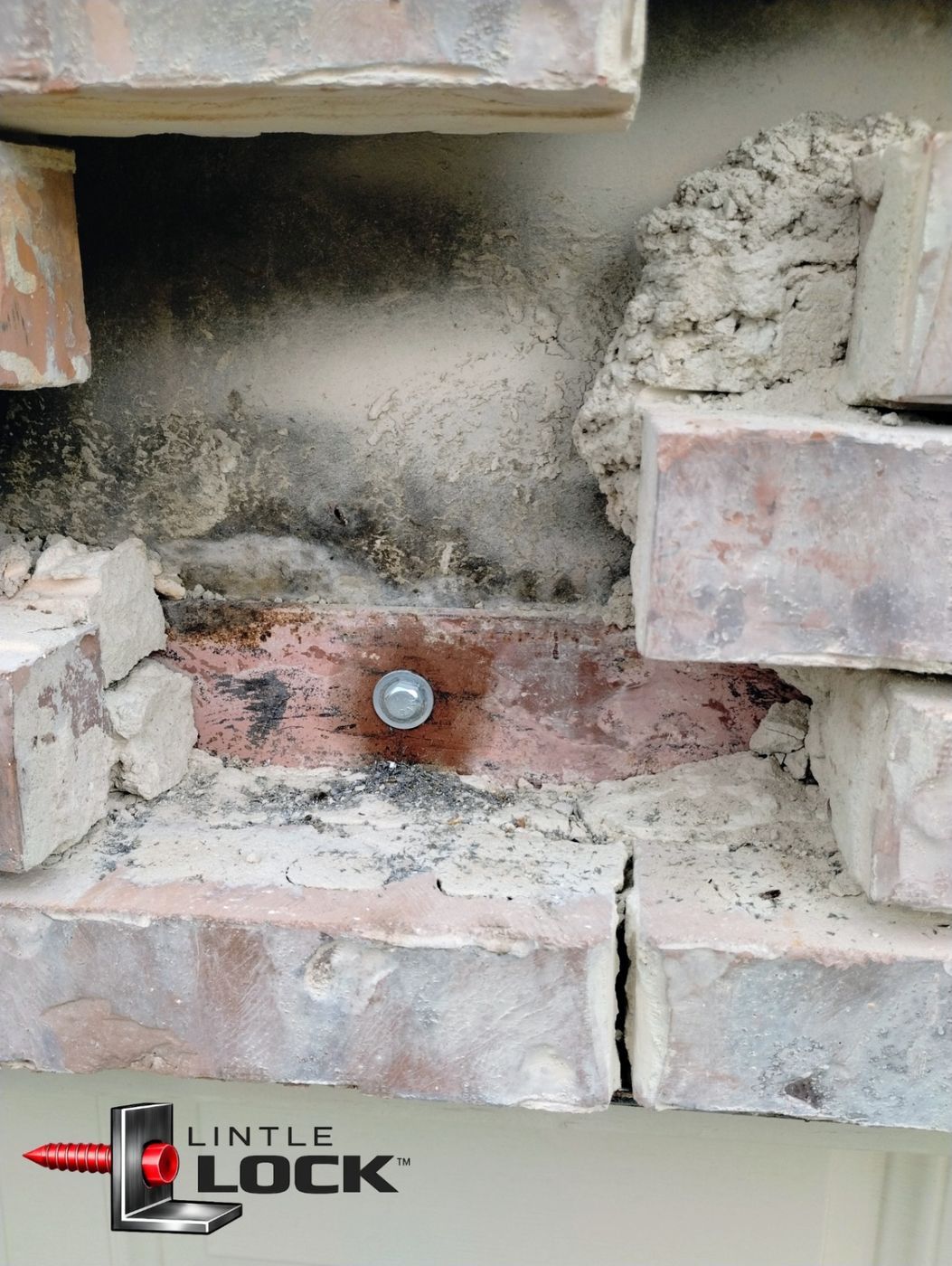
“If the brick over your garage door is cracking and sagging, treat it like a structural support problem. A cosmetic patch is temporary. A stabilized lintle repair is permanent-minded.” : Brick Repair EXPERT, Owner
Faster than most homeowners expect. In real-world conditions, a hairline crack can become a visible gap in a single storm season if water is driving into the joint line and corrosion is active.
Use this practical urgency scale:
Monitor (but schedule an inspection): hairline cracking with no sag, no rust staining
Act soon: 1/16 in (1.5 mm) cracks, visible separation, or early dip above the opening
Urgent lintle repair: 1/8 in (3 mm) cracks, loose brick, rust scale, or a noticeable “smile” line
Keep clear / safety risk: bricks shifting, bulging, or any falling mortar/brick pieces
Be direct and systematic:
Photograph the area straight-on and from each corner of the garage opening
Measure crack widths and note if they grow after rain or temperature swings
Check gutters and downspouts: reduce water loading while you schedule lintle repair
Book a lintle repair evaluation focused on the lintel and brick support, not just mortar
Choose a system built for garage lintels: choose LintleLOCK™
If you have lintel repair issues, you need LintleLOCK™. Schedule your assessment and get the right fix before the damage spreads: http://lintlerepair.com
If we’ve helped you with lintle repair or brick stabilization in Dallas–Fort Worth, leave a Google review here (it helps homeowners find qualified masonry repair): https://g.page/r/CWX03ZFdqAk6EBE/review
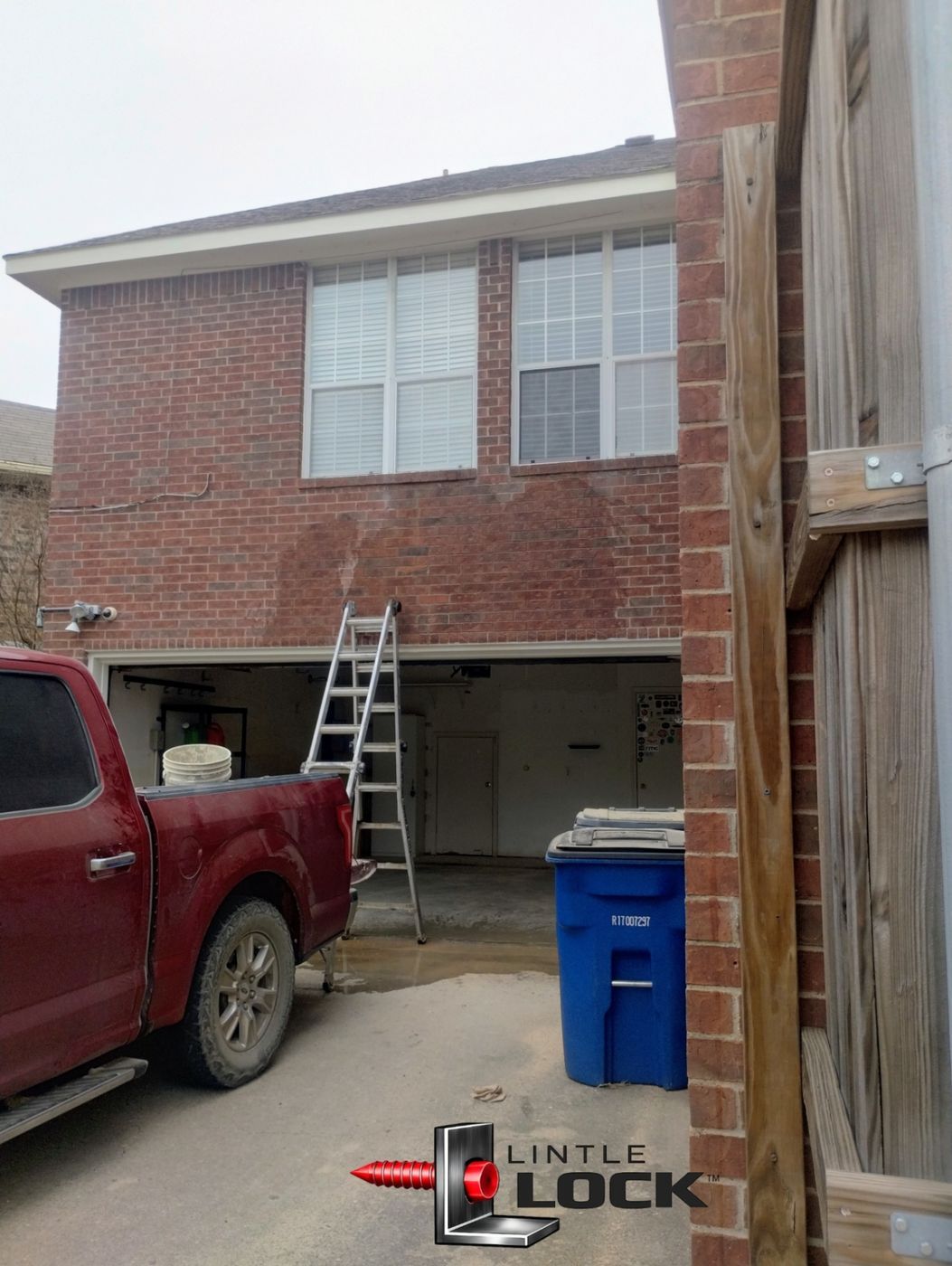
Champion Brick Repair is a division of Whitestone Construction, Hamilton, Texas, and is not affiliated with any other companies using similar names.
Cracks are ugly — let Champion Brick Repair fix them right, with mortar matched to your home and a lifetime warranty.