February 5, 2026 · By Abraham Wix-Expert
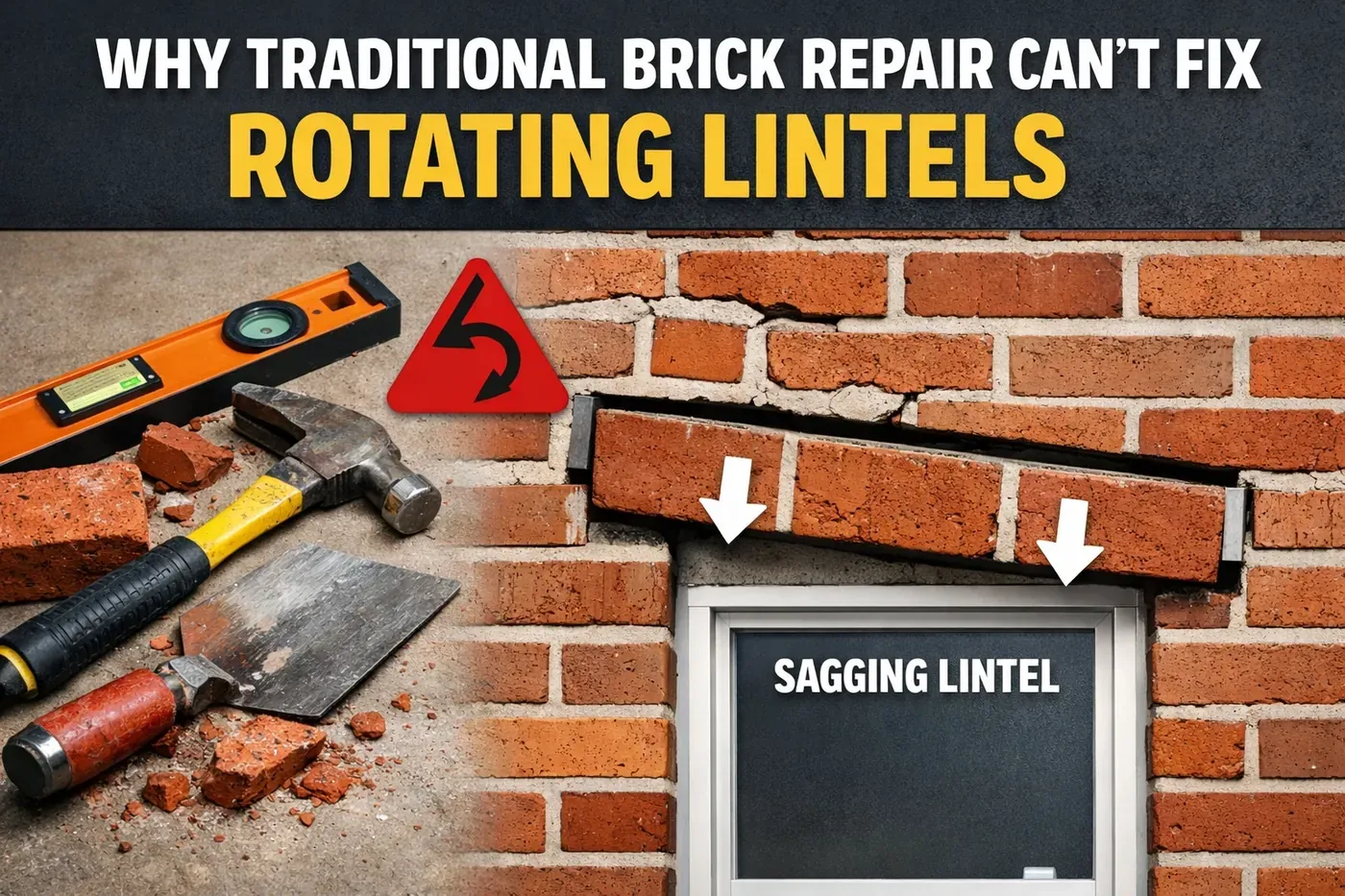
You've got a sagging garage opening. The brickwork above the door is cracking, bulging, or pulling away from the rest of the wall. A masonry contractor comes out, quotes you for tuckpointing or "brick repair," and tells you it'll be fine.
Here's the problem: if your lintel is rotating, no amount of mortar is going to fix it.
Traditional brick repair methods: tuckpointing, patching, even replacing individual bricks: are cosmetic solutions. They address the symptoms, not the cause. When a lintel rotates, you're dealing with a structural failure that requires a structural fix.
A lintel is the steel beam that spans across openings like garage doors, windows, or entryways. Its job is to carry the weight of the brick above and transfer that load to the sides of the opening.
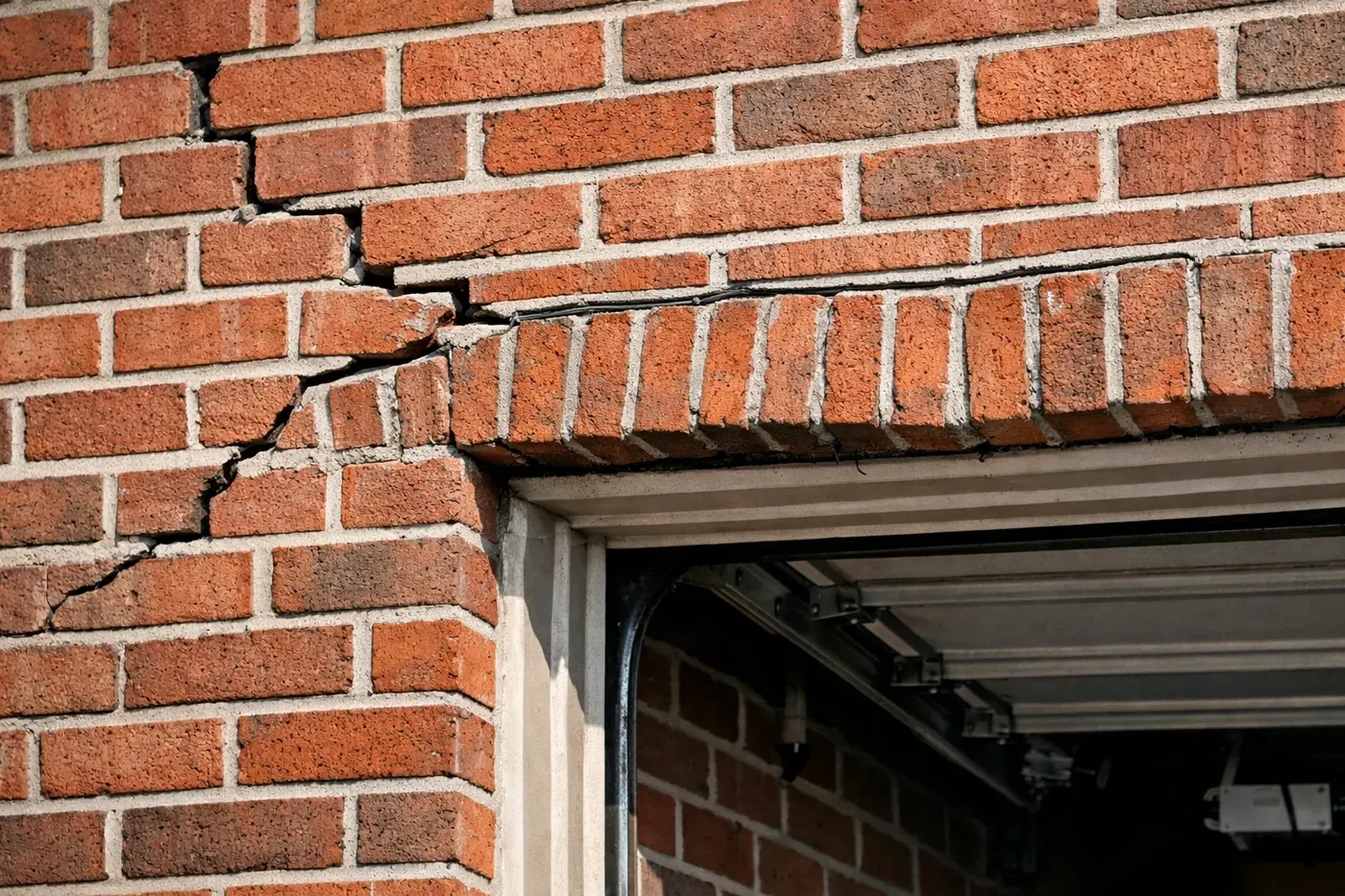
When a lintel starts to rotate (also called "rolling"), it twists forward, away from the wall. This rotation causes:
The brick above to bulge outward
Stair-step cracks radiating from the corners of the opening
Mortar joints to open up and separate
The header course (top row of brick above the lintel) to pull away from the wall
Caution: If you can see daylight through the cracks above your garage door, your lintel is likely rotating. This is not a cosmetic issue.
Tuckpointing involves grinding out old mortar joints and filling them with fresh mortar. Brick patching means replacing individual damaged bricks. Both methods assume the wall structure itself is sound.
When a lintel is rotating, the structure is not sound. The lintel continues to twist, even after you've filled the cracks.
Think of it like putting a Band-Aid on a broken bone. The Band-Aid might cover the wound, but the bone is still broken underneath. Within months: sometimes weeks: the same cracks reappear because the underlying movement never stopped.
Fresh mortar cracks within 6-12 months as the lintel continues to rotate
New brick you installed pulls away from the wall along with the old brick
Water infiltration accelerates because cracks reopen faster than before
You pay twice: once for the cosmetic fix, again for the real repair
Dallas homeowners deal with this cycle constantly. Our clay soils expand and contract with moisture changes, which accelerates lintel rotation in homes built on slab foundations.
Lintel rotation happens when the steel beam loses its mechanical connection to the brick header above it. Common causes include:
Corrosion: Steel expands as it rusts, pushing the brick outward and breaking the bond
Settlement: Foundation movement creates uneven loads that twist the lintel
Poor initial installation: Lintel wasn't properly seated or supported during construction
Thermal expansion: Decades of heating and cooling cycles weaken the mortar bond
Once the lintel starts rotating, gravity takes over. The weight of the brick above pushes down and out, accelerating the rotation.
Tip: If your home was built between 1970-1995 in the Dallas area, check your garage lintel. This era saw rapid construction with minimal corrosion protection on steel lintels.
Mortar serves two purposes in masonry: it bonds bricks together, and it allows slight movement to accommodate thermal expansion and minor settling.
But mortar was never designed to stop a rotating steel beam.
When you tuckpoint around a rotating lintel, you're asking mortar to do something it cannot do: resist constant rotational force from hundreds of pounds of brick and steel. The mortar compressive strength is irrelevant here: this is a mechanical failure, not a bonding failure.
Constant rotational force: The lintel keeps twisting forward
No mechanical anchor: Mortar alone cannot re-attach the header to the lintel
Leverage effect: The further the lintel rotates, the greater the force pulling it forward
Moisture penetration: Open cracks allow water in, accelerating steel corrosion
Even high-strength mortar or epoxy injections fail because they don't address the mechanical separation between the rotating lintel and the brick header above it.
LintleLOCK™ works differently than traditional brick repair because it creates a new mechanical connection between the lintel and the brick header.
Here's how the system works:
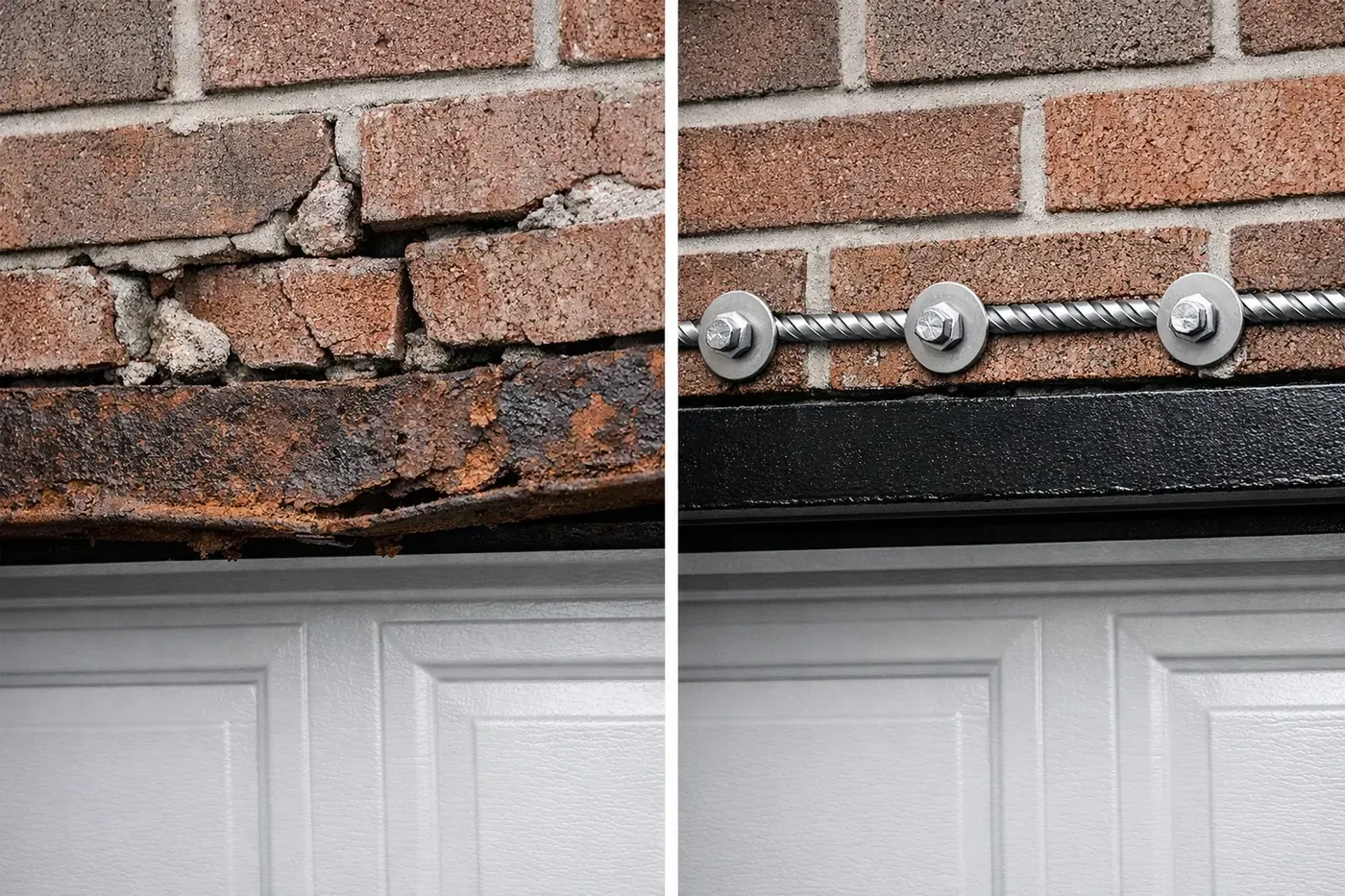
Helical anchors drill through the brick header into the rotating lintel below
The anchors lock mechanically into both the brick and the steel, creating a rigid connection
Torque is applied to pull the header back against the lintel and stop rotation
The connection is permanent: no reliance on mortar bonding alone
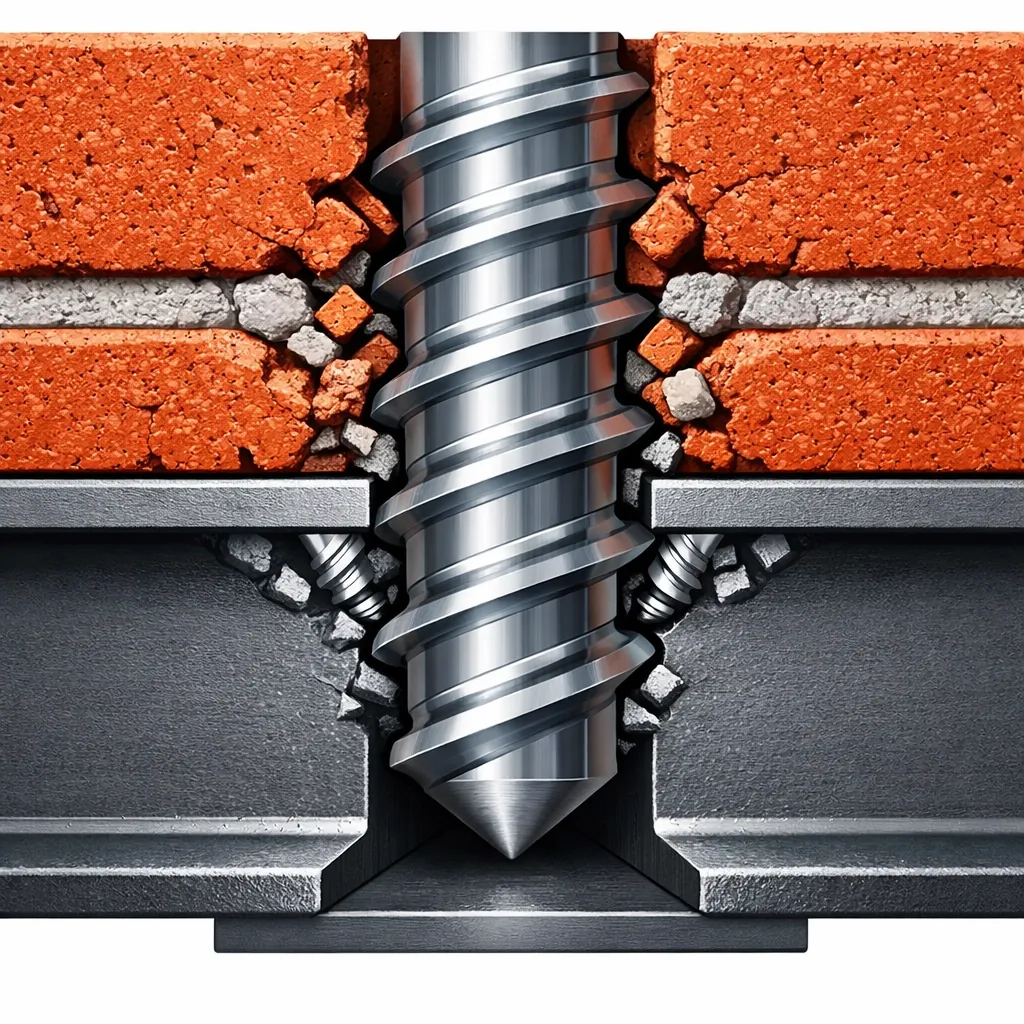
Think of it like using bolts instead of glue to reattach something structural. The helical anchors physically tie the brick back to the lintel, preventing further rotation.
Traditional repairs rely on friction and adhesion. LintleLOCK™ uses mechanical interlock: the same principle that holds bridges and buildings together.
Once installed, the header cannot rotate independently from the lintel because they're physically connected by steel anchors. The rotational force is transferred through the anchors, not through fragile mortar joints.
Tip: LintleLOCK™ repairs typically take 4-6 hours for a standard two-car garage. No beam removal, no major reconstruction: just a permanent mechanical fix.
We back every LintleLOCK™ installation with a lifetime guarantee because the repair addresses the structural cause, not just the cosmetic symptoms.
Compare that to traditional tuckpointing, which typically comes with a 1-2 year warranty at best. Contractors know cosmetic repairs fail on rotating lintels: that's why they won't guarantee the work long-term.
Our guarantee covers:
The mechanical connection between header and lintel
Prevention of further rotation
Structural integrity of the repair
Caution: If a contractor won't guarantee their lintel repair for at least 10 years, they're likely offering a cosmetic fix, not a structural solution.

Dallas-area homes face unique challenges that accelerate lintel rotation:
Our black clay soils can expand up to 10% in volume when saturated. This constant heaving and settling puts stress on slab foundations and the lintels attached to them.
Most Dallas homes built after 1960 sit on concrete slabs. When the slab settles unevenly, lintels twist because they have no independent support: they're anchored to the moving slab.
Summer temps over 100°F followed by winter freezes create expansion and contraction cycles that weaken mortar bonds faster than in more temperate climates.
Plano, Frisco, Allen, and north Dallas suburbs saw explosive growth in the 1980s-90s. These homes are now 30-40 years old: prime age for lintel rotation to become visible.
If you're in the Dallas area and notice bulging brick above your garage, don't wait for the problem to worsen. The longer a lintel rotates, the more expensive the repair becomes.
When you call for a lintel repair estimate, ask these questions:
"Will this repair stop the lintel from rotating, or just cover the cracks?"
"What's your warranty period on this specific repair?"
"Are you creating a new mechanical connection to the lintel, or relying on mortar alone?"
"Can I see photos of similar repairs you've done, taken 5+ years after installation?"
If the answers are vague or focus only on cosmetic appearance, you're looking at a temporary fix.
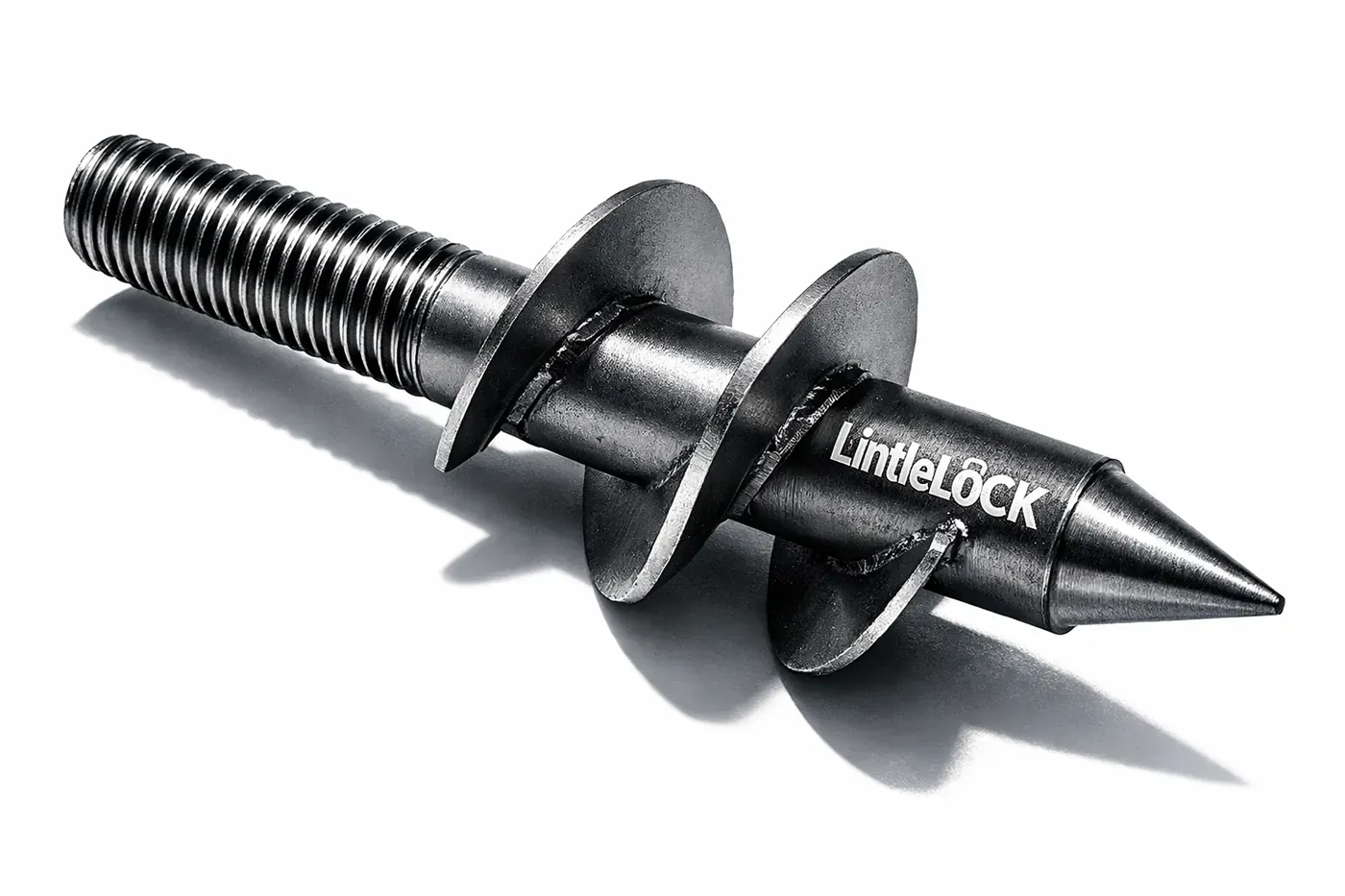
Traditional brick repair methods: tuckpointing, patching, mortar injection: cannot fix a rotating lintel because they don't address the mechanical failure. These are cosmetic repairs applied to a structural problem.
It's like putting a Band-Aid on a broken bone. The wound might look better temporarily, but the underlying issue keeps getting worse.
A rotating lintel needs a mechanical solution that re-establishes the connection between the steel beam and the brick header above it. LintleLOCK™ provides that permanent mechanical fix, backed by a lifetime guarantee.
If you're in the Dallas area and suspect your garage lintel is rotating, get a proper structural assessment. Send us 4-6 photos of the affected area plus your address, and we'll provide a same-day rough estimate.
Don't pay twice for the same repair. Fix it right the first time with a solution that addresses the root cause, not just the symptoms.
Ready to fix your rotating lintel permanently?Contact us for a free assessment, or learn more about sagging garage lintel repair specific to the Dallas area.
Cracks are ugly — let Champion Brick Repair fix them right, with mortar matched to your home and a lifetime warranty.