The brick above your garage door is dropping — and it is not your door's fault
A sagging garage door lintel is the most misdiagnosed problem on the front of a Texas home. The lintel is the steel angle iron that spans the top of your garage door opening and carries every brick above it. When that steel starts to fail, the brickwork over the door drops with it — and most homeowners blame the garage door, the opener, or the foundation, because the first thing they notice is a door that sticks or brick that suddenly looks crooked. The door is the symptom. The sagging garage door lintel is the cause.
Champion Brick Repair has raised and secured more than 500 failing garage door lintels across the Dallas–Fort Worth area. If the brick above your garage door is sagging, bowing, or cracking, you are looking at a lintel problem — and it is one we fix permanently, without tearing the front of your home apart.
Stair-step cracks from the corners. Cracks that climb the mortar joints in a stepped pattern, up and away from the top corners of the garage door opening, are the classic fingerprint of a lintel losing its support.
A bow — the "smile" — in the middle. Sight along the brick courses above the door. A failing lintel dips in the center, so the brick line curves down like a frown or smile instead of running straight, and individual bricks start to dip out of line.
Rust jacking. The steel lintel rusts where water gets behind the brick. Rust takes up more room than the steel it replaces, so the expanding metal physically jacks the masonry apart — pushing mortar joints open and displacing brick from below.
A door that binds or won't close square. As the lintel drops and rotates, the opening itself goes out of square. The garage door starts rubbing, binding, or leaving a gap at one corner — not because the door failed, but because the frame it hangs in is moving.
A gap opening above the lintel. If you can see daylight or a widening joint between the steel and the brick it carries, the beam has already dropped or shifted.
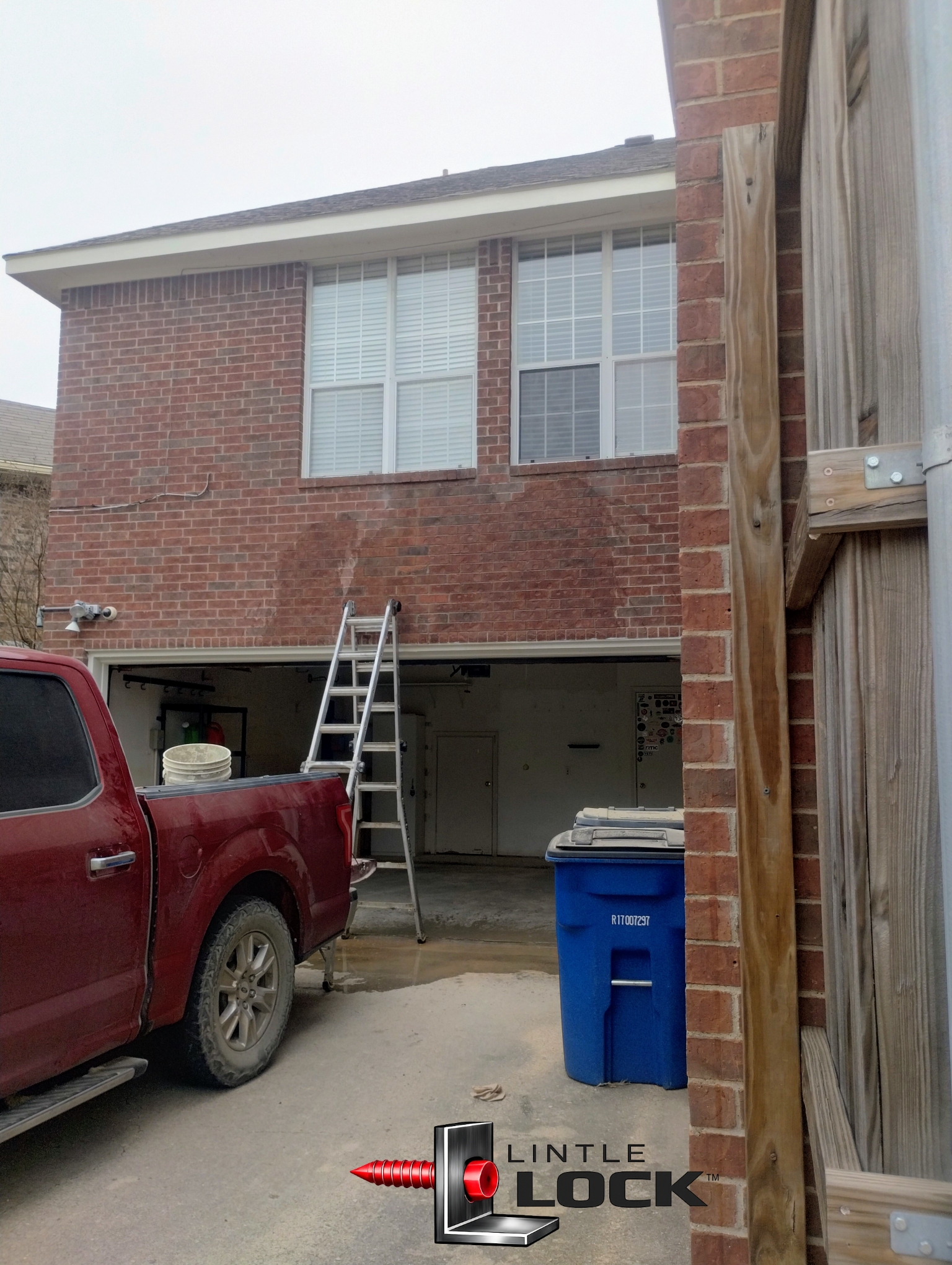
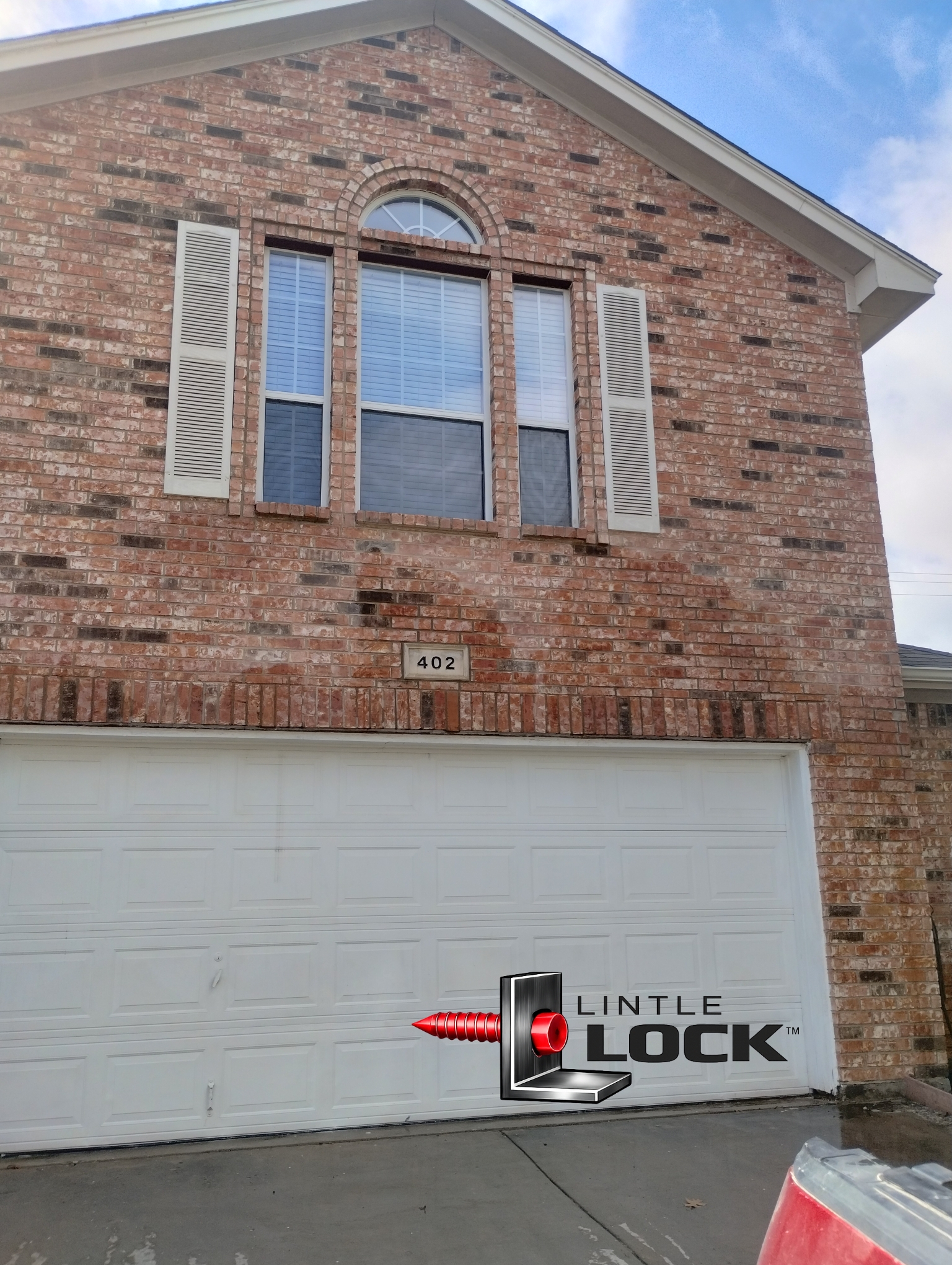
Most garage door lintels were never given a fair chance. The typical residential lintel is a 3"×5" steel angle that is supposed to be lagged tight to the structural header above the opening, to Brick Industry Association standards. On the failures we open up, that almost never happened: the lintel was undersized for the span, it was never properly lagged, or it was hung on next to nothing — in plenty of homes, little more than an 8-penny nail or a single screw per side.
That is the setup for the failure engineers call torsional twist. With no real fastening holding it, the weight of the brick veneer slowly rolls the angle iron forward and down. The fasteners pull out a fraction at a time, the lintel rotates and sags, and the brick above follows it down. It is progressive: a hairline crack this year is a dropped, rotated lintel a few years later. Grinding out the cracks and repointing the mortar does nothing about it, because the steel carrying the wall is still moving — the cracks simply come back.
Want the full technical breakdown of rotational lintel failure? Read our sagging garage lintel repair page, or see how the LintelLOCK™ system itself works.
LintelLOCK™ is Champion Brick Repair's engineered system for correcting a sagging garage door lintel from the inside. Instead of propping the steel up or bolting ugly brackets across the front of your home, the system's drawing action pulls the rotated lintel — and the brick it carries — back up to level, rolls it back into its proper vertical position, and locks it directly to the structural header so it cannot rotate again.
When the work is done, the brick wall above your garage door is restored straight and true, with no visible hardware, brackets, or beams — it looks like the damage never happened. The correction is 100% structural, not cosmetic, and every LintelLOCK™ installation is backed by a lifetime transferable warranty: it stays with the home when you sell.
Questions about the LintelLOCK™ system itself? Call (469) 730-0650. Ready to have your opening looked at? Text photos of the brick above your garage door to (817) 523-1540 or request your free estimate and we will tell you exactly what your lintel needs.
Stand back and sight along the brick above your garage door. A sagging garage door lintel bows down in the middle — a visible smile — with stair-step cracks climbing the mortar joints from the corners, bricks dipping out of line, or a gap opening between the lintel and the brick above it. If your garage door has also started binding or rubbing, the opening itself is moving out of square.
Often it is the lintel. When the steel lintel above the opening sags or rotates, the brick load shifts and the opening goes out of square, so the door binds, rubs, or will not close flush. Check the brick above the door for stair-step cracks and a bow in the middle before paying for door or opener repairs.
Yes. The LintelLOCK™ system draws the failed steel lintel back up to level and locks it to the structural header, so the brick above is restored in place — no tear-out, no visible brackets or beams, and the repair is backed by a lifetime transferable warranty.
Cost depends on the span of the opening, how far the lintel has dropped, and how much brick and mortar damage has to be made good. Text photos of the opening to (817) 523-1540 and we will give you a free, exact estimate before any work starts.