October 15, 2026 · By Champion Brick Repair
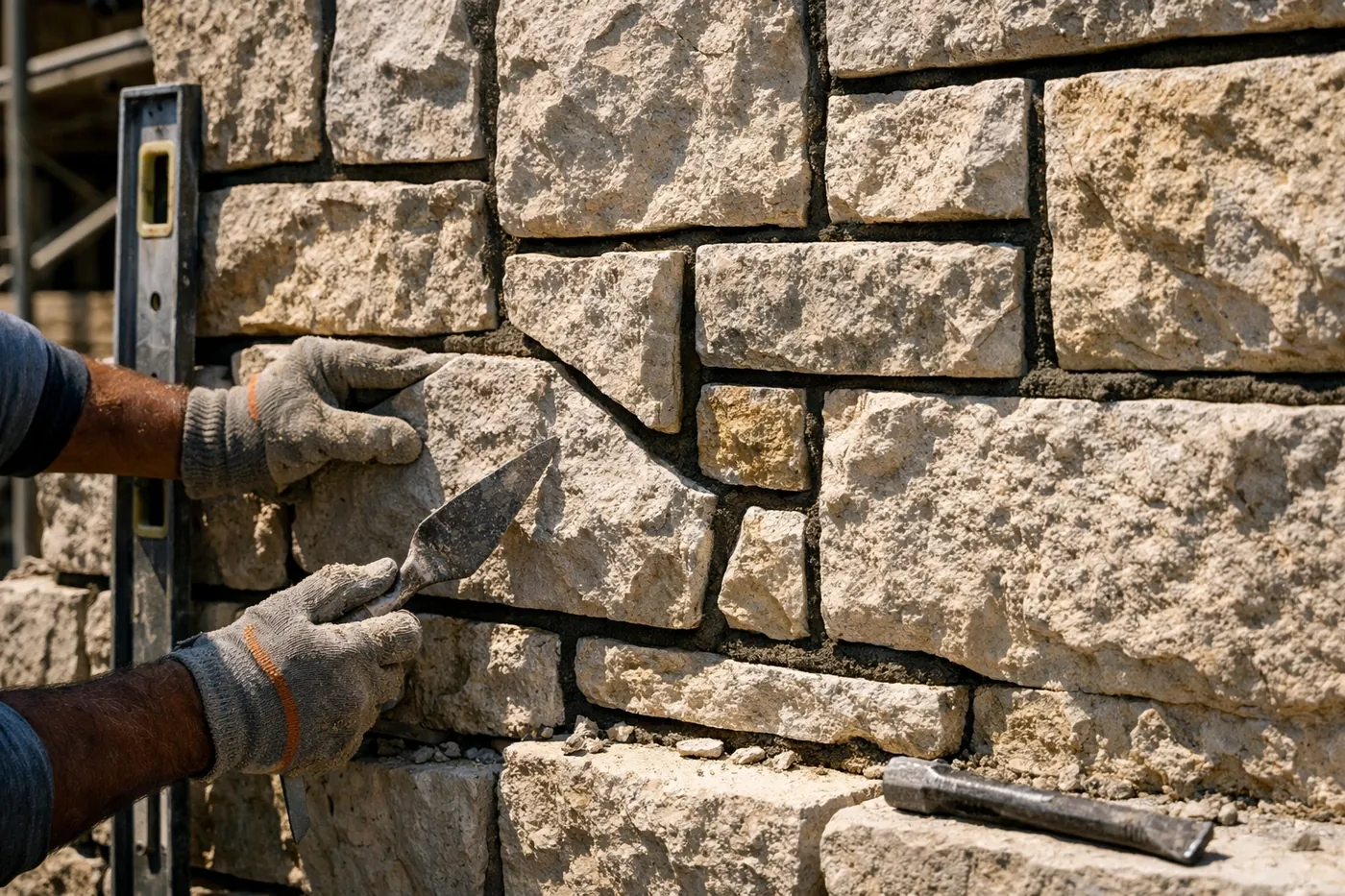
Old brick gets dirty, and dirty brick begs to be cleaned. The trouble is that the two fastest cleaning methods — high-pressure washing and sandblasting — do not clean historic brick so much as remove its skin. The damage does not always show the same day. It shows over the next years, as a wall that used to shrug off weather starts drinking water, spalling faces, and aging a decade in a season. Our brick restoration work begins with the gentlest method that can do the job, because brick you can never un-blast.
A fired clay brick is not uniform all the way through. The outside face — the fire skin formed in the kiln — is the hardest, densest, most weather-resistant part of the unit. Behind it, the body of the brick is softer and more porous. That skin is the wall's raincoat. Sandblasting strips it off entirely; a pressure washer at close range with a tight nozzle can cut it, groove it, and blow the mortar joints out along with the dirt. What is left looks clean for a month and behaves like a sponge for a generation.
Faces spalling and flaking. With the skin gone, water enters the soft body of the brick, and freeze cycles pop the faces off in scales — the failure pattern we walk through in brick spalling in North Texas.
Mortar joints eroded and recessed. Blasting and pressure chew the joints back past their tooled profile, opening a ledge that catches water instead of shedding it. The wall then needs full repointing on top of the brick damage.
Ghosting and uneven color. Aggressive cleaning cuts deeper where the operator lingered. The wall ends up striped and patched-looking — permanently, because material was removed unevenly.
Detail erased. The crisp edges that give older masonry its character — struck joints, molded brick, carved stone trim — round off and soften. On a historic elevation, that loss is the history.
Start with the mildest test, in the least visible place, and step up only as far as the dirt requires. Often that is low-pressure water and a masonry detergent made for the specific soiling — carbon crust, biological growth, paint overspray, and mortar smears are different problems with different chemistries, and the test patch tells you which one you actually have. Pressure stays low, nozzles stay fanned and moving, and joints are checked as the work goes so cleaning stops before the wall becomes the thing being removed. Where paint must come off old brick, chemical softening and hand work take longer than blasting — and leave the brick still owning its face when the job is done.
Cleaning also has to be sequenced with the rest of the restoration. Sound mortar work comes with it or before it: cleaning a wall whose joints are already failed just drives water deeper. And color judgment for any repointing waits until after the wall is clean, because matching to a dirty wall builds the dirt into the repair — the same principle behind matching historic brick in our guide to historic masonry restoration in Dallas.
What pressure, nozzle, and standoff distance will you use on this brick — and will you prove it on a test patch first?
What detergent is matched to this soiling, and what does it do to the mortar?
How are the joints inspected as you go, and who stops the work if faces start cutting?
Is sandblasting anywhere in the plan? On historic brick, that answer ends the conversation.
If your older home or building needs its brick cleaned, have it tested gently and cleaned as restoration — not blasted as a shortcut. The wall has kept its face for this long; the right cleaning keeps it.
Champion Brick Repair is a division of Whitestone Construction, Hamilton, Texas, and is not affiliated with any other companies using similar names.
Historic or older brick that needs cleaning, repointing, or both? Get a restoration look at it before anyone puts high pressure or abrasive to the wall.
Call or text photos: (817) 523-1540
Website:championbrickrepair.com
Estimate:quick and easy free online estimate
Review our work:Google Review page
Old brick can be cleaned without being skinned — let Champion Brick Repair test the gentle route on your wall first.