October 20, 2026 · By Champion Brick Repair
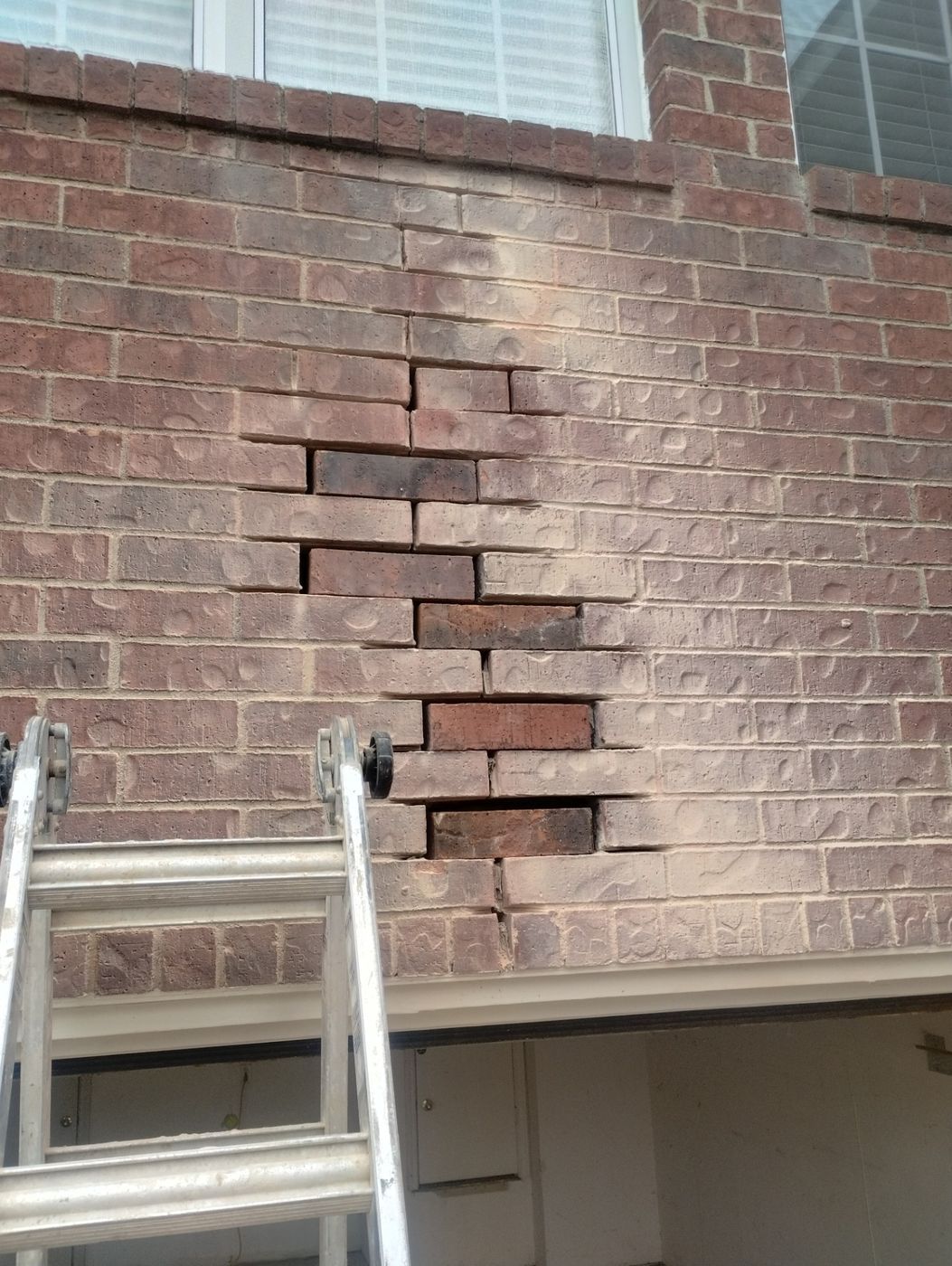
If you own a brick home or building in Dallas, look at the very top of the wall. In Dallas, parapet cap failure starts where most people never look: the cap, or coping, that covers the top course of a brick parapet wall. That cap takes the full Texas sun, the full force of driving rain, and every freeze and thaw first. When it cracks, loosens, or loses its slope, water does not run off the wall. It runs into the wall, from the top down.
A parapet is a low wall that rises above a roofline or runs along the top of a brick facade, common on Dallas commercial buildings, garden walls, and the raised brickwork around flat and low-slope roofs. The cap is its roof. It can be precast stone, cast stone, metal coping, or a row of brick laid to shed water. Whatever the material, its job is the same: overhang the wall slightly, slope away from the center, drip clear of the faces below, and seal the top so the wall core stays dry.
It is horizontal. Every other part of a brick wall is vertical and sheds water by gravity. The cap is the one surface where water sits, so cracked joints and failed sealant there hold moisture instead of draining it.
It moves the most. The top of a wall sees the widest temperature swings and has the least weight holding it down. Caps expand, contract, and work loose at their joints season after season.
Its joints are exposed on both sides. A failed cap joint lets water enter from above and reach both faces of the wall, which is why damage below a bad cap often shows up indoors and out at the same time.
Once water is inside the top of the wall, it travels down through the core, rusts the wall ties and any steel it finds, and pushes out through the faces below. The staining, spalling, and open joints homeowners blame on the lower wall often started at the cap, the same top-down water path covered in our look at through-wall flashing in brick veneer.
Cracked or open cap joints. Gaps between cap sections, or sealant that has split and pulled away, are direct openings into the wall.
Staining that starts at the top. Dark streaks, white salt deposits, or green growth beginning just below the cap and running down point to water entering at the top, not rising from the ground.
Loose or rocking cap pieces. A cap section that moves under hand pressure has lost its bedding and its seal, and wind-driven rain gets under it freely.
Spalling and open joints in the courses below. Brick faces popping and mortar softening in the top few courses is the wall telling you the cap above it has been leaking, a pattern that also shows up at the drainage details covered in what weep holes do.
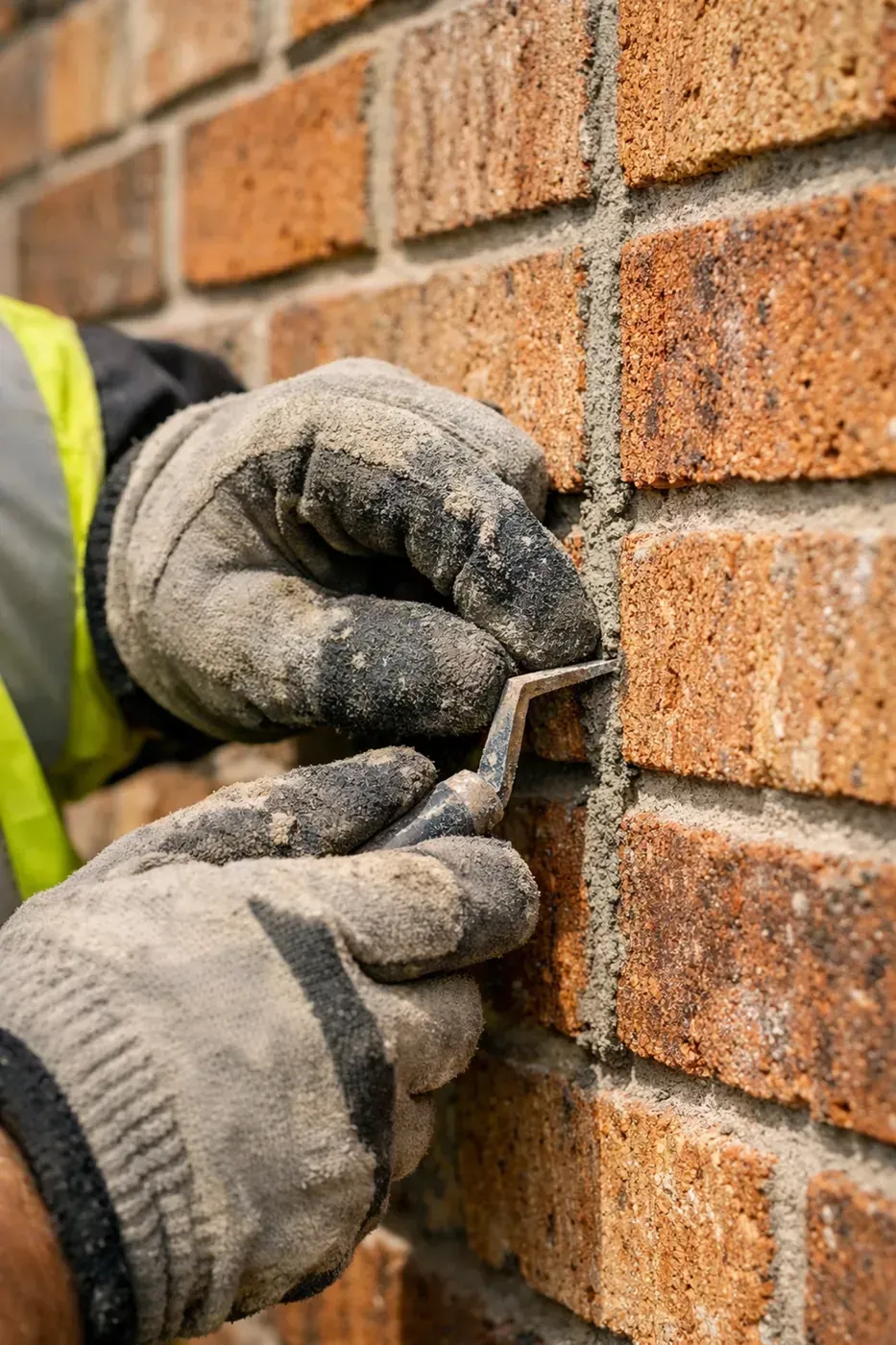
Remove the failed sections. Loose and cracked cap pieces come off, and the top course below is inspected. Water-damaged brick and soft mortar at the top get cut out, not covered over.
Restore the top course. Damaged units are replaced and the top of the wall is repointed with mortar matched for color and texture and kept softer than the brick, the standing rule in mortar matching 101. Joints are ground out to proper depth, cleaned, and dampened before new mortar goes in.
Reset or replace the cap with slope and drip. Sound cap pieces are re-bedded level and tight. Failed pieces are replaced with cap that overhangs the wall faces and slopes so water drips clear instead of running down the brick.
Seal the cap joints, not the whole wall. Cap joints get proper backer and sealant sized for movement. Smearing sealant over the wall face below is not a cap repair, and it traps the water already inside.
A bead of caulk over a cracked cap joint sits on the most exposed, most mobile joint on the building. Sun cooks it, movement splits it, and standing water works behind it. Worse, a surface bead can hide a cap that is already loose and a top course that is already wet. The fix is mechanical first: sound bedding, real slope, a drip that throws water clear, and joints sealed at the cap itself. Sealant is the last step of a cap repair, never the whole repair.
From the yard or sidewalk, look along the top of the wall. The cap line should read straight and continuous, with no cracked gaps between sections, no staining starting right below it, and no brick faces popping in the top courses. Photograph anything that breaks that pattern from the ground and get it inspected from proper access. Our Dallas brick repair page covers the parapet, chimney, and wall work we do across the city.
Champion Brick Repair is a division of Whitestone Construction, Hamilton, Texas, and is not affiliated with any other companies using similar names.
Cracked cap, loose coping, or staining that starts at the top of your wall? Get the cap inspected before water from above takes out the courses below it.
Call or text photos: (817) 523-1540
Website:championbrickrepair.com
Estimate:quick and easy free online estimate
Review our work:Google Review page
A cracked parapet cap lets water into your wall from the top down — let Champion Brick Repair inspect the top of yours right.