October 13, 2026 · By Champion Brick Repair
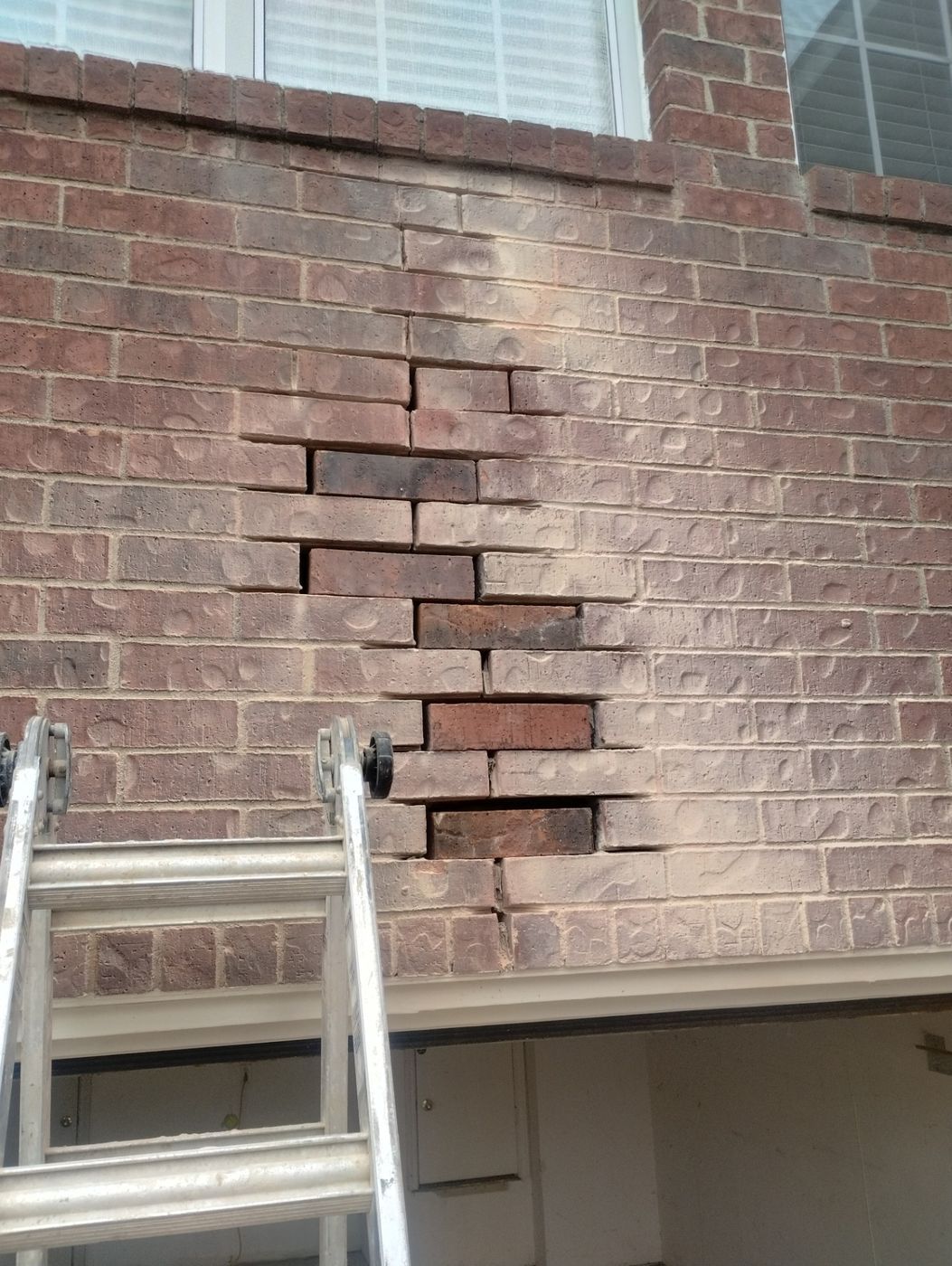
Look under any window on a Dallas brick home and you will see a course of brick laid on edge, standing up like a row of soldiers. That is a rowlock sill, and it is not decoration. It is the sloped brick sill that sits under your window frame, and its whole job is to catch the rain that runs down the glass and throw it clear of the wall below. When a Dallas rowlock sill is built right, water lands on it, runs downhill, and drips off the face. When it goes flat, cracks, or starts losing brick, that same water runs straight into your wall.
Sills are small. The damage a failed one causes is not. A bad sill is one of the most common — and most overlooked — water entry points we find on North Texas brick homes.
In a rowlock course, the bricks are set on their long edge with the end facing out. Laid under a window, that course forms a sill that can be pitched — sloped outward — so the top surface works like a tiny roof. Rain hits the window, sheets down to the sill, and the slope carries it out and away from the brick below.
That slope is the entire point. A sill that sits flat, or worse, one that has settled and tilts back toward the window, does the opposite job: it becomes a shallow trough that collects water and holds it against the window frame and the mortar joints. Brick and mortar both absorb water. A sill that ponds water after every rain is feeding moisture into the wall system day after day.
The sill also caps the top of the wall section below the window. It protects the courses underneath it the same way a chimney crown protects a chimney — shed the water at the top, and the masonry below stays drier and lasts longer.
The slope is lost. Settlement, a bump during other work, or a sloppy original lay can leave the sill flat or back-pitched. The brick still looks fine from the street. The water path is what changed.
The mortar joints crack. A rowlock sill has a lot of vertical joints packed into a short run, and every one of them is a seam water can enter once the mortar cracks or washes out. Open joints in a sill are open doors.
Freeze spalling. Water that soaks into a sill brick and then freezes expands and pops the face off the brick — that flaking, crumbling damage is called spalling. Dallas does not freeze often, but it only takes a few hard freeze cycles on a saturated sill to start shedding brick faces.
Hard mortar repairs. A sill repointed with mortar that is harder than the brick traps moisture inside the brick instead of letting it escape through the joint. The joint should always be the sacrificial part — repair mortar has to stay softer than the brick it sits between.
Caulk smeared over the problem. A bead of caulk across a cracked sill hides the crack for a season and traps the water behind it. It is a cover-up, not a repair.
Staining or dark streaks on the brick directly below a window. That pattern almost always starts at the sill above it.
Spalled, flaking, or cracked sill bricks — faces popping off, corners crumbling, or a brick split clean through.
Open or recessed mortar joints in the sill course while the joints in the wall below still look sound.
Water marks, soft trim, or paint failure on the inside around the window after driving rain.
A sill you can see is flat. Put a short level on it, or just watch it in a rain: a working sill sheds water off its face; a failed one holds a puddle.
Water that enters at a sill does not stay at the sill. It runs down inside the cavity, and where it ends up depends on the drainage path — which is why sill problems so often show up alongside the issues in our guide to weep holes and how to check yours. The wall is designed to drain. A failed sill simply gives it far more water to drain than it was ever meant to handle.
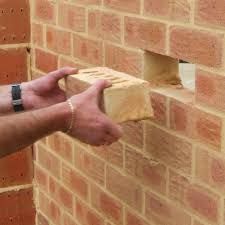
Remove the failed course. The damaged sill bricks come out — all of them, not just the one that looks worst. A sill is one sloped plane; patching single bricks into it breaks the plane and the water path with it.
Replace damaged brick with matching brick. Spalled or split bricks are not reused. Sound original bricks can be cleaned and re-laid; failed ones get replaced with brick matched for size and color so the repair reads as part of the wall.
Re-lay on a proper slope. The new rowlock course is laid on a fresh mortar bed pitched outward, so the finished sill sheds water off its face — this slope is the repair. Everything else is finish work.
Tool every joint. Each joint is tooled to a compacted, weather-shedding profile once the mortar firms up. Tooling compresses the surface of the joint and is what makes it resist water instead of drinking it.
Check the drainage below. While the wall is open at the sill, the flashing line and the weeps that serve that section get checked and cleared. There is no sense rebuilding the entry point and leaving the exit blocked — the same water-management thinking behind our through-wall flashing guide applies at every window.
Will the new sill be laid on a slope, and how will you show me the pitch?
Are you replacing spalled brick, or re-laying brick whose face is already gone?
What mortar are you using, and is it softer than my brick?
Will the joints be tooled, or just struck off flat?
Are you checking the flashing and weeps below this window while you are here?
If the brick under your Dallas windows is staining, flaking, or growing open joints at the sill, send photos and get a straight answer about the water path before the wall below joins the problem. For related information, see Champion's brick repair services in Dallas.
Champion Brick Repair is a division of Whitestone Construction, Hamilton, Texas, and is not affiliated with any other companies using similar names.
Sill cracked or sitting flat? Get the water path fixed before the wall below it starts failing.
Call or text photos: (817) 523-1540
Website:championbrickrepair.com
Estimate:quick and easy free online estimate
Review our work:Google Review page
A sill that sheds water protects the whole wall under it — let Champion Brick Repair rebuild yours on a proper slope.