October 14, 2026 · By Champion Brick Repair
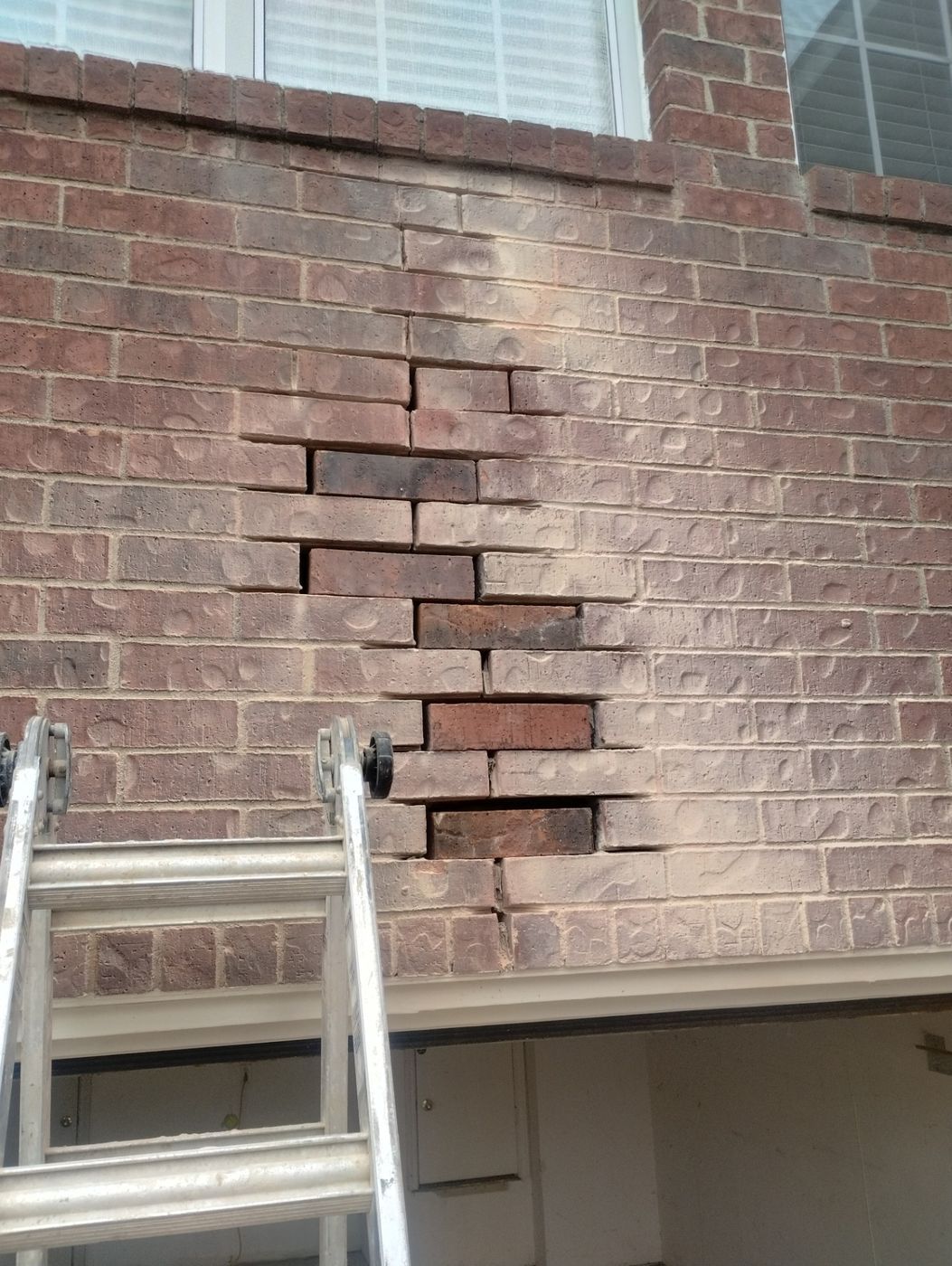
Brick does not hold itself up over an opening or along a floor line in Dallas. It sits on steel. A shelf angle — also called a relieving angle — is a heavy L-shaped steel angle bolted or welded to the structure, and the brick veneer above it rests on the flat leg of that angle. Every course above a wide opening, a garage, or a floor line in a Dallas brick home is quietly depending on that hidden steel staying sound.
When the shelf angle corrodes, the brick it carries tells on it. Rust takes up more room than the steel it came from, so a rusting angle grows thicker as it fails. That growth lifts, pushes, and cracks the very brick it was installed to carry.
A brick veneer is heavy, and it cannot span a wide opening on its own. The shelf angle transfers the weight of the brick above back into the structure at set points, so the wall below is not asked to carry a load it was never built for. Above the angle, through-wall flashing is supposed to catch any water that gets into the cavity and direct it out through weep holes just above the angle line.
That flashing and those weeps are not extras. They are the reason the steel stays dry. Steel that stays dry lasts. Steel that sits in trapped water rusts, and a shelf angle lives exactly where cavity water collects if the drainage path fails — which is why this repair pairs with our guide to through-wall flashing in brick veneer.
A horizontal crack running along one course line. Corrosion lifts the brick evenly along the angle, so the crack often follows a straight bed joint instead of stepping like a settlement crack.
Brick pushed out of plane above an opening. Courses above a garage or wide window bow or step outward while the wall below stays flat.
Rust staining at the angle line. Orange streaks bleeding from a joint at the same height across a wall are steel talking, not dirt.
Open joints and spalling right above the angle. Expanding rust pops mortar and can flake brick faces along that one line.
Blocked or missing weeps above the angle. If water cannot get out there, it sits on the steel. Check yours the way we describe in our weep hole guide.
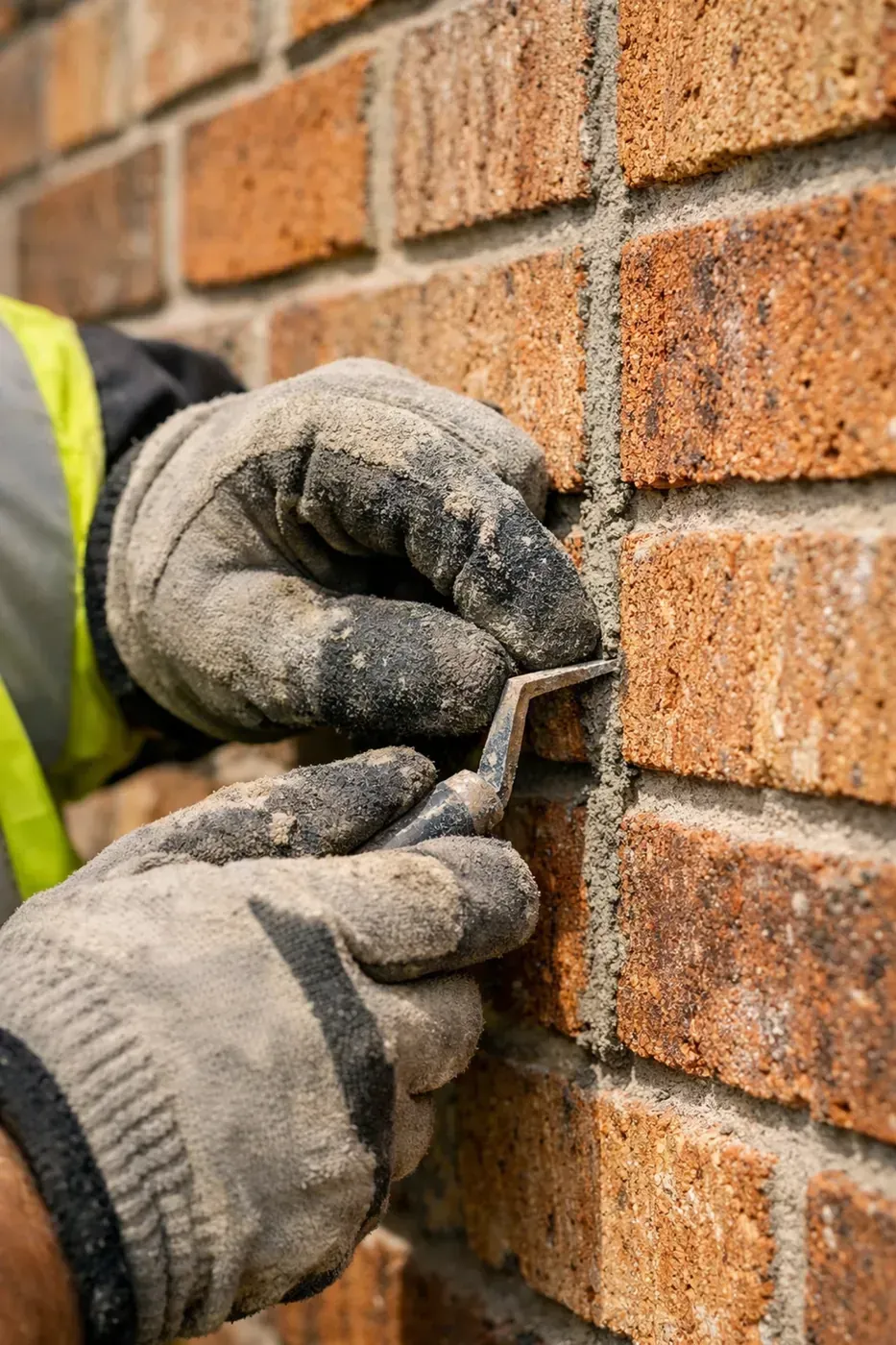
The crack is the symptom. The corroding steel underneath is still expanding, so fresh mortar packed into that joint gets pushed back out. Worse, a surface patch can seal water into the cavity at exactly the line where the angle needs to drain. Name the cause first, then fix the cause — that order is the whole job.
Support the brick above. The veneer over the affected run is supported before anything comes out, so the wall is never left hanging on corroded steel.
Remove brick along the angle in a controlled run. Enough courses come out to expose the full corroded section — not just the worst-looking foot of it.
Replace the failed steel. Badly corroded angle is cut out and replaced with new coated steel, anchored back to the structure. Light surface rust on sound steel is a different call than steel that has lost section and is lifting the wall — the inspection decides, not the guess.
Renew the flashing and clear the weeps. New through-wall flashing goes in above the new angle and the weep path is opened, so the replacement steel does not sit in the same trapped water that killed the original.
Rebuild the brick to match. Sound brick is cleaned and re-laid; failed brick is replaced with matching brick, and the mortar is custom matched before it goes in the bag — softer than the brick, tooled to shed water, as we explain in mortar matching 101.
Walk the wall slowly and look along it, not straight at it — sighting down the face is how a bowed or stepped-out course shows itself. Find the long horizontal line above your widest openings and check three things. First, is there a crack that runs straight along one mortar joint for several feet, rather than stepping up and down like a staircase? Second, is there rust-colored staining bleeding from that line, especially after rain? Third, are the small weep openings just above that line open, or are they caulked shut, buried in mulch, or packed with old mortar?
Then look at the joints themselves. Mortar that is cracked only along that one line, while the rest of the wall still looks tight, is pointing at movement from below — at the steel — not at general wear. Take a photo straight-on and one sighting along the wall, and note whether the line has changed since last season. A shelf angle does not heal, and it does not stop expanding once corrosion starts; it only moves the brick further. Catching it while the repair is still one run of brick and one section of steel is the difference between a contained job and a wall section that has to come down and go back up over a much longer run.
Are you exposing the steel, or only repointing the crack above it?
How will the brick above be supported while the angle is out?
Is the flashing above the angle being renewed, and are the weeps being cleared?
Is the steel being replaced where it has lost section, or coated where it is still sound?
If a straight horizontal crack, rust staining, or brick stepping out of line has shown up above an opening on your Dallas home, get the steel looked at before the wall above it moves further. For related information, see Champion's brick repair services in Dallas.
Champion Brick Repair is a division of Whitestone Construction, Hamilton, Texas, and is not affiliated with any other companies using similar names.
Crack running straight along one course line? Get the steel under it inspected before the brick above it keeps moving.
Call or text photos: (817) 523-1540
Website:championbrickrepair.com
Estimate:quick and easy free online estimate
Review our work:Google Review page
A shelf angle that stays dry carries brick for decades — let Champion Brick Repair expose, replace, and rebuild yours right.