October 16, 2026 · By Champion Brick Repair
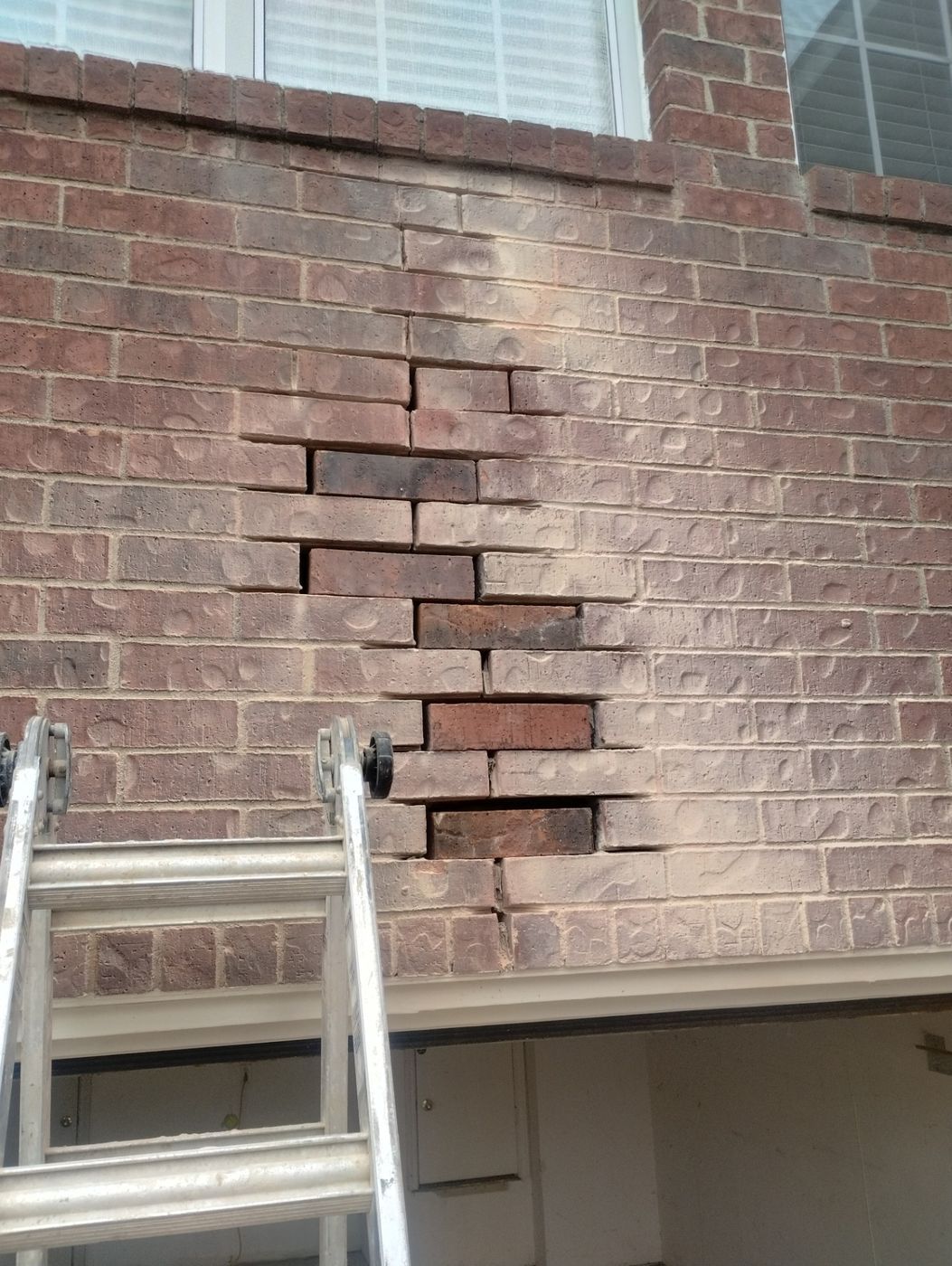
Look above almost any window or garage door on a Dallas brick home and you will see a soldier course — a row of brick standing upright, shoulder to shoulder like soldiers at attention, forming the band that finishes the top of the opening. It is one of the most handsome details in Dallas masonry, and it is often the first place a wall in Dallas starts to crack. That is not because the upright brick is weak. It is because a soldier course can only be as sound as the steel carrying it and the joints holding it together.
A running-bond wall interlocks: every brick overlaps the ones below it, so a small crack has to zigzag to travel. A soldier course does not interlock that way. Each upright brick stands on the steel below, bedded on its end, tied to its neighbors only by the head joints between them. When the steel moves, swells, or loses its bearing, the soldiers move one at a time — and the cracks run straight up between them where everyone can see them.
Brick standing on end cannot span an opening by itself. Underneath every soldier course over a window or door sits a steel lintel or angle that carries the weight of that band — and often the brick above it — back to the masonry on each side of the opening. The soldiers are the visible finish. The steel is the structure. That is why soldier course failure is so often a steel problem wearing a brick disguise, the same hidden cause we walk through in our guide to shelf angle corrosion in Dallas.
Water is what starts the chain. Rain runs down the wall, finds the horizontal ledge where the band meets the opening, and sits in any open joint. From there it reaches the steel. Bare or poorly coated steel rusts, and rust takes up more room than the steel it replaces. As it expands, it lifts and pushes the course it carries. The upright bricks tilt, step out of line, or separate, which opens the joints wider, which lets in more water. Left alone, the cycle feeds itself.
Straight vertical cracks between upright bricks. A crack that runs in a clean line up the band, soldier to soldier, is the signature. There is no overlap to force it sideways, so it telegraphs movement below.
The band bowing or stepping out over the opening. Sight along the course from the side. Soldiers pushed forward or lifted in the middle of the span mean pressure is building underneath them.
Rust staining bleeding down from the band. Orange streaks below a window head or garage opening mean water has already reached steel — and steel that is staining is steel that is expanding.
Open head joints you can slip a coin into. Joints between soldiers should be full and tooled. Gaps mean the course has spread or the mortar has been pushed out.
Cracked or dropped brick at the ends of the span. The ends are where the steel bears on the wall. Damage concentrated there points at bearing and support, not at the brick itself.
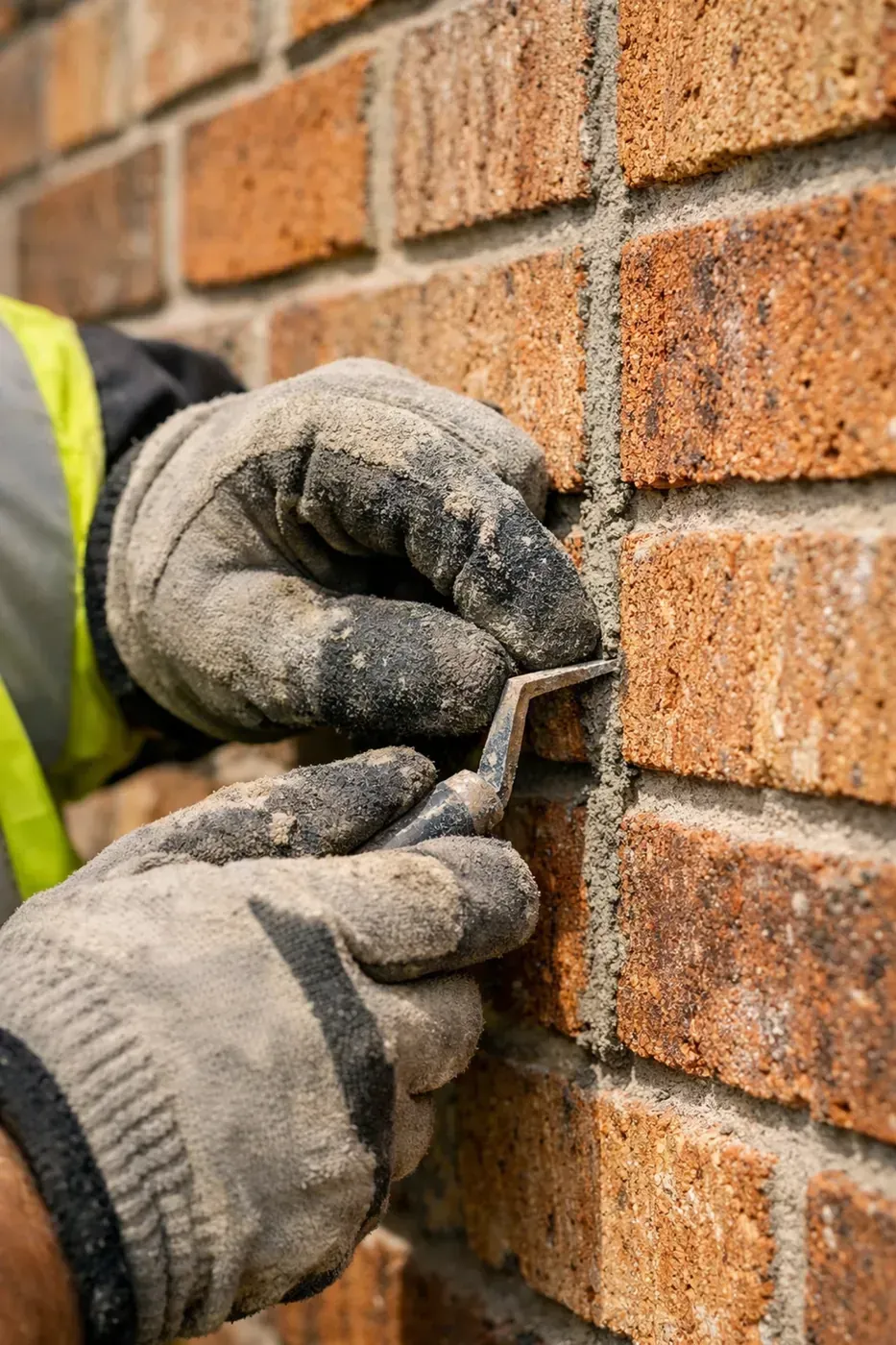
The quick fix is a bead of caulk or a smear of mortar across the open joints, and it fails for the same reason it always does: it treats the crack and ignores the cause. If rusting steel is lifting the band, a surface bead just hides the movement for a season while the steel keeps expanding underneath. Worse, a hard surface patch locks the face of the joint while the back of it is still open, trapping water exactly where the steel sits.
The same goes for repointing alone when the steel has lost its section. Fresh mortar in the joints of a band that is still being jacked apart from below will crack back out along the same lines. The order of work matters: steel first, brick second, joints last. Our walkthrough of why rust expansion pushes brick apart shows that same sequence over a garage opening.
Support and open the band. Loose or displaced soldiers come out carefully so sound brick can be saved and reused where it matches. The steel underneath is fully exposed — you cannot judge a lintel you cannot see.
Judge the steel honestly. Light surface rust on a sound angle is a clean-and-coat job. Steel that has lost thickness, pitted deep, or bent under load gets replaced, with flashing set over the new steel so water is directed out of the wall instead of onto the metal.
Relay the soldiers plumb and in line. Each upright goes back on a full mortar bed, aligned to the course on either side, with matching brick used for any units too damaged to reuse.
Repoint with mortar matched before it goes in the bag. The replacement mortar is custom matched for color and texture before bagging, and kept softer than the brick so the joint stays the sacrificial part of the wall — the rule we lay out in mortar matching 101. Failed joints around the band are ground out about 5/8 inch first, cleaned, and dampened so the new mortar bonds instead of sitting on dust.
Tool, brush, and clean. Joints are tooled to match the profile of the surrounding work, brushed, and the face cleaned so the repair reads as one band, not a patch.
Walk your Dallas home and stop at every window and door with an upright brick band over it. Sight along the band from the side for a bow or a step. Look for a straight crack climbing between two soldiers, rust color bleeding below the ends, or a head joint open wide enough to catch a fingernail. Photograph each band straight-on so you can compare next season — a band that is moving will show it in the photos before it shows it in fallen brick.
One caution: do not pry at a loose soldier from a ladder. A brick standing on end that has lost its bed can come out in your hand. Note it, photograph it, and get it looked at from proper access. If the band over your garage is the one moving, our Dallas brick repair page covers the openings work we do across the city.
Are you opening the band to inspect the steel, or pointing over the top of it?
What happens if the steel underneath has lost thickness — is replacement part of the plan?
Is flashing going in over the steel, and where does that water come out?
How is the mortar being matched, and is it softer than the brick?
If the upright band over a Dallas window or garage is cracking in straight lines, bowing out, or bleeding rust, get the steel under it looked at before the course starts losing bricks. The band is the warning. The steel is the repair.
Champion Brick Repair is a division of Whitestone Construction, Hamilton, Texas, and is not affiliated with any other companies using similar names.
Soldier course cracking or stepping out over an opening? Get the band and the steel under it inspected before loose brick starts coming down.
Call or text photos: (817) 523-1540
Website:championbrickrepair.com
Estimate:quick and easy free online estimate
Review our work:Google Review page
A soldier course is only as sound as the steel under it — let Champion Brick Repair inspect and rebuild yours right.