October 11, 2026 · By Champion Brick Repair
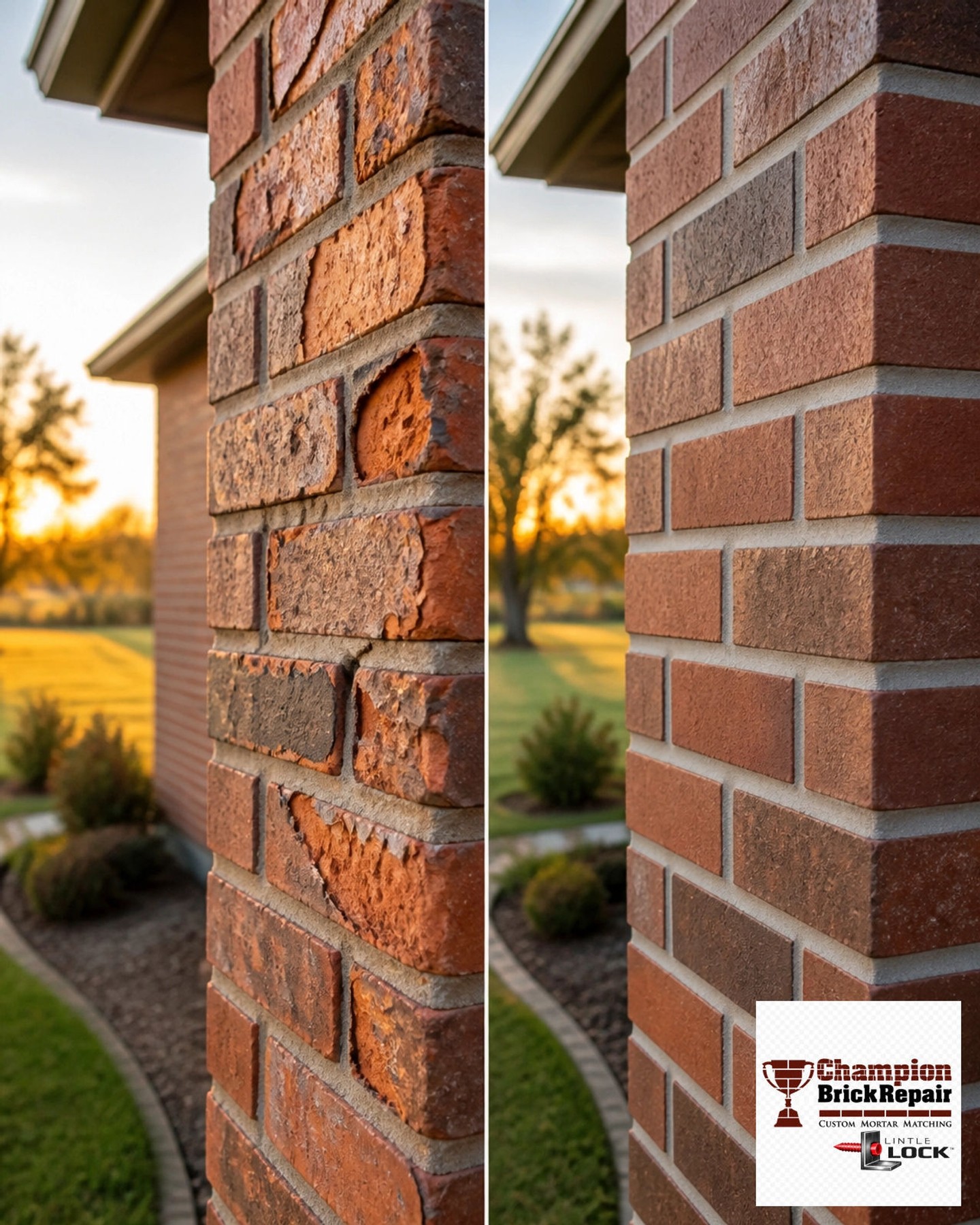
If you own a brick home in Dallas, you probably believe your walls keep water out. The truth runs the other way: modern brick veneer is designed to let water in — and then drain it back out before it ever touches the wood framing behind it. That drainage system has a hero almost no homeowner has heard of: through-wall flashing. When it works, your wall can stay dry for decades. When it is missing, installed wrong, or buried under mortar droppings, water parks inside your wall and starts popping brick faces, feeding mold, and rotting the structure you cannot see.
This is the trade detail that separates a wall that lasts from a wall that leaks. Here is how it works, how it fails on Dallas homes, and what a real repair looks like.
Brick veneer is not a waterproof barrier. It is a drainage wall — a single layer of brick standing about an inch off the sheathing, with an air cavity between the two. Wind-driven rain pushes water through mortar joints, hairline cracks, and the brick itself. Capillary action wicks it upward. That is normal, and the wall is engineered for it — if the drainage path is intact.
Water that enters the cavity is supposed to run down the back of the brick, hit flashing, and exit through weep holes at the base of the wall. Every link in that chain matters. Through-wall flashing is the link most builders get wrong.
Through-wall flashing is a waterproof membrane or formed metal that spans the full thickness of the wall — from the backup sheathing all the way out to the face of the brick. It is installed at every point where water needs an exit:
At the base of the wall, just above the foundation, where all cavity water collects.
Above and below every opening — windows, doors, vents — where water running down the cavity would otherwise pool on a lintel or sill.
Under rowlock sills, so water shedding off the sill cannot dive behind the brick below it.
At shelf angles and relieving angles on taller walls, where the brick bears on steel.
The flashing is lapped shingle-style and turned out through the face of the brick, with weep holes left open in the head joints just above it. Think of it as a quiet gutter hidden inside your wall. Done right, you never think about it again.
When we open up leaking walls around Dallas, we keep finding the same handful of failures:
It was never installed. Plenty of older and budget-built walls simply have no through-wall flashing at the base or over openings. The cavity drains straight onto the foundation or onto bare steel.
It was installed but never turned out. The membrane ends behind the brick face instead of extending past it. Water follows the flashing, hits a dead end, and drops right back into the wall.
Mortar droppings bridge the cavity. Squeezed-out mortar piles up in the air gap during construction and dams the drainage path. Water ponds behind the dam and finds its way sideways and inward.
Weep holes are missing, clogged, or painted shut. Flashing without a working exit is a bathtub. If you have never seen daylight through your weeps, read our guide on weep holes and how to check yours.
Corroded or punctured flashing at shelf angles. Metal flashing rusts through; membranes tear. Either way, the drainage plane breaks exactly where the most water collects.
Failed flashing rarely announces itself inside the wall first. It shows up on the face: corners that spall and crumble, white efflorescence banding near the base of the wall, brick faces popping off in flakes, and damp spots on interior baseboards after a hard rain. By the time you see brick faces spalling off, water has been living in that wall for a long time.
Inside, the signs are subtler — a musty smell near exterior walls, paint blistering at the baseboard, or soft drywall that keeps coming back no matter how many times it is patched. That is not a paint problem. It is a drainage problem.
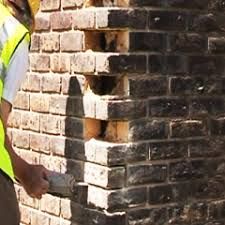
There is no caulk-tube shortcut for failed flashing. The wall has to be opened, and the repair has to rebuild the drainage path from the inside out:
Remove the brick in the failed zone, course by course, and set sound brick aside for reuse.
Clean the cavity. Every mortar dropping and bridge comes out so water can actually travel down to the flashing line.
Install new flashing — self-adhering membrane or formed metal — lapped shingle-style, sealed to the backup wall, and turned out past the brick face.
Restore open weeps in the head joints directly above the flashing so collected water has somewhere to go.
Rebuild with custom-matched mortar, tooled to match the existing joints, so the repair disappears into the wall.
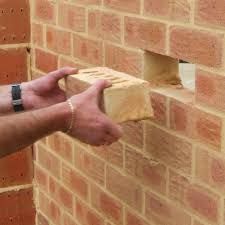
One more place flashing matters: over every steel lintel. Water running down the cavity lands on lintels constantly, and bare or rusting steel plus standing water is how rust expansion starts pushing brick apart. Every LintelLOCK install gets flashing run over the new steel with a waterproofing membrane along the top — that flashing detail is the difference between a five-year patch and a permanent repair. If a contractor quotes your lintel work and never mentions flashing, you are buying the five-year version.
Where exactly is flashing missing, and where is it still good?
How will you clean the mortar droppings out of the cavity?
Where will the new flashing turn out, and what is the weep plan above it?
Will the mortar be custom-matched to my wall before it goes in?
What happens to the water at my lintels and sills in your repair?
If you are dealing with water problems in your brick and wondering about sealers, know this: no coating fixes a failed drainage plane. Fix the flashing first. For related information, see Champion's brick repair services in Dallas.
Champion Brick Repair is a division of Whitestone Construction, Hamilton, Texas, and is not affiliated with any other companies using similar names.
Not sure whether your wall needs a repair, a sealer, or both? Send photos and get a straight answer.
Call or text photos: (817) 523-1540
Website:championbrickrepair.com
Estimate:quick and easy free online estimate
Review our work:Google Review page
Cracks are ugly — let Champion Brick Repair fix them right, with mortar matched to your home.