October 9, 2026 · By Champion Brick Repair
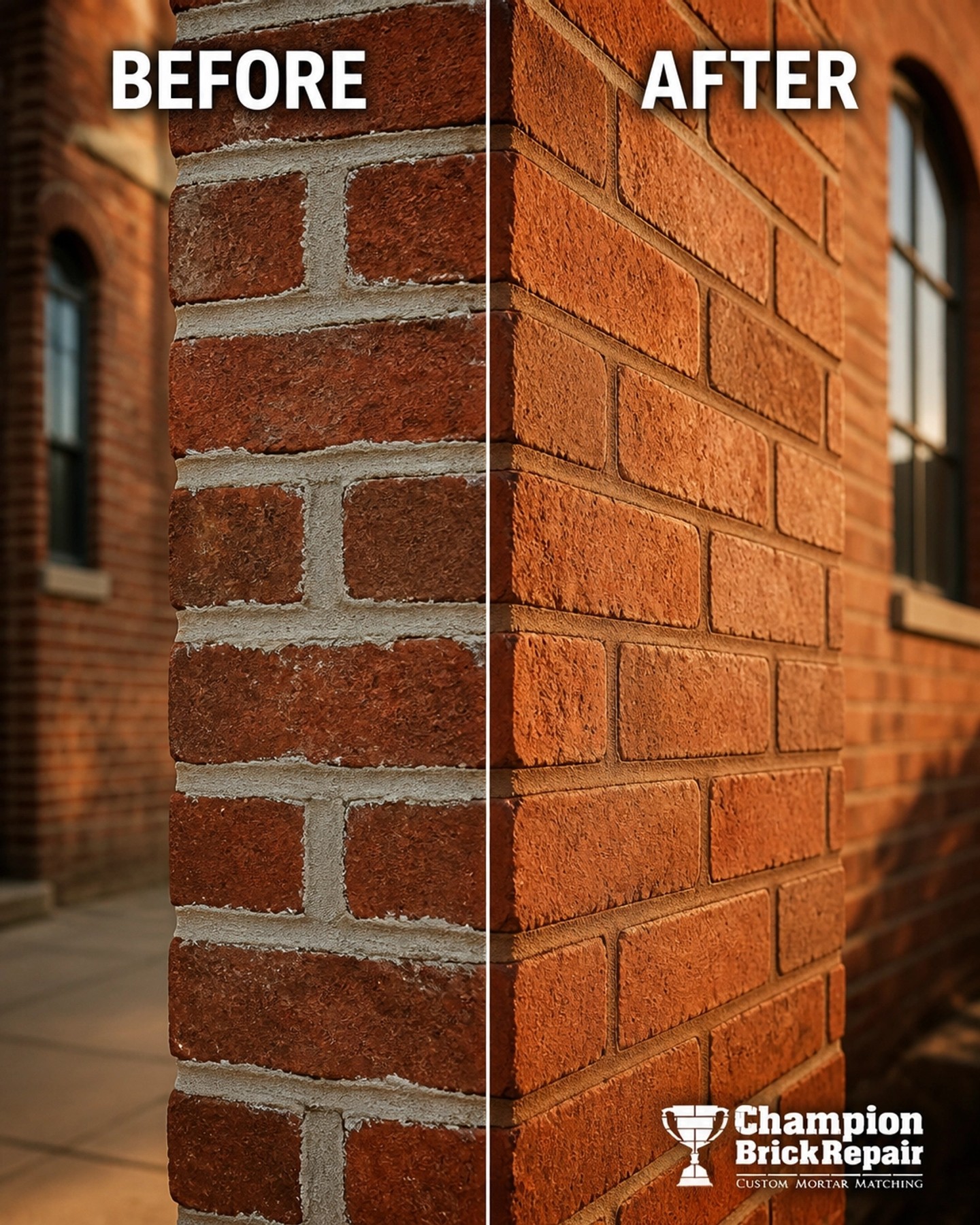
If your Dallas tuckpointing job just wrapped up and the wall looks great from the sidewalk but hazy and filmed-over up close, the last step of the job got skipped. That last step is the cleanup — a controlled acid wash — and it is not an optional extra. It is the difference between a repair that disappears into your wall and one that advertises itself every time the sun hits it.
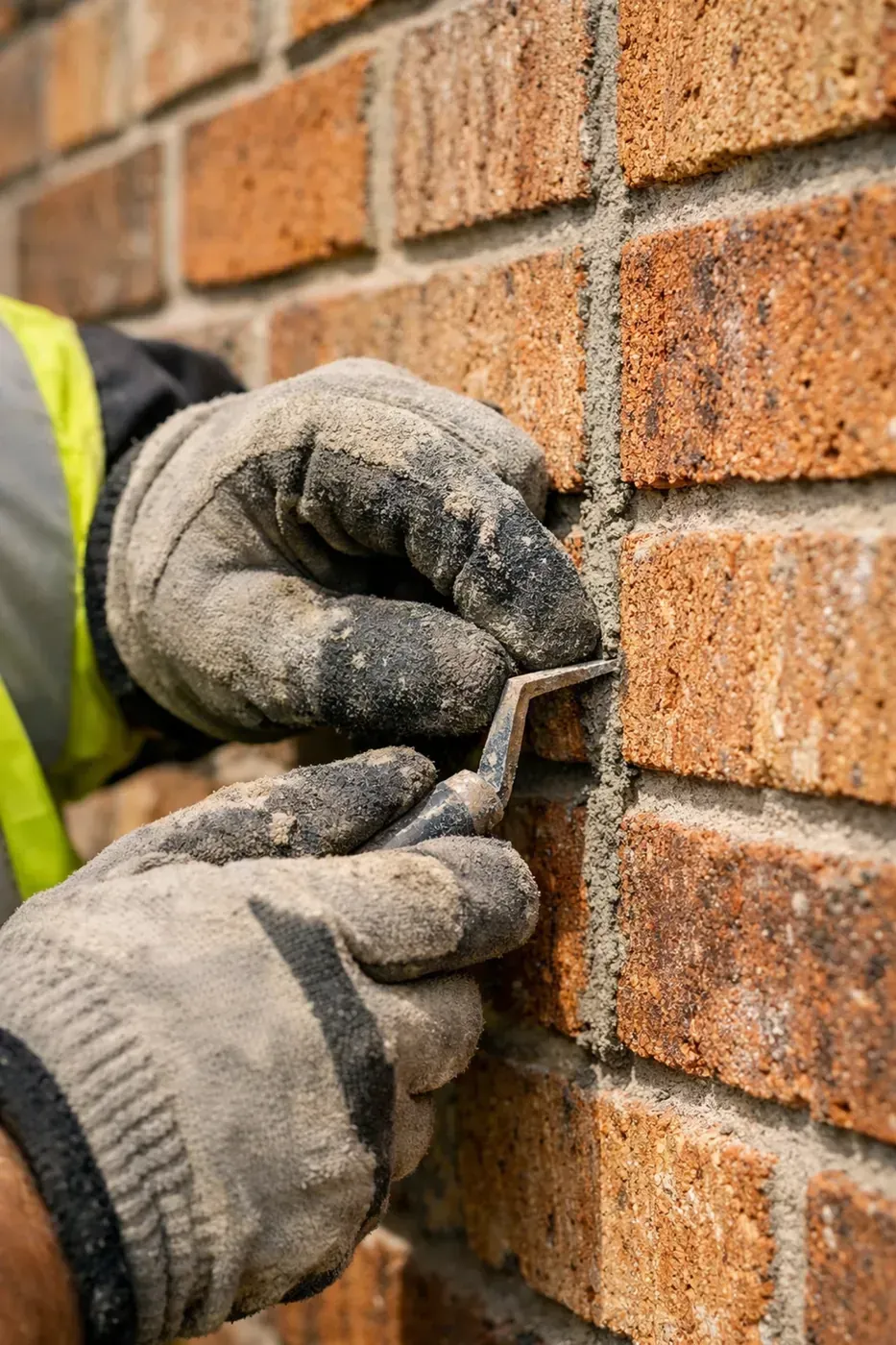
Here is the part most homeowners never hear: tuckpointing is a four-beat process, and the wash is beat four. First the old joints get ground out to a proper depth. Then the mortar gets custom color-matched before it ever goes in the bag — never an off-the-shelf mix. Then it gets piped into the joints, tooled, and brushed. And then the wall gets washed. Skip that final beat and you can do everything else right and still end up with a job that looks wrong.
Pointing mortar is messy work by nature. No matter how careful the hand on the grout bag, a thin film of cement paste ends up smeared across the brick faces around every joint. Left alone, that film dries into a milky haze — sometimes faint, sometimes a chalky veil that dulls the whole wall.
A proper acid wash dissolves that film. A diluted masonry cleaning solution loosens the cement residue, a stiff brush works it out of the brick texture, and a thorough rinse carries it off the wall. When it is done right, two things happen: the brick faces come back to their true color, and the new mortar joints read the way they were matched to read.
That second part matters more than people think. A custom-matched mortar is mixed to blend with the wall as it is — the real brick, not brick seen through a gray film. If the film stays, the match looks off even when the match was right.
An acid wash is a chemical step, and chemicals demand respect. There is a right way that protects your wall and a wrong way that damages it. Here is the difference.
The wall gets pre-wet first, so dry brick cannot drink the cleaning solution deep into its pores.
The solution is diluted — masonry-safe strength, not raw acid straight from the jug.
Dwell time is short and watched. The solution does its work on the surface, then comes off.
Joints get rinsed top-down, thoroughly, so no residue sits in the fresh mortar.
The work happens after the joints are tooled and brushed but before the film has weeks to harden — timing is part of the craft.
Acid applied to a dry wall, where it soaks into the brick and leaves bleached, burned-looking patches that do not fade.
Solution mixed too strong or left to dwell too long, etching the brick face and eating at the new joints.
No real rinse — the chemical dries on the wall and keeps working long after the crew leaves.
Acid used on limestone, cast stone, or certain architectural trim, which it can permanently discolor or dissolve.
A pressure washer cranked up as a substitute for chemistry, blasting mortar out of joints that were just pointed.
That last one deserves emphasis. A high-pressure blast is not a wash. It gouges soft mortar, drives water behind the brick, and turns a finished job into a callback. Chemistry with a garden-hose rinse does what brute force cannot.
You do not need trade training to check this. Walk up to the wall after the crew has gone and look for these signs:
A milky haze on the brick faces around the repointed joints — the classic sign of an unwashed wall.
Mortar smeared outside the joints, dried onto brick faces like gray fingerprints.
Joints that look chalky instead of clean and compacted.
A color match that looked right in the sample but reads wrong on the wall — often the match is fine and the film is the problem.
Water marks or acid burns — streaks and bleached patches that point to a wash done wrong, not one skipped.
A wall that was ground, matched, pointed, tooled, brushed, and washed looks seamless. The joints sit clean in the wall, the brick shows its real color, and nothing about the repair calls attention to itself. That is the standard. Accept nothing hazier.
The cleanup step costs time, water, and care — three things a cheap bid tries to eliminate. Grinding makes dust. Bagging and tooling take skill. Washing takes patience, and patience does not fit in a rush job. Some crews genuinely do not know better; they were never taught that the wash is part of the repair. Others know and skip it anyway, betting the homeowner will not look closely.
Here is the thing: the wash is also when a careful mason does the final inspection. Working across the wall with a brush and a hose, he sees every joint — the one that needs a touch-up, the smear that needs another pass, the spot the grinder missed. Skipping the wash does not just leave a film on the wall. It skips the last quality check too.
When you get a tuckpointing estimate, ask one question most homeowners never ask: “Walk me through your cleanup process.” You want to hear about tooling, brushing, a controlled wash, and a full rinse — in that order. If the answer is “we hose it off” or a blank stare, you have your answer about the rest of the job too.
For related reading, see why real repointing in Dallas starts with a grinder, not a caulk gun and why your repair mortar should be softer than your brick. And if you are weighing a wall repair, our Dallas brick repair page covers the full scope of what we do.
Champion Brick Repair is a division of Whitestone Construction, Hamilton, Texas, and is not affiliated with any other companies using similar names.
Need tuckpointing in Dallas done start to finish — grind, match, point, tool, brush, and wash?
Call or text photos: (817) 523-1540
Website:championbrickrepair.com
Estimate:quick and easy free online estimate
Review our work:Google Review page
Hazy joints and smeared brick faces mean the job was not finished — let Champion Brick Repair do it right, start to finish, with a lifetime warranty.