October 16, 2026 · By Champion Brick Repair
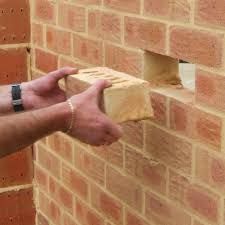
If you are searching for brick fence repair near me in Keller, TX, you are probably looking at a fence that is leaning, cracked between its columns, or dropping brick along the top — in a Keller yard where that fence is both your privacy and your property line. A brick fence in Keller lives a harder life than the brick on your house. It stands alone in the weather on both faces, catches wind like a sail, and moves with Keller clay soil at its footing with no house frame to hold it straight. Here is how to tell what yours actually needs.
A typical masonry fence is a system, not a wall: brick columns or piers at intervals, brick panels running between them, a concrete footing under the whole line, and caps on top shedding water. When one part of that system fails — a footing, a column, the bond between panel and column — the fence tells you in lean and cracks long before it falls. Reading those signs right is the difference between a targeted repair and a full rebuild.
Clay soil movement at a shallow footing. Keller sits on the same expansive North Texas clay as the rest of the Metroplex. A fence footing is shallower than a house slab, so wet-and-dry cycles lift one column and drop the next — and the rigid panel between them cracks or separates.
Wind load on a freestanding panel. A solid brick panel catches storm wind across its whole face. Year after year that push works on the footing and on the panel-to-column joints, especially where a gate hangs and slams.
Water in at the top. Missing or cracked caps let rain straight into the columns and panels. Wet brick and mortar that then bake, and occasionally freeze, break down from the top course down.
Tree roots and drainage. A root under one footing, or a flower bed holding water against one side of the line, moves a single bay while the rest stand straight — the classic one-panel lean.
No room to move. Long fence runs built without movement joints crack at their weakest point instead, usually mid-panel or right at a column. Our guide to expansion joint failure in brick veneer explains why rigid masonry needs a planned place to move — a long fence run is no different.
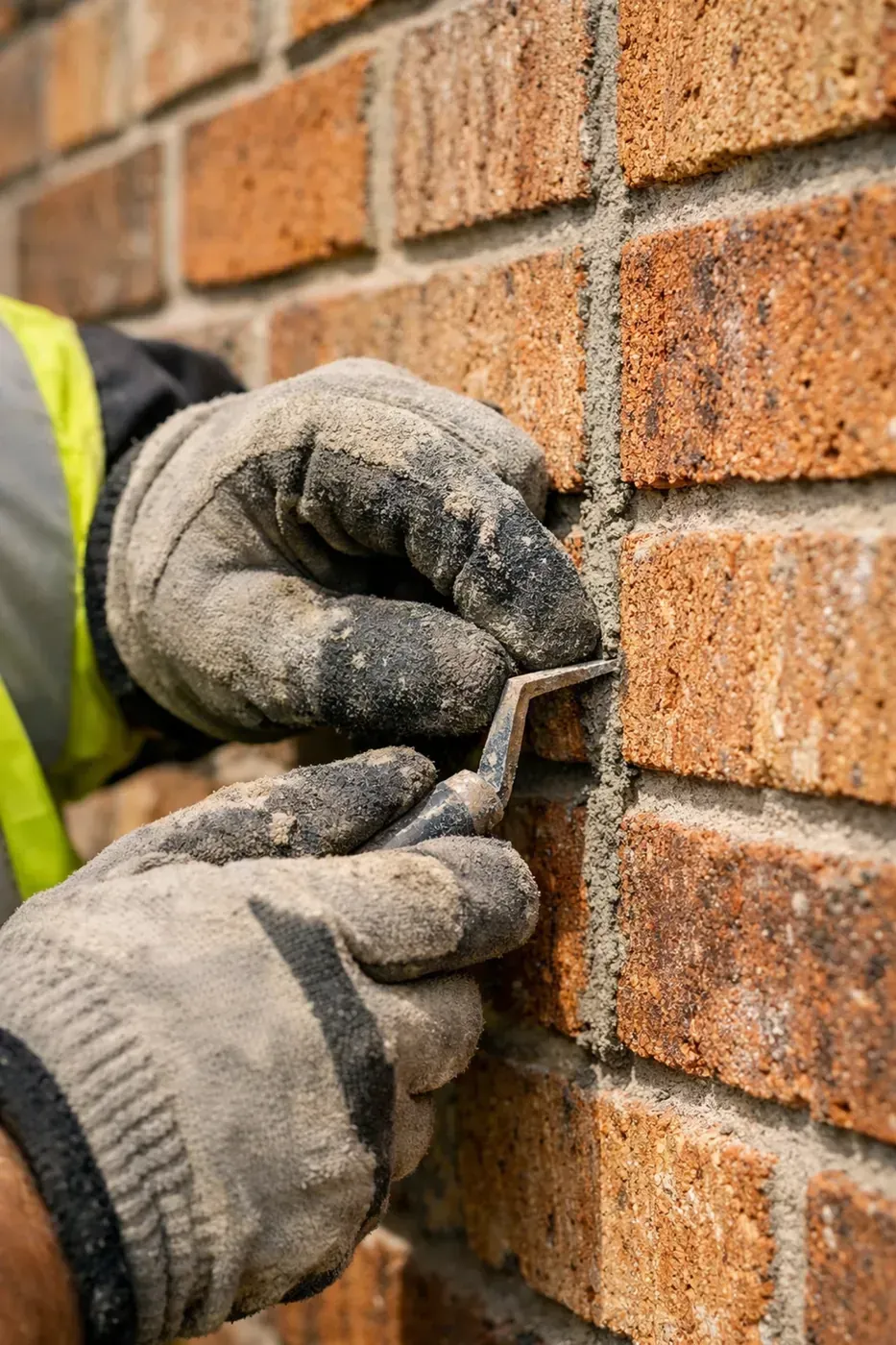
Repair fits when the footing and columns are sound. A panel with cracked or eroded mortar but a plumb line, solid columns, and no footing crack is a repointing and relay job: grind the failed joints out about 5/8 inch, clean and dampen them, and repoint with mortar custom matched before it goes in the bag, softer than the brick — the standard we set out in mortar matching 101. Loose top courses and damaged caps get relaid or replaced in the same visit.
A section rebuild fits when the line has moved. If a column is out of plumb, a panel has separated from its column, or the footing is cracked through, pushing the fence straight and pointing the cracks does not last — the footing will move it again. That bay comes down to sound material, the footing is repaired or replaced at proper depth, and the column and panel are rebuilt plumb and tied together. The footing-first logic is the same one we use on a house wall, in our brick column repair guide.
Full-line rebuild is the last resort, not the default. It is warranted when most footings have failed or the whole line is out — not because one bay leaned. Any quote that jumps straight to tearing out a whole fence for one leaning panel deserves a second look.
Make it safe first. A leaning panel over a sidewalk or pool gets braced or taken down before anything else. Loose brick at height is not a wait-and-see item.
Fix the footing, not just the lean. The section is rebuilt from the footing up wherever the footing has failed, so the new work is not standing on the same movement that broke the old.
Tie panel to column. Rebuilt panels are bonded and tied into their columns so the line works as one system again, instead of panels leaning away from piers.
Give long runs a movement joint. On a long straight line, a proper joint at a column keeps the next round of soil movement from choosing its own crack location.
Cap it to shed water. Sound caps with a slope and a drip edge go back on every column and along the panel top, so rain leaves the fence instead of soaking into it.
Match the brick and mortar you already have. A fence is all face — a mismatched bay shows from the street. Replacement brick and mortar are matched to the standing line before work starts, not approximated from a bag.
Sight down the top of the fence from one end. A healthy line reads straight; a failing bay shows as a step or a lean against that line. Push gently at mid-panel — any rock or give is information. Then look low: a crack in the footing, soil washed out from under one bay, or a gate that has started dragging all point at movement below the brick, not in it. Photograph the line from the end and each cracked bay straight-on, so any change next season is easy to prove.
If your Keller fence is leaning toward a neighbor, a sidewalk, or a pool, treat that as the urgent case and keep people clear of the low side until it is braced or down. For the service picture in your city, see Champion's brick repair services in Keller.
Is the footing under the leaning bay cracked, and does your plan fix the footing or just the lean?
Are you repairing this bay, rebuilding this bay, or quoting the whole line — and why?
How are replacement brick and mortar being matched to the standing fence?
Are caps and a movement joint part of the fix, or extras I will be sold later?
Searching brick fence repair near me in Keller, TX should land you a contractor who talks about footings, columns, and caps before talking about the cracks. The cracks are where a fence complains. The footing is where it gets fixed.
Champion Brick Repair is a division of Whitestone Construction, Hamilton, Texas, and is not affiliated with any other companies using similar names.
Brick fence leaning, cracked, or losing its caps? Get the line inspected bay by bay before one leaning panel becomes a fallen one.
Call or text photos: (817) 523-1540
Website:championbrickrepair.com
Estimate:quick and easy free online estimate
Review our work:Google Review page
A leaning brick fence starts at its footing — let Champion Brick Repair fix the footing, the columns, and the caps right.