October 19, 2026 · By Champion Brick Repair
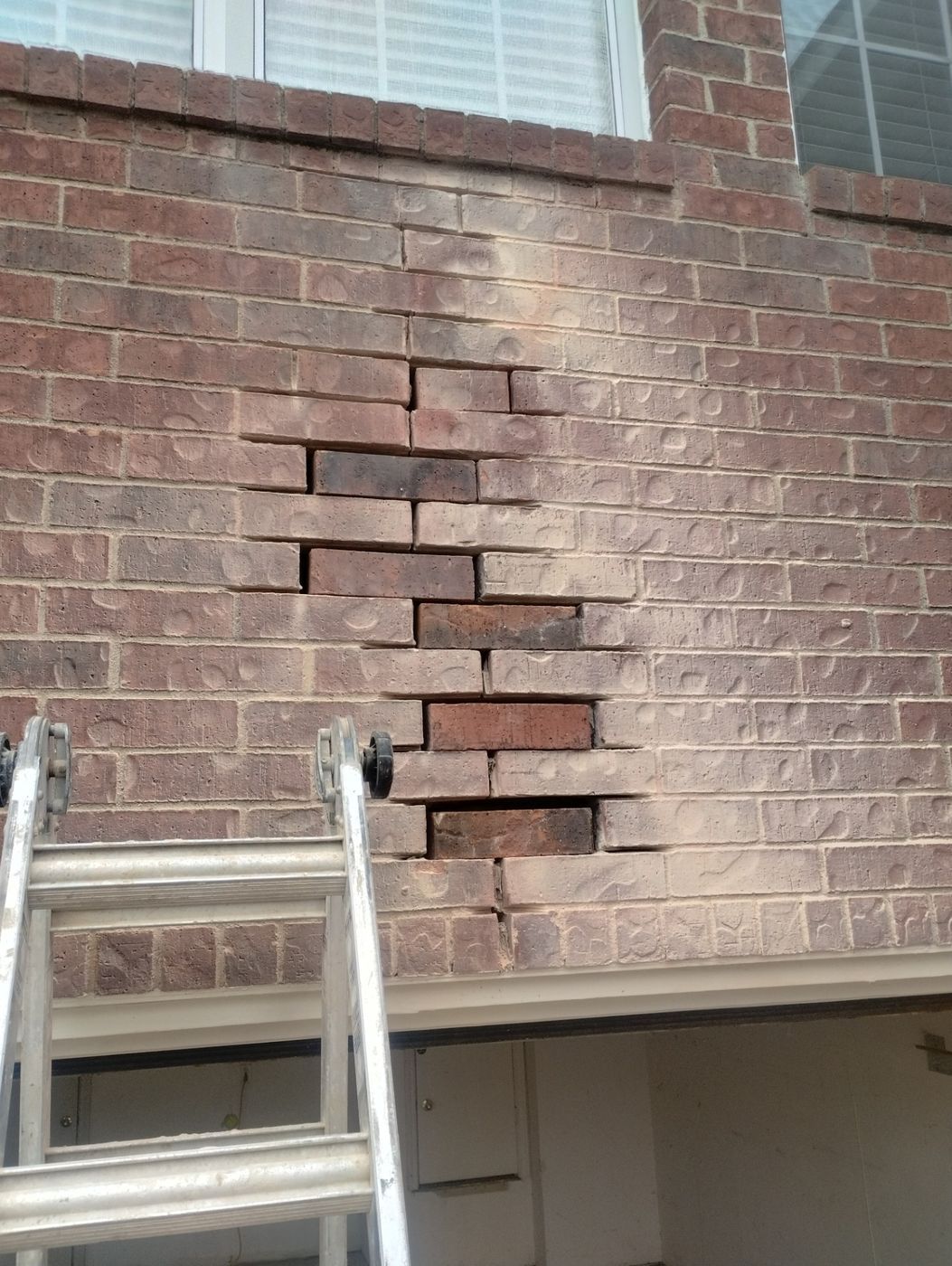
If you own a home in Dallas with a wide brick chimney, look at the roof slope on the uphill side of that chimney. In Dallas, a chimney cricket — the small peaked saddle built behind a wide chimney — is the piece most homeowners have never heard of, and its absence is a common reason water ponds, debris piles up, and flashing fails early. A chimney is a wide masonry box in the middle of a sloped roof. Water running downhill does not split around it on its own. Without a cricket, the uphill face of the chimney is a dam.
A cricket, also called a saddle, is a small ridge structure built on the high side of the chimney. Its two sloped faces meet at a short ridge behind the chimney and fall away to each side, so water and debris are divided and walked around the chimney instead of being held against it. It is roof framing, sheathing, roofing, and flashing working together — not a pile of sealant, and not a flat patch of metal laid against the brick.
On the downhill and side faces of a chimney, water is moving away or stepping down past the flashing. On the uphill face, everything the roof collects above the chimney arrives at one flat wall:
Ponding water: rain running down the slope hits the flat uphill face and slows, deepening against the flashing line instead of shedding past it.
Debris dams: leaves, pine needles, and grit wash down and lodge behind the chimney, holding moisture against the metal and mortar long after the rain stops.
Standing stress on flashing: the uphill flashing line is the longest-held-wet joint at the chimney base, so rust, lifted edges, and failed sealant show up there first — the system covered in our look at chimney flashing failure.
Roofing practice commonly calls for a cricket on chimneys that are wide across the slope — around thirty inches or more is the usual rule of thumb masons and roofers work from. Plenty of Dallas chimneys are wider than that and were built with a flat uphill flashing line and nothing to divide the water. Those are the chimneys that leak behind the stack, season after season, no matter how often the base gets patched.
A leak stain that tracks to the uphill side. Ceiling or wall staining near the fireplace that is worst after long, steady rain — not just wind-driven storms — points at water held behind the chimney.
Debris piled behind the chimney every time you look. A mat of leaves and grit sitting on the uphill side means water is sitting there too.
Rusted or patched-flat metal behind the stack. A flat, surface-patched valley behind a wide chimney, with rust streaks and layered patch material, is a saddle that was never built — or one that has rotted flat.
Damp firebox or musty smell after rain. Water entering behind the chimney travels down inside the masonry and can show as damp joints or rust at the damper, the same warning signs covered in what a real chimney fix covers.
Frame the saddle. A small peaked frame is built on the uphill side, sized to the chimney width and the roof pitch, so its faces shed water clearly to both sides of the stack.
Sheath and roof it like the rest of the roof. The cricket is decked and covered with the same roofing system, with valleys formed where its faces meet the main slope — a cricket is a small roof, not an accessory.
Flash it in layers. Saddle flashing carries water from the cricket faces out onto the roof, step flashing steps up the chimney sides, and counterflashing is set into a cut mortar joint and bent down over the top — layers that overlap so movement does not open a gap.
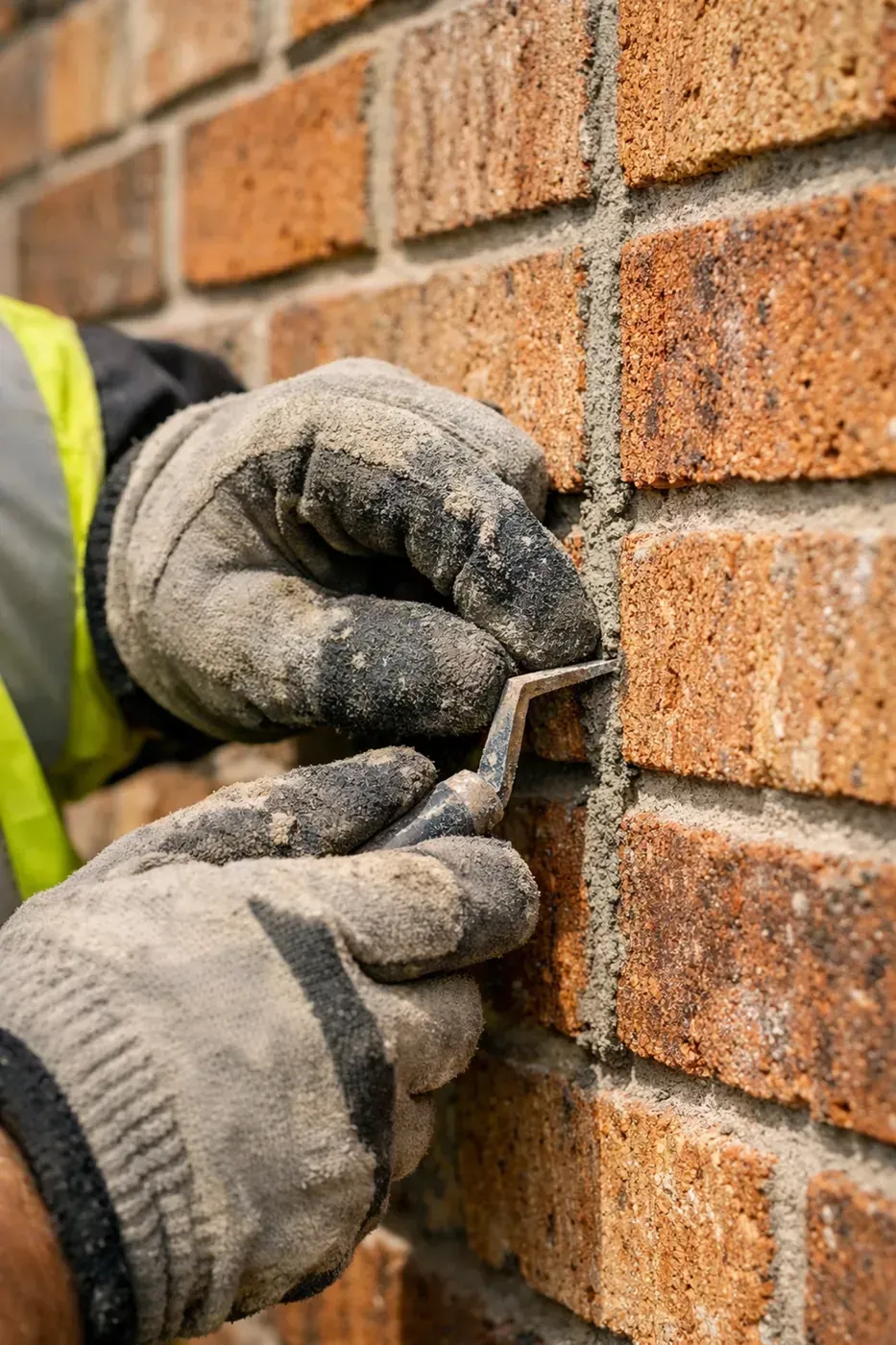
Repoint the joints that feed it. Open mortar joints on the uphill courses are ground out, cleaned, dampened, and repointed with mortar matched for color and texture and kept softer than the brick — the standing rule in mortar matching 101.
Sealant and roof cement smeared behind a wide chimney sit in exactly the spot where water ponds deepest. Sun, heat, and standing moisture age that patch fast, and every new layer hides the flashing line a real inspection needs to see. The geometry is the problem: a flat wall across a slope will hold water no matter what you smear on it. A cricket fixes the geometry. It gives the water a divided, downhill path on both sides, and it lets the flashing do its job dry instead of submerged.
From the yard, look at the roof behind your chimney. On a wide chimney you should see a small peaked ridge rising behind the stack — the cricket — with clean slopes falling to each side. If the roof runs flat into the back of a wide chimney, if debris is visibly piled there, or if the metal behind the stack looks rusted and patched in layers, photograph it from the ground and get it inspected from proper access. Do not climb up to pry at it yourself; the uphill side of a chimney is awkward footing over sharp metal. Our Dallas brick repair page covers the chimney and masonry work we do across the city.
Champion Brick Repair is a division of Whitestone Construction, Hamilton, Texas, and is not affiliated with any other companies using similar names.
Wide chimney leaking behind the stack, or no saddle where one should be? Get the uphill side inspected before ponded water takes out the flashing for good.
Call or text photos: (817) 523-1540
Website:championbrickrepair.com
Estimate:quick and easy free online estimate
Review our work:Google Review page
A wide chimney without a saddle is a dam on your roof — let Champion Brick Repair inspect the uphill side of yours right.