October 21, 2026 · By Champion Brick Repair
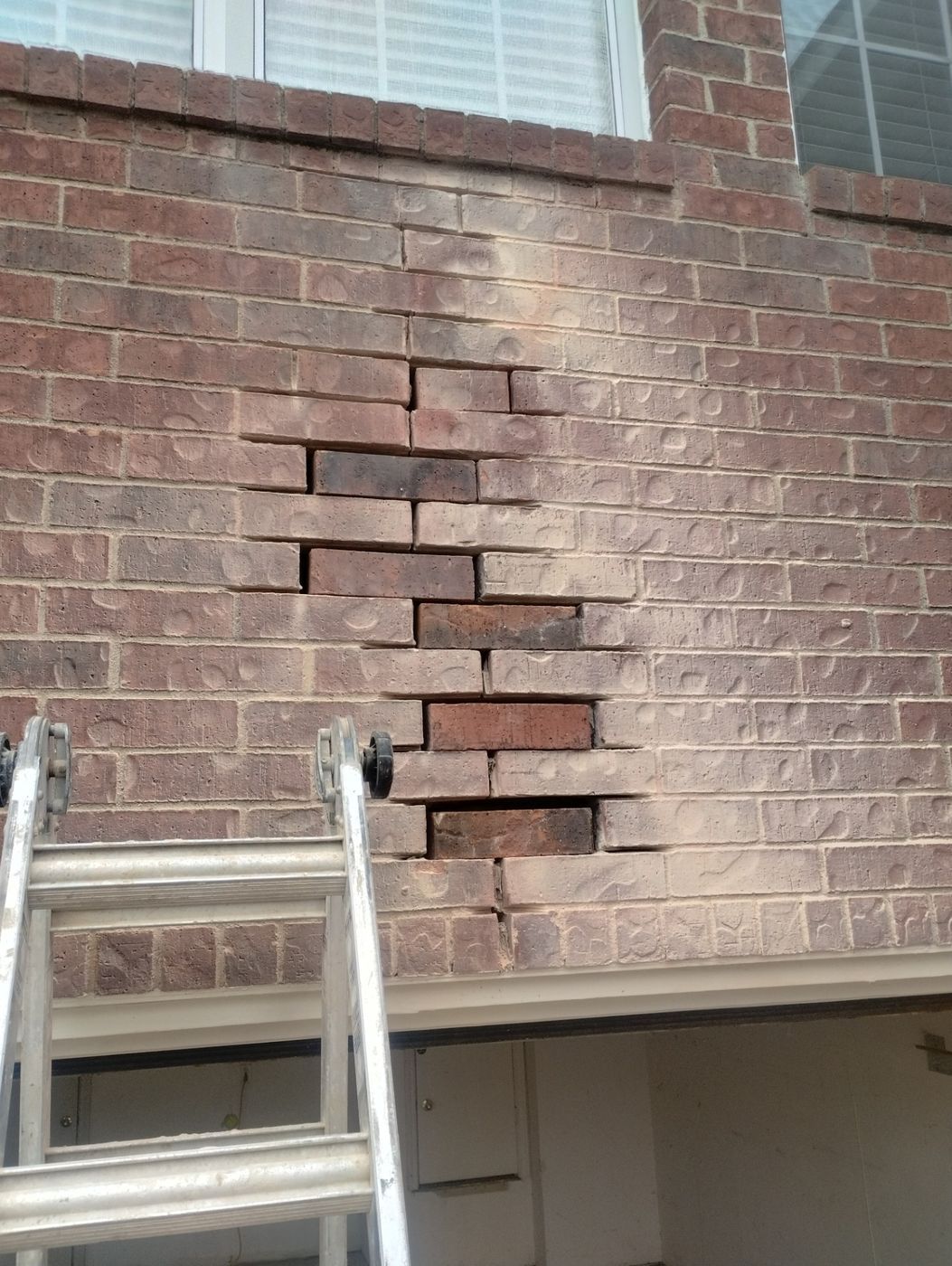
If you own a brick home in Fort Worth, find the straight vertical line that runs through the brick from top to bottom. In Fort Worth, that line is a control joint, and it is there on purpose. Brick expands in the Texas heat and shrinks back when temperatures drop, so builders leave a narrow vertical gap in the wall and fill it with a flexible sealant instead of hard mortar. When that sealant gets old, splits, and pulls away, the joint stops being a cushion and starts being an open door for water.
A control joint is not a crack. It is a planned break in the brickwork, usually lined up with a window or door edge, that gives a long wall room to move without cracking somewhere random. The sealant inside it has to stretch and compress for years without letting go of either side. That is a hard job, and it only works when the joint was built with two parts most homeowners never see: backer rod and a bond breaker.
Backer rod sets the depth. It is a round foam rod pressed into the joint before the sealant goes in. Sealant works best in a shallow, hourglass shape, roughly half as deep as the joint is wide. A joint filled solid, top to bottom, is too deep to flex and tears itself apart.
Bond breaker keeps the sealant off the back. Sealant should stick to the two sides of the joint only, never to the back of it. If it bonds on three sides, it cannot stretch in the middle, so it rips away from one side instead. The backer rod itself acts as that bond breaker when it is sized and placed right.
Tooling shapes the joint. After the sealant is gunned in, it is tooled into a smooth, slightly concave profile that presses it tight against both sides. A smeared, feathered edge looks fine for a month and peels by the next season.
These are the same hidden details that decide whether the movement joints covered in our guide to expansion joint failure in brick veneer keep working or start opening the wall up.
Sealant split down the middle. A clean split through the center usually means the sealant was bonded on three sides or filled too deep, so movement tore it instead of flexing it.
Sealant pulled away from one side. A dark gap along one edge of the joint is an open channel. Wind-driven rain goes straight in and reaches the wall ties and backup wall behind the brick.
Hard, cracked, or shrunken sealant. Old sealant loses its flex, shrinks back from the edges, and cracks like dried paint. At that point it is decoration, not a seal.
Staining or moisture below the joint. Dark streaks, white salt, or damp sheathing found below a failed joint mean water has been using that joint for a while, the same top-down entry pattern we cover at parapet cap failure.
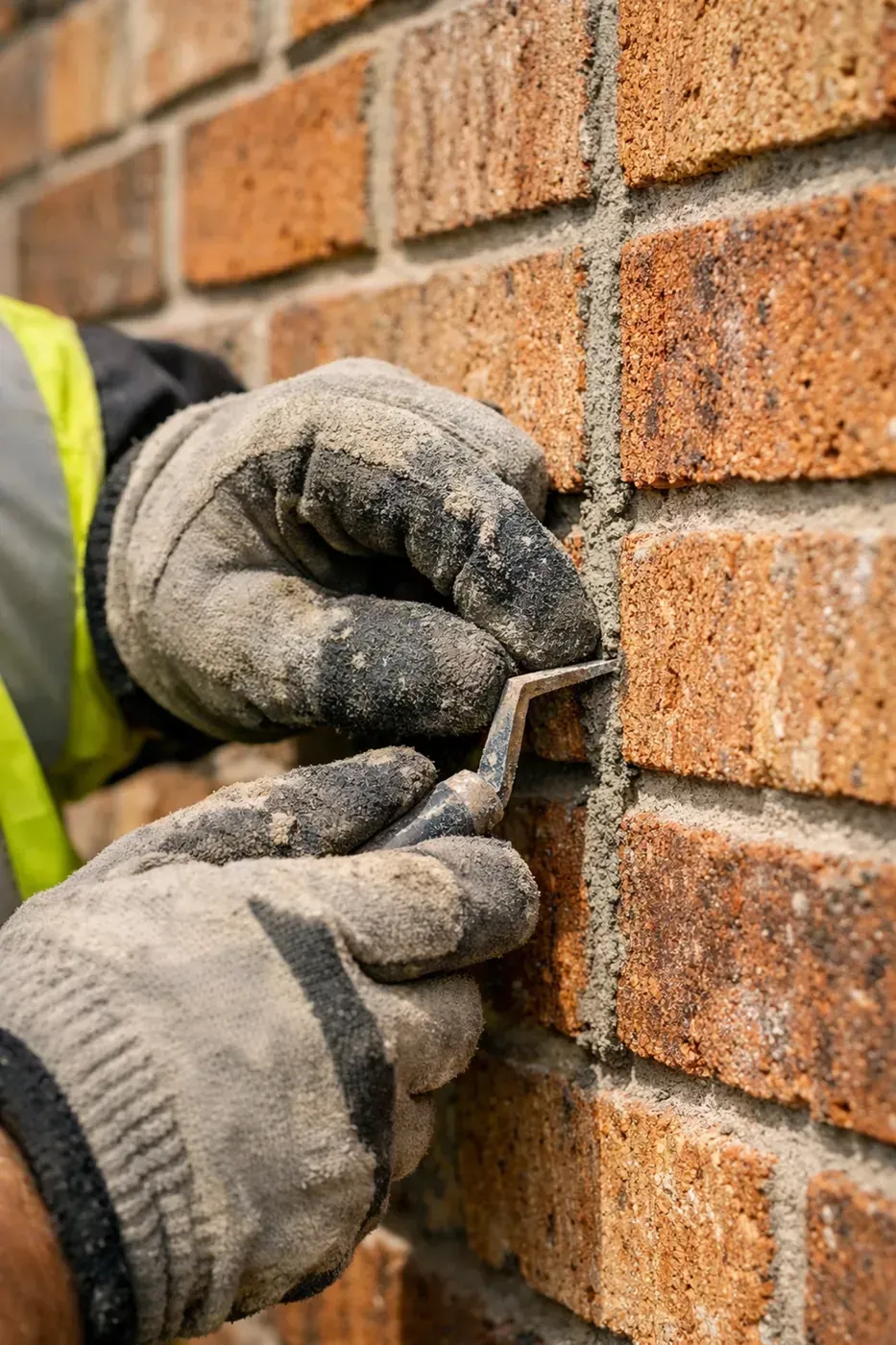
Cut out every bit of the old sealant. New sealant does not bond reliably to old sealant. The failed material and any hard mortar packed into the joint come out completely, and the joint sides are cleaned back to sound brick.
Check what the water reached. A joint that has been open for seasons gets a look behind it where access allows. Rusted ties or damaged backup are fixed while the joint is open, not sealed back over.
Set the backer rod at the right depth. The rod is sized slightly wider than the joint so it stays put, and pressed to a uniform depth so the sealant bed is shallow and even along the whole run.
Gun and tool the sealant in one pass. The joint is filled full, then tooled to that hourglass profile with clean, bonded edges. No feathered smears over the brick face, and no sealant smeared across the mortar joints beside it.
A thin bead laid over split sealant bonds to a surface that is already letting go, so it lets go with it. It also seals the joint at the wrong depth, with no backer and no bond breaker, which is exactly the setup that tore the original sealant apart. Renewal is not more sealant. It is the right shape, at the right depth, bonded to two clean sides only. The mortar work around the joint still follows the standing rule in mortar matching 101: never fill a movement joint with hard mortar, because a joint that cannot move will crack the brick beside it instead.
Walk your long walls and find every straight vertical joint. The sealant should look continuous, flexible, and bonded on both edges, with no center split and no gap you can slip a fingernail into. Photograph any joint that fails that check. Our Fort Worth brick repair page covers the joint, wall, and chimney work we do across the city.
Champion Brick Repair is a division of Whitestone Construction, Hamilton, Texas, and is not affiliated with any other companies using similar names.
Split, shrunken, or peeling control joint sealant on your brick? Get the joint renewed with the backer rod and depth set right before water gets behind the wall.
Call or text photos: (817) 523-1540
Website:championbrickrepair.com
Estimate:quick and easy free online estimate
Review our work:Google Review page
A split control joint lets water straight into your wall — let Champion Brick Repair renew yours with the backer rod and bond breaker done right.