October 8, 2026 · By Champion Brick Repair
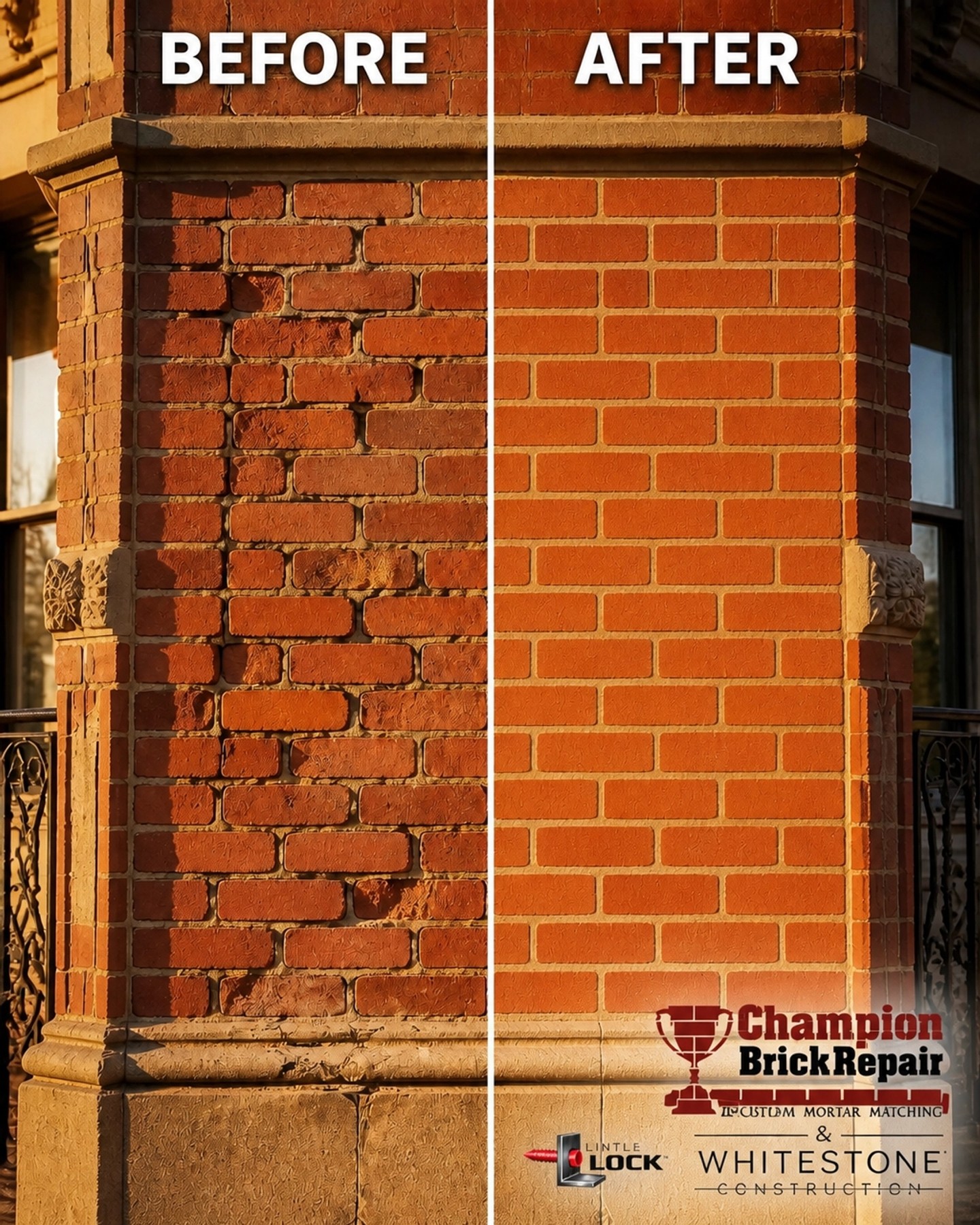
If you are searching for cracked brick wall repair near me in Arlington, TX, you have probably already done the anxious part: standing in the driveway, staring at a crack, wondering whether you are looking at a few hundred dollars of mortar work or a wall that needs to come down and go back up.
Here is the honest answer most contractors will not give you on the first visit: it depends on what the crack is telling you. Some cracks are surface mortar problems that repointing fixes cleanly. Others are symptoms of movement, failed support, or water damage that no amount of new mortar will solve.
Not all cracks are equal. Before you hire anyone, walk your wall and see which pattern you have.
Cracks that zigzag down the wall following the mortar joints — one joint, over, down one joint, over — are the most common cracks in Arlington and across DFW. They usually point to movement: expansive clay soil shifting under the foundation, settlement, or a failing support above an opening. The joints crack because the wall moved; the brick is usually still sound.
A vertical crack that runs through mortar joints in a straight line often traces back to expansion and contraction, or to two wall sections moving differently — for example, where an addition meets the original house. Short, narrow vertical cracks in joints are typically repointing candidates.
When a crack runs through the face of the brick units — not just the mortar around them — the wall has experienced real force. This is the pattern that separates a mortar problem from a structural one. Broken brick units do not heal with repointing.
A horizontal crack, or any crack where one side of the wall sits higher or farther out than the other, is the one to take seriously. Displacement means the wall is moving in two directions, and that points to foundation movement, a failed lintel, or lateral pressure — not a mortar issue.
Repointing (also called tuckpointing) means grinding out the deteriorated mortar and installing new, matched mortar to the proper depth. It is the right fix when:
The brick units are sound and intact
The wall is plumb and in its original position
The joints are eroded, crumbling, or cracked but the wall has not moved
The crack pattern is limited to mortar joints with no displacement
Real repointing starts with grinding the joints out to a proper depth — not a caulk gun — and with mortar that is matched to the wall for strength and appearance. If a contractor proposes to smear new mortar over the old without grinding, that is not repointing; it is a surface patch, and it will fail.
A rebuild — taking down and relaying a section of wall — is the right fix when:
Brick units are failing: spalling, crumbling, or broken bricks cannot be repaired with mortar alone
The wall has displaced: bulging, leaning, or one side sitting higher than the other
Structural support failed: a rusted lintel angle, a settled arch, or a collapsed support behind the brickwork
Through-cracks are widening: cracks that keep growing even after previous repairs were patched
A straight rule of thumb: if the problem is in the joints, repointing fixes it. If the problem is in the structure behind or below the joints, repointing only hides it.
When you search for a contractor, watch for these green flags and red flags on the estimate visit:
They diagnose before they propose. A pro reads the crack pattern and tells you what caused it. A salesman just prices the crack.
They talk about the cause. Settlement, soil, lintel failure, water behind the wall — if they cannot name the cause, they cannot fix it permanently.
They grind before they point. Ask directly: “How deep do you grind the joints before repointing?” Vague answers are a red flag.
They match the mortar. Ask how they match color, strength, and texture. “We use the same bag for everything” is a no.
They back the work. A lifetime workmanship warranty tells you more than any sales pitch.
We will not throw a number at you on a web page, because honest masonry pricing depends on what is actually wrong — the wall, the brick, the cause, and the repair. That said, know this:
A repointing repair costs less than a rebuild, but only if repointing is actually the right fix — paying for repointing on a wall that needs a rebuild means paying twice.
Be wary of anyone who prices your crack over the phone without seeing a photo. The crack pattern decides the repair; a photo tells a mason more than a description ever will.
Water behind the wall is the cause most often missed on estimate visits — check weep holes, grading, and drainage before you blame the mortar.
A crack in your brick wall is a message, not a disaster. Read the pattern, diagnose the cause, and match the repair to the cause. Repointing fixes joints. Rebuilds fix structures. The expensive mistake is paying for the wrong one.
For related information, see our Arlington brick repair services.
Text us photos of your cracked brick wall and we will tell you whether it is a repointing repair or a rebuild — before you spend a dollar.
Call or text photos: (817) 523-1540
Website: championbrickrepair.com
Estimate: Get a free estimate
Cracked brick? Get a straight diagnosis and a repair that matches the cause — from Champion Brick Repair.