October 15, 2026 · By Champion Brick Repair
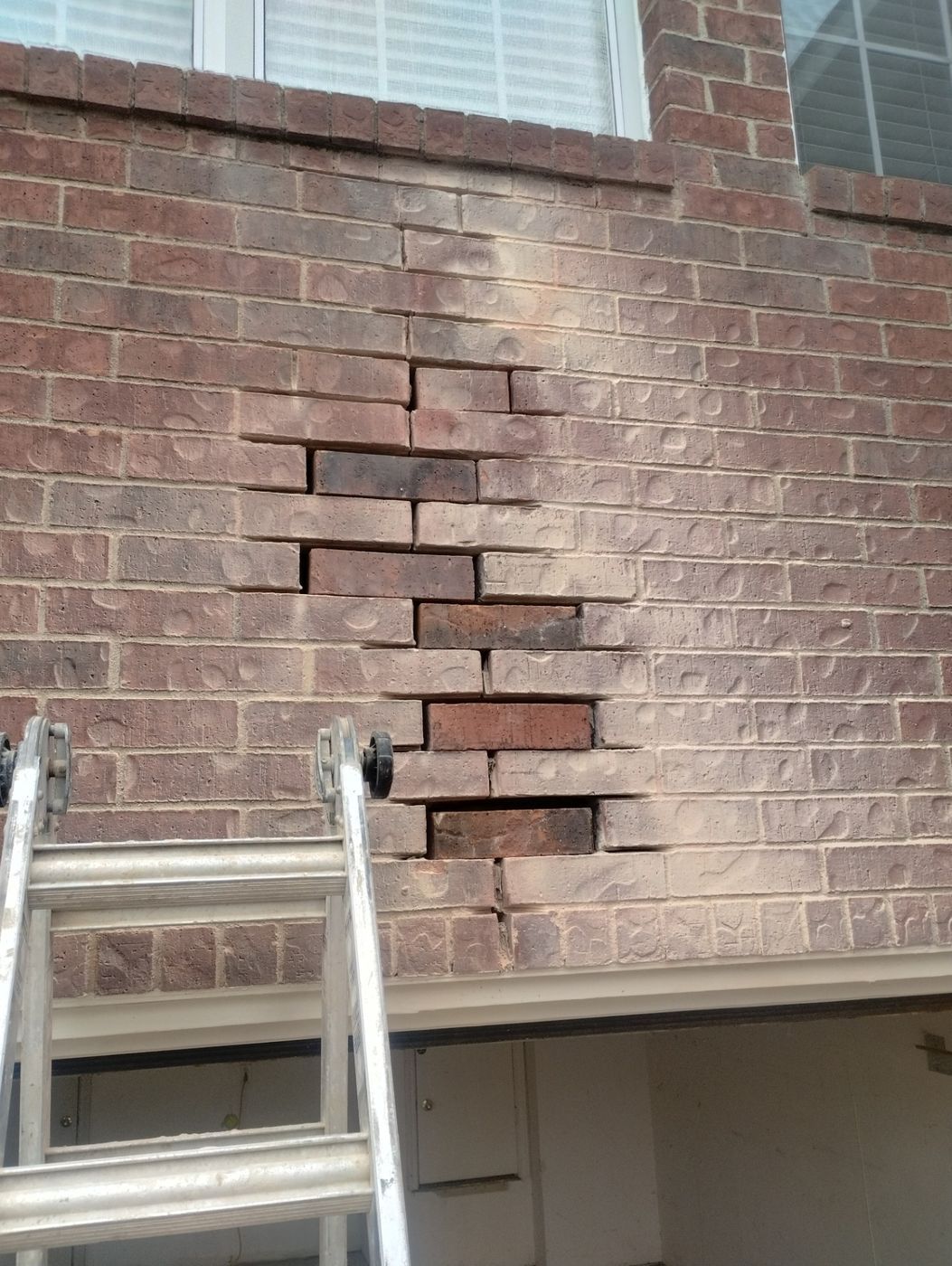
Brick veneer in Fort Worth moves. That is not a defect — it is how clay brick behaves in Fort Worth heat, sun, and rain. A long brick wall grows a little on a hot afternoon, grows a little more over years as the brick takes on moisture, and needs somewhere for that growth to go. Expansion joints are that somewhere. When an expansion joint fails, the wall does not stop moving. It just starts pushing on itself.
An expansion joint is a vertical gap built into the veneer at planned intervals, filled with a compressible backer rod and sealed at the face, with a bond break so the two sides of the wall can move without tearing each other apart. It is supposed to stay soft and flexible for the life of the joint. Packed hard with mortar, filled with the wrong sealant, or never built at all, it stops being a joint and becomes a fuse point for the whole wall.
Clay brick expands with heat and with moisture, and that moisture growth is one-way over time — brick slowly gets a fraction larger across its service life and does not shrink back. Add a Fort Worth summer, where a sun-baked wall face runs far hotter than the shaded cavity behind it, and a long uninterrupted run of veneer is under steady pressure to get longer. Steel, framing, and concrete behind the veneer move at different rates, too. Good masonry detailing expects all of that movement and gives it a planned place to happen.
That planned place matters more on long walls, walls with few openings, and walls that turn a corner. Corners, offsets, and changes in wall height concentrate the stress, which is why you so often see the damage show up near a corner or at the end of a long run first. Our guide to through-wall flashing in brick veneer covers the other hidden layer that has to work alongside the joints for a wall to stay dry while it moves.
A vertical joint packed hard with mortar. A true expansion joint should give when you press the sealant. Hard mortar in that line means someone filled the movement gap solid — the wall can no longer move there.
Sealant split, pulled away, or squeezed out. Old sealant that has hardened, cracked away from one side, or bulged out of the joint is no longer sealing or flexing. Water gets in and movement gets trapped at the same time.
Brick bowing or stepping out near a corner. When growth has nowhere to go, the veneer pushes outward or shoves past the corner. Sighting along the wall face is how that bow shows itself.
Spalled or crushed brick near the joint line. Faces flaking off and corners crushing at one vertical line are pressure damage, not age. The brick is losing the argument with the wall behind it.
Cracks that open and close with the seasons. A crack that is wider in summer heat than in winter is telling you it is a movement crack. Sealing it hard without restoring the joint just moves the crack somewhere else.
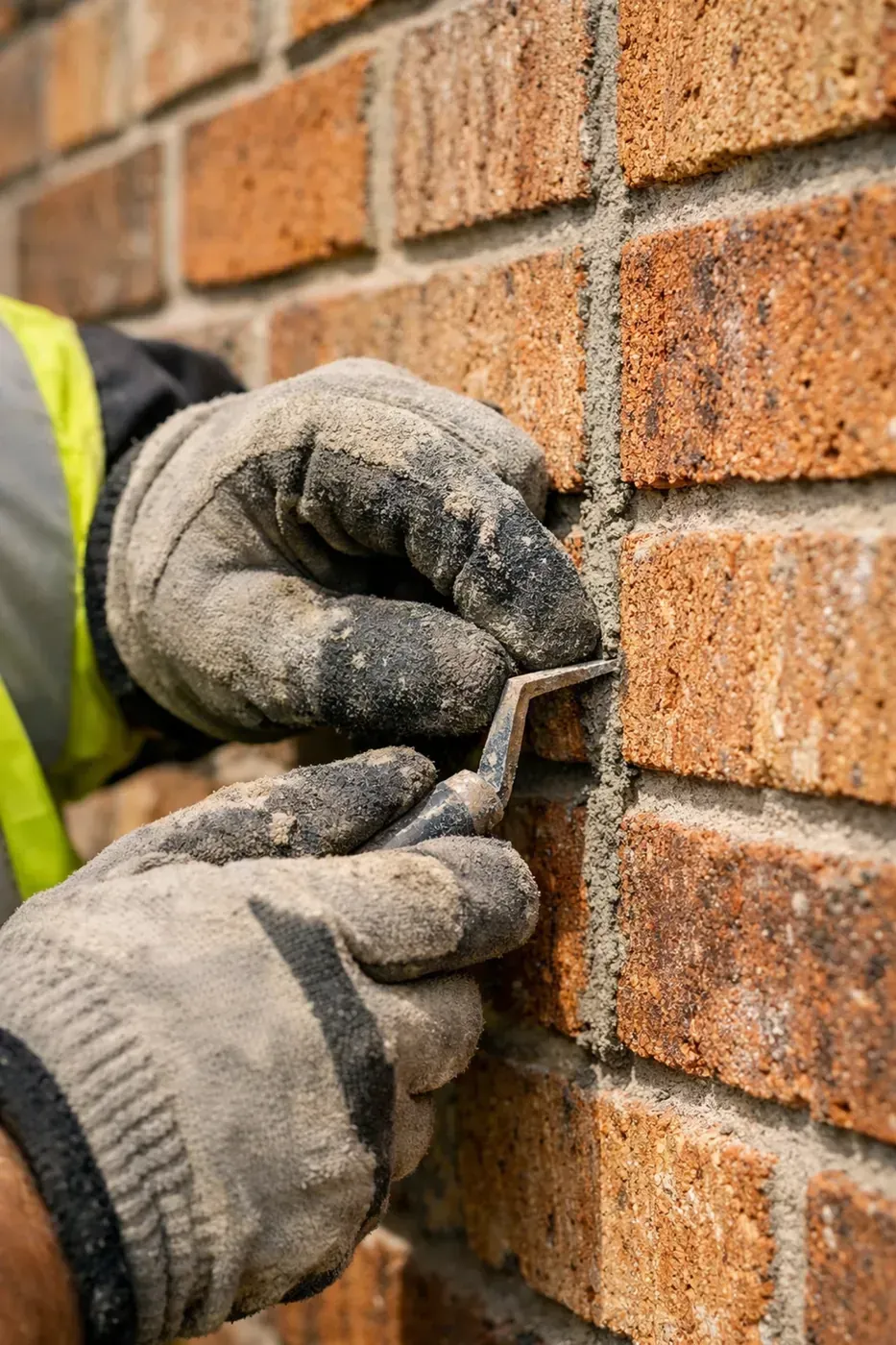
It looks tidy and it is exactly wrong. A well-meaning repair packs the open vertical joint with mortar to match the rest of the wall, and for a season it looks finished. Then the wall grows again, meets a joint that cannot compress, and the force has to go somewhere — into bowed brick, spalled faces, or a new crack a few feet away. Mortar belongs in bed joints and head joints that are meant to be solid. A movement joint is meant to move, and anything hard in it defeats the detail the wall was built with.
The second mistake is the opposite shortcut: smearing a surface bead of sealant over a joint that is still full of hard material or failed backer. A thin skin over a packed joint neither seals for long nor restores movement. The joint has to be opened and rebuilt to depth, not painted over at the face.
Open the joint fully. Failed sealant, backer, and any hard packing come out to the full depth of the veneer joint, using hand work and careful grinding where needed so the brick edges are not damaged — the same care we use when grinding out mortar joints before repointing.
Check the brick on both sides. Crushed, spalled, or displaced brick along the line is replaced with matching brick before the joint is rebuilt, and any mortar work is custom matched before it goes in the bag, softer than the brick, as we explain in mortar matching 101.
Set a proper backer rod at the right depth. The rod gives the sealant the right shape and keeps it from bonding on three sides, which is what tears sealant apart. Bond breaker is part of the detail, not a detail to skip.
Tool in a flexible sealant made for masonry movement. The sealant is tooled to shed water, bonded to the two sides only, and left recessed as detailed — not crowned proud and not smeared across the brick faces.
Confirm the wall can drain, too. A joint repair that seals the face while the cavity behind it still cannot drain through open weeps trades one problem for another. Check yours the way we describe in our weep hole guide for Fort Worth brick.
Find the vertical joints on your longest, sunniest wall — they often sit near corners, at offsets, or where the wall changes height. Press the sealant in each one with a fingertip. It should feel like a firm rubber, not like rock and not like a loose skin peeling at the edges. Look for hard mortar sitting in that same vertical line, sealant split down the middle, or brick faces flaking right beside the joint.
Then sight along the wall. A gentle bow near a corner, brick stepping out at one line, or a crack that you know is wider in August than in January all point the same direction: the wall is asking for movement it is not getting. Take a straight-on photo and one sighting along the face so you can compare next season. Expansion pressure does not reverse itself, and brick that is crushing at a joint this year will be brick that has to come out and be replaced in a longer run if the joint stays packed hard.
Are you removing the hard material and failed backer, or sealing over the top of them?
What backer and sealant are you setting, and at what depth?
Is any brick along the line already crushed or spalled, and is it being replaced?
Are the weeps and flashing along this wall being checked while the joint is open?
If a vertical joint on your Fort Worth home is packed hard, split open, or flanked by bowing and spalling brick, get the joint itself looked at before the wall moves the damage further along. For related information, see Champion's brick repair services in Fort Worth.
Champion Brick Repair is a division of Whitestone Construction, Hamilton, Texas, and is not affiliated with any other companies using similar names.
Vertical joint packed hard or brick bowing near a corner? Get the movement joint inspected before the wall pushes the damage further.
Call or text photos: (817) 523-1540
Website:championbrickrepair.com
Estimate:quick and easy free online estimate
Review our work:Google Review page
A wall that can move at its joints lasts — let Champion Brick Repair open, rebuild, and reseal yours right.