October 22, 2026 · By Champion Brick Repair
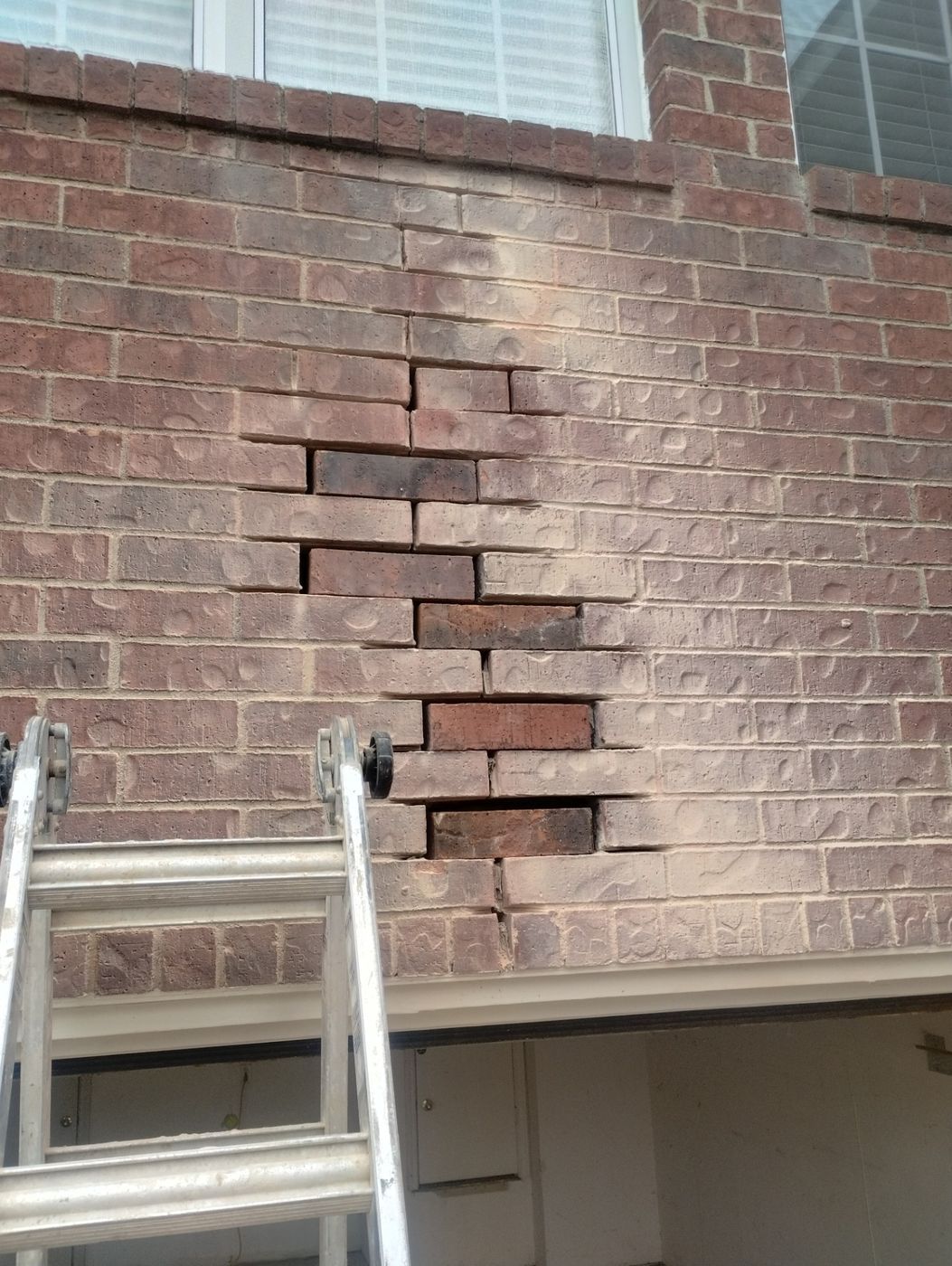
If you are searching for lintel repair near me in Denton, TX, start by looking at the brick directly over your garage door and your widest windows. In Denton, that brick is not holding itself up. It is resting on a lintel, a horizontal steel angle hidden in the wall that carries the brick across the opening and hands the weight off to the brick on either side. When that steel rusts, the brick it carries is usually the first thing to tell you, with a sag, a stair-step crack, or a row of brick pushed visibly out of line.
A lintel failure is not a brick problem that happens to sit over a window. It is a steel problem showing up in brick. Fixing only the brick, without dealing with the steel under it, is how the same crack earns a second repair.
A lintel lives in the worst seat in the wall. Water that gets behind the brick runs down and sits on the flat top of the steel, exactly where it can do the most harm and stay the longest. Steel that rusts does not just get thinner. Rust takes up more room than the solid steel it came from, so a corroding lintel physically grows as it fails.
It lifts what it carries. Expanding rust jacks the brick above the opening upward and outward, opening stair-step cracks that climb away from the corners of the window or garage door.
It bows and sags. A lintel that has lost section to rust can also bend under a load it once carried flat, so the brick line over the opening dips in the middle instead of running straight.
It breaks its own paint and protection. Each expansion cycle cracks the coating that was keeping water off the steel, so the next water gets in faster. The failure speeds itself up, which is the same rust-expansion cycle we walk through for garage openings in rusted garage lintels in Dallas.
Stair-step cracks starting at opening corners. Cracks that step up and out from the top corners of a window or garage door, following the mortar joints, are the classic signature.
A sagging or wavy brick row over the opening. Sight along the brick above the opening from the driveway. A dip in the middle, or one end sitting lower than the other, means the support under it has moved.
Brick pushed out of plane. Individual bricks or a whole course standing proud of the wall face above an opening have been jacked forward by expansion behind them.
Rust staining below the ends. Orange-brown streaks weeping from the joints at either end of the opening are the steel itself leaving evidence on the wall.
Open joints in the upright brick row. The soldier course, the row of upright bricks that often finishes the top of an opening, opens its joints first when the steel moves, a pattern covered in detail in our guide to soldier course failure.
Support the brick first. The brick over the opening is shored so nothing moves or drops when the failed steel comes out. Nobody pulls a lintel out from under an unsupported wall.
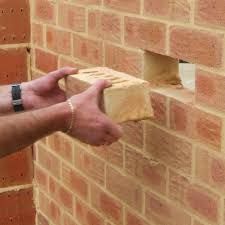
Remove the damaged brick carefully. Cracked and displaced units above the opening come out and are set aside or replaced, opening the wall enough to expose the full length of the lintel, not just the rusty spot in the middle.
Deal with the steel itself. A lintel with light surface rust may be cleaned, treated, and coated. A lintel that has lost real section, bowed, or split its brick gets replaced with new steel sized for the span and the load. That call is made with the steel exposed and visible, never guessed from the driveway.
Flash it and give the water a way out. Flashing over the new or restored lintel directs water that gets behind the brick back out of the wall, and the weep openings at that line are kept open so the water actually has an exit.
Rebuild and match. The brick goes back plumb and level, with replacement units matched to the wall and mortar matched in color, strength, and tooling, the standing practice in mortar matching 101. From the street, the repair should read as wall, not as patch.
Check the other openings. Lintels on the same house were built the same year, with the same steel and the same exposure. If one has failed, the rest get looked at while the crew is there.
The crack over the opening is the symptom homeowners see, so it is the thing patch work treats. Fresh mortar ground in over moving steel gets pushed right back out, because the rust underneath is still growing. Caulk in the open joints does the same job for a shorter time and traps water against the steel while it does it. Until the steel is exposed, judged, and either restored or replaced, and the flashing above it is working, any surface repair over an opening is on a clock.
Stand back and read every wide opening on the house: garage first, then the widest windows. Look for a straight brick line, closed joints, and no rust weeping at the ends. Photograph any opening that fails that check, up close and from the street. Our Denton brick repair page covers the lintel, wall, and chimney work we do across the city.
Champion Brick Repair is a division of Whitestone Construction, Hamilton, Texas, and is not affiliated with any other companies using similar names.
Sagging brick, stair-step cracks, or rust stains over a Denton window or garage door? Get the lintel exposed and judged before the crack gets repointed over one more time.
Call or text photos: (817) 523-1540
Website:championbrickrepair.com
Estimate:quick and easy free online estimate
Review our work:Google Review page
Sagging brick over an opening means the steel under it is failing — let Champion Brick Repair expose, judge, and rebuild yours right.