October 22, 2026 · By Champion Brick Repair
If you have a masonry fireplace in Dallas, there is a part of it you have probably never seen, and it does heavy work every time you light a fire. In Dallas, that part is the smoke chamber: the funnel-shaped space that sits directly above the firebox and the damper, and narrows the wide firebox opening down to the round or rectangular flue above it. Smoke chamber parging is the smooth, heat-rated coat troweled over the inside of that funnel, and on a lot of older fireplaces it was never applied well, or it has cracked and fallen away in pieces.
Here is why that hidden funnel matters. Hot smoke leaves the firebox wide and slow, and it has to speed up and turn into a much smaller flue without spilling back into the room. A smooth chamber helps it do that. A rough chamber fights it at every step.
Most masonry smoke chambers were built by corbelling. The mason stepped each course of brick inward a little at a time, front, back, and sides, until the opening matched the flue. That method is strong, and it has held up fireplaces for generations, but it leaves a staircase inside the chamber instead of a smooth slope.
Every step is a ledge. Each corbelled course leaves a flat shelf where soot and creosote can settle instead of riding the draft up and out.
Every step is a sharp corner. Smoke hitting a staircase of right angles swirls and slows instead of flowing. Turbulent smoke drafts poorly, and a poorly drafting fireplace is the one that puffs smoke into the living room when the damper opens.
The joints face the heat directly. The mortar between those stepped courses takes the hottest gases in the system, right where the firebox heat first concentrates. Old, soft, or cracked joints up there erode faster than the same joints out on the chimney face.
Smoke spilling at the damper. A fireplace that smoked a little on windy days and now smokes on calm ones is often telling you the path above the damper has gotten rougher, not smoother.
Heavy, flaky buildup on the steps. Creosote collects fastest where smoke slows down. Thick deposits sitting on the corbel ledges mean those ledges are catching what should have exited.
Missing or cracked mortar between courses. With the fire cold and a strong flashlight aimed up past the open damper, stepped brick with open, recessed, or fallen-out joints is visible on many older chambers. Gaps there let hot gases work into places they were never meant to reach.
Chunks in the firebox. Pieces of old parge coat or joint mortar dropping down behind the damper after a fire are the chamber itself shedding material.
A flashlight look is a starting point, not an inspection. The full chamber, and the flue above it, get read properly with a camera run up the system, the same kind of complete look we describe for a full chimney job in our guide to brick chimney repair in Irving.
Clean first. Loose mortar, fallen chunks, and heavy deposits come out, and the stepped brick is cleaned back to sound material. A coat stuck to soot and dust is a coat already letting go.
Repoint the open joints. Deep gaps between the corbelled courses are packed first, so the parge coat is a finish over solid work, not a thin skin bridging holes.
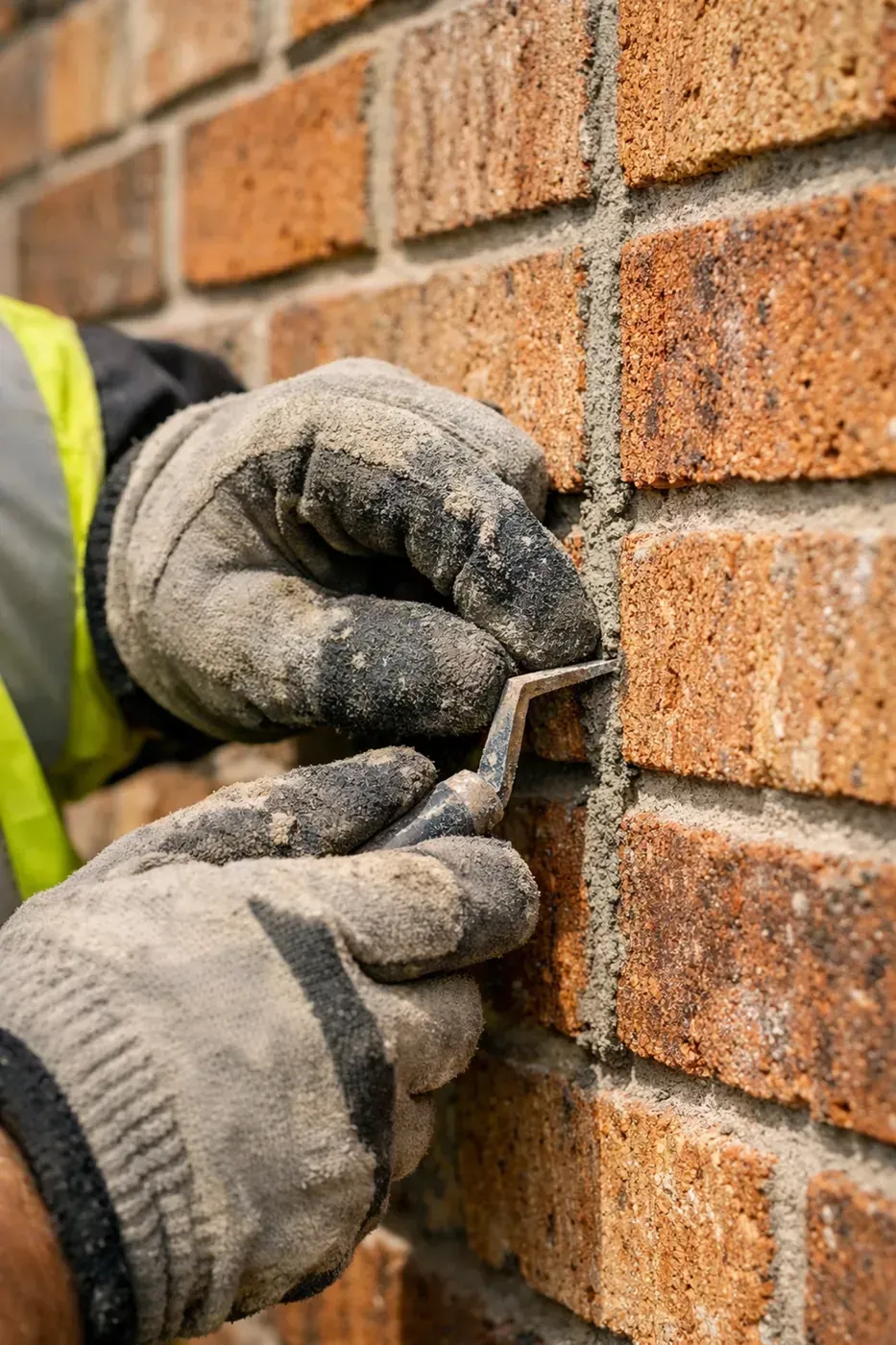
Apply a heat-rated refractory coat in lifts. The chamber is dampened, then the parging material is troweled on and built up over the steps, following the product directions for thickness and cure. One heavy, sagging pass is not the job; controlled lifts that stay put are.
Trowel it into one smooth funnel. The finished surface runs in a continuous slope from the damper frame up to the flue, with the corners filled and rounded. No ledges left to catch deposits, no sharp steps left to trip the draft.
Blend the transitions. The coat has to meet the damper frame at the bottom and the first flue tile at the top without a lip at either end. A ridge at the flue entry is just a new ledge in a worse place.
Hardware-store fireplace mortar has its place for small, shallow joint touch-ups. It is not a chamber rebuild. Smeared thin over dirty, stepped brick, it dries as a brittle skin, cracks with the heat cycles, and falls in flakes, sometimes within a single burning season. The material also has to be rated for the heat this part of the system actually sees, and the surface under it has to be clean, sound, and dampened right. Parging is a coating system over prepared masonry, not a caulk job. The same rule runs through all our interior and exterior work, and it is the rule in mortar matching 101: the material has to suit the masonry it is protecting.
Parging fixes one link in a chain. The firebox below has to be sound, the damper has to open fully and seat, the flue above has to be clear and intact, and the top of the chimney has to shed water, which is why a wide stack also needs the saddle work covered in our guide to the chimney cricket. A smooth chamber cannot overcome a blocked flue, and a clean flue cannot fix a staircase chamber. Each part gets checked on its own, then the system gets judged as a whole. Our Dallas brick repair page covers the chimney and fireplace work we do across the city.
Champion Brick Repair is a division of Whitestone Construction, Hamilton, Texas, and is not affiliated with any other companies using similar names.
Fireplace smoking into the room, or a flashlight look showing stepped, open joints above your damper? Get the smoke chamber cleaned, repointed, and parged smooth before burning season does the testing for you.
Call or text photos: (817) 523-1540
Website:championbrickrepair.com
Estimate:quick and easy free online estimate
Review our work:Google Review page
A rough, open-jointed smoke chamber drafts poorly and collects creosote on every ledge — let Champion Brick Repair clean, repoint, and parge yours smooth.